
Beyond the Hype What Machine Learning Actually Does in 2026
If you ask a sci-fi movie from the 90s, machine learning is the first step toward a robot uprising. If you ask a Silicon Valley VC, it’s a money-printing machine. But if you ask the engineer who has to clean the data, machine learning is mostly just very sophisticated, very tiring statistics with a better marketing department.
At its core, machine learning is the practice of using algorithms to parse data, learn from it, and then make a determination or prediction about something in the world. Instead of hand-coding a software program with a specific set of instructions to accomplish a particular task, the machine is “trained” using large amounts of data and algorithms that give it the ability to learn how to perform the task.
The Invisible Engine of Your Daily Life
Most people think they aren’t using ML until they open ChatGPT. The reality? You’ve probably interacted with a dozen ML models before you even finished your morning coffee.
When your email filter catches a “Win a Free iPhone” scam, that’s ML. When Spotify suggests a song that perfectly matches your mood (even if you’re embarrassed to admit you like it), that’s ML. It’s no longer a “future technology”—it is the invisible plumbing of the modern internet.
How It Works (Without the PhD Jargon)
To understand machine learning, you have to stop thinking of it as “thinking.” Computers don’t think; they calculate.
Pattern Recognition at Scale
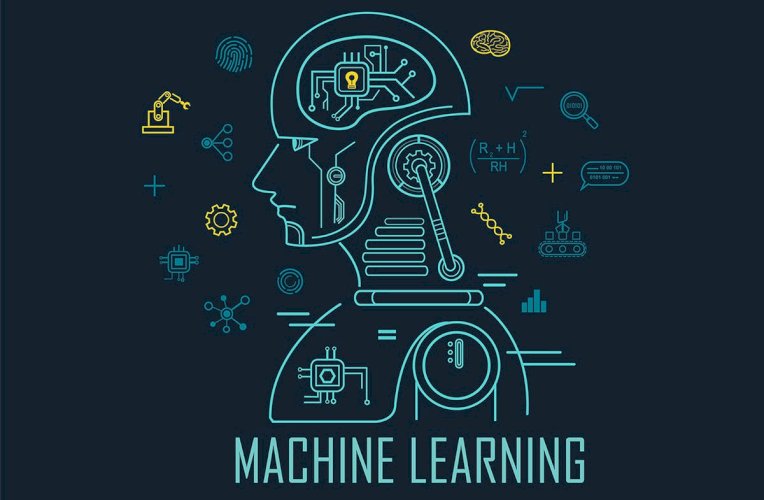
Imagine teaching a child to recognize a cat. You don’t explain the skeletal structure or the DNA; you point at a furry creature and say, “Cat.” After twenty cats, the child gets it. Machine learning does the same, but it needs twenty thousand pictures of cats. It looks for patterns in pixels—the curve of an ear, the slit of an eye—that humans don’t even realize they are noticing.
The Three Pillars of Learning
-
Supervised Learning: This is like a student with a teacher. The data is already labeled (e.g., “This is an image of a malignant tumor” vs. “This is benign”). The model learns to match the input to the correct label.
-
Unsupervised Learning: Here, the machine is left alone to find patterns in “messy” data. It might notice that customers who buy diapers also frequently buy beer at 8:00 PM on a Friday. No one told it to look for that; it just found the cluster.
-
Reinforcement Learning: Think of training a dog with treats. The algorithm tries something, gets a “reward” (score) if it succeeds, and a “penalty” if it fails. This is how AI learns to play chess or drive autonomous vehicles.
The Reality Check: ML is Not “Intelligence”
Here is the editorial truth: We need to stop calling it “Artificial Intelligence” in every context. Machine learning is brilliant at math, but it has the common sense of a brick.
The Misconception: People believe ML models understand why things happen. The Reality: ML models understand correlation, not causation. If a model sees that every time people carry umbrellas, it rains, it might conclude that umbrellas cause rain. It lacks the human context to understand the atmosphere. This is why human oversight isn’t just a safety feature—it’s a logical necessity.
Why Businesses are Actually Using It
Beyond the buzzwords, ML solves three very boring, very expensive problems:
1. Predictive Maintenance
In the old days, you fixed a factory machine when it broke. With ML, sensors monitor vibrations and heat. The algorithm says, “Based on these patterns, this bearing will fail in 48 hours.” You fix it before the disaster. That saves millions.
2. Hyper-Personalization
In 2026, “one size fits all” marketing is dead. ML allows brands to treat a million customers like individuals. It’s the difference between receiving a generic coupon and getting a discount on the exact brand of oat milk you buy every Tuesday.
3. Fraud Detection
Humans are too slow to spot a credit card theft happening in milliseconds across three continents. ML looks at your “behavioral fingerprint”—how you type, where you shop, how fast you scroll—and flags an anomaly before the transaction is even finished.
The “Dirty Secret” of Machine Learning
If you want to work in this field or implement it in your business, here is what the glossy brochures won’t tell you: The data is usually a mess.
Most of the “work” in machine learning isn’t building cool algorithms; it’s cleaning spreadsheets. It’s deleting duplicates, fixing typos, and ensuring the data isn’t biased. If you train an ML model on biased data, you don’t get an objective machine; you get a high-speed, automated bias machine. This is the biggest ethical hurdle of our decade.
How to Start (The Practical Path)
You don’t need a math degree to start leveraging machine learning today.
-
For Business Owners: Don’t build; buy. Use existing API tools (like those from Google Cloud, AWS, or OpenAI) to add features to your workflow.
-
For Career Changers: Focus on Python and SQL. Understanding how to manipulate data is more valuable than memorizing the internal math of a neural network.
-
For the Curious: Use tools like Google’s “Teachable Machine” to see how training works in real-time. It’s eye-opening to see how easily a machine can be confused.
Closing Thoughts: The Human Element
We are entering an era where “knowing how to do the work” is less important than “knowing how to direct the machine.” Machine learning isn’t a replacement for human creativity or strategy; it’s a power tool. A chainsaw doesn’t build a house, but a carpenter with a chainsaw builds one much faster than one with a hand saw.
The future belongs not to the machines, but to the people who can speak their language.