Neural Network Architecture The Blueprint of Artificial Intelligence
If you were asked to build a skyscraper using only the instructions for a garden shed, the result would be catastrophic. In the world of Artificial Intelligence, we make this mistake every single day. We throw massive amounts of data at a generic model and hope for magic, forgetting that the “shape” of the brain is just as important as the information it holds.
A neural network architecture is essentially the skeleton and nervous system of an AI. It defines how data flows, how information is processed, and ultimately, whether the machine will solve your problem or just hallucinate expensive nonsense. To build something that actually works, we have to move past the buzzwords and understand the structural engineering of code.
The Reality Check: Complexity Does Not Equal Intelligence
Here is the uncomfortable truth: a more complex neural network architecture is not inherently “smarter.” Many developers fall into the trap of thinking that adding more layers (the “Deep” in Deep Learning) will automatically solve a lack of quality data. In reality, an overly complex architecture on a simple problem leads to “overfitting”—where the AI basically memorizes your homework instead of learning the subject. Sometimes, a simpler, leaner structure is not just cheaper; it’s better.
The Pillars of Modern Digital Brains
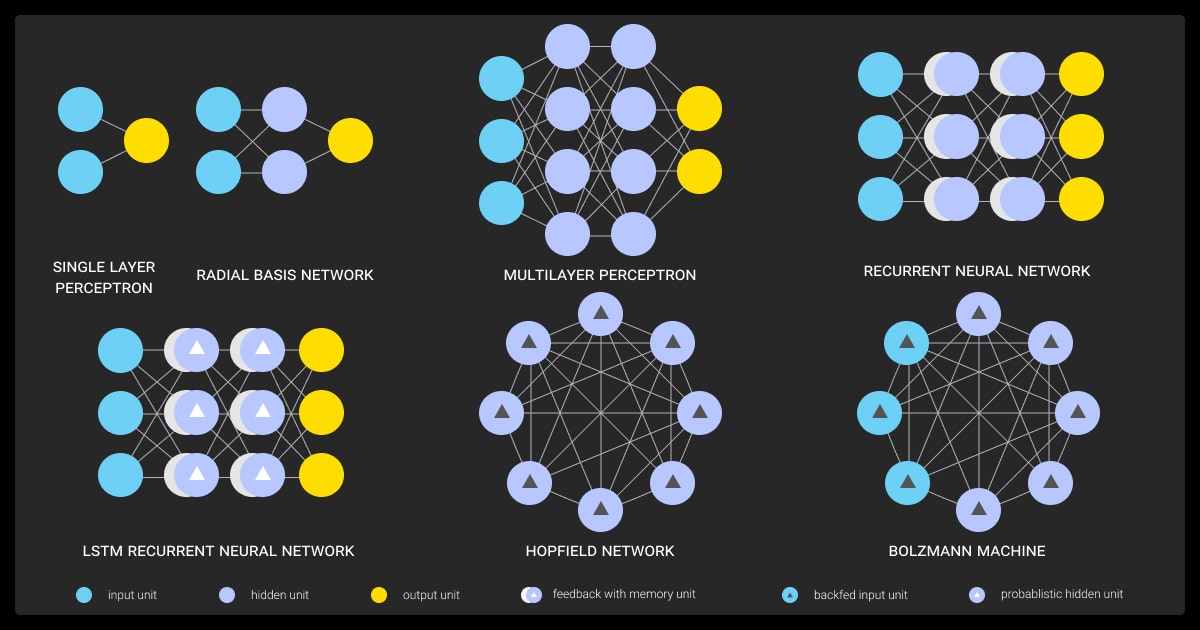
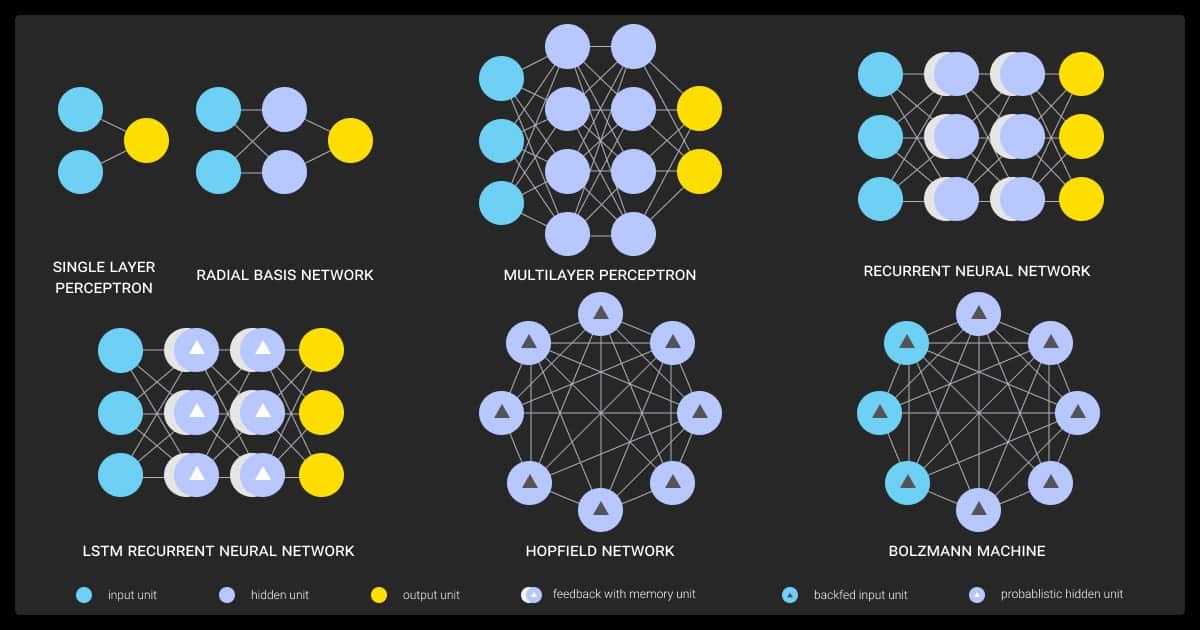
Every neural network architecture is composed of input layers, hidden layers, and output layers. But how these are wired determines the machine’s “talent.”
1. Feedforward Neural Networks (FNN)
The simplest form of the digital brain. Information moves in one direction—forward. It’s the “straight-A student” of the AI world: predictable and great for basic classification tasks, but it lacks the “memory” needed for complex sequences.
2. Recurrent Neural Networks (RNN)
Unlike the FNN, an RNN has a feedback loop. It can remember what happened a split second ago. This makes it the go-to architecture for anything involving sequences, like speech recognition or time-series forecasting. However, they have a short fuse; they tend to forget things that happened too far back in the conversation.
3. The Transformer: The King of Modern AI
If you’ve used ChatGPT, you’ve interacted with a Transformer architecture. What makes this neural network architecture revolutionary is its “attention mechanism.” It doesn’t look at data sequentially; it looks at the whole picture at once and decides which parts are most important. It’s why AI can now write poetry and code with frightening fluency.
The Editorial Perspective: The Cost of Architecture
We often talk about the brilliance of AI, but we rarely discuss the environmental and financial cost of these structures. Training a state-of-the-art neural network architecture can cost millions of dollars in electricity and cloud computing fees. As an industry, we need to shift our focus from “How big can we make it?” to “How efficient can we make it?” The future of AI isn’t just about power; it’s about elegant, sustainable design.
Choosing Your Blueprint: A Practical Guide
How do you decide which neural network architecture to use for your project? It comes down to the nature of your data:
-
If your data is a grid (Images/Video): Lean toward Convolutional Neural Networks (CNNs). They are built to recognize spatial patterns.
-
If your data is a sequence (Text/Audio): Transformers are the gold standard, though RNNs still have a place in low-power, real-time applications.
-
If your data is tabular (Spreadsheets/Sales logs): Sometimes, you don’t even need a deep neural network. A simple Random Forest or Gradient Boosting model might outperform a complex AI architecture with a fraction of the cost.
What No One Tells You: Hyperparameter Tuning

The “shape” of your neural network architecture isn’t just about the number of layers. It’s about the “hyperparameters”—the tiny knobs and dials like learning rates, dropout layers, and activation functions. An architecture is like a high-performance engine; even if you have the best parts, if the timing is off by a millisecond, the whole thing stalls.
The Future: Neural Architecture Search (NAS)
The most exciting (and slightly terrifying) development is AI that designs its own AI. Neural Architecture Search (NAS) is a process where an algorithm tests thousands of different structural combinations to find the most efficient neural network architecture for a specific task. We are reaching a point where humans provide the goal, and the AI builds the brain it needs to get there.
Final Thought
The neural network architecture is more than just a technical choice; it is a philosophy of how we process information. Whether you are building a simple recommendation engine or the next viral chatbot, remember that the structure dictates the soul of the machine. Build with intent, prioritize efficiency over hype, and never assume that “bigger” means “better.”