Data Augmentation The Art of Teaching Machines to Imagine
Imagine spending months and thousands of dollars collecting 10,000 images of rare vintage cars, only for your AI model to fail because the sun was hitting the windshield at a slightly different angle. It’s frustrating, right?
The reality is that neural networks are incredibly literal. If they haven’t seen a “tilted” car, they don’t know it’s a car. This is where data augmentation steps in—not as a mere technical trick, but as a fundamental shift in how we build intelligence. It is the process of synthetically expanding your dataset by creating modified versions of existing data. Instead of buying more data, you’re teaching your model to “imagine” variations of what it already knows.
Beyond the Copy-Paste: Why Data Augmentation is Non-Negotiable
In the early days of machine learning, the mantra was “more data is better.” While true, it ignored the logistical nightmare of data labeling. Data augmentation flips the script. It allows developers to increase the diversity of their training sets without the overhead of manual collection.
But it’s not just about volume. The real magic lies in regularization. When you apply data augmentation, you are essentially forcing the model to stop memorizing the training data (overfitting) and start learning the underlying patterns. It’s the difference between a student who memorizes a textbook and a student who actually understands the logic behind the math problems.
The Hidden Cost of “Clean” Data

We often think clean, perfect data is the goal. Paradoxically, AI models trained on “perfect” data are fragile. They break the moment they hit the “messy” real world. Data augmentation introduces “controlled noise,” making the model resilient to shadows, rotations, and background clutter.
The Toolkit: Essential Data Augmentation Techniques
While the concept sounds futuristic, the execution often involves clever geometric and color transformations. Depending on your niche—be it computer vision or natural language processing—the tools vary.
1. Geometric Transformations (The Visual Shift)
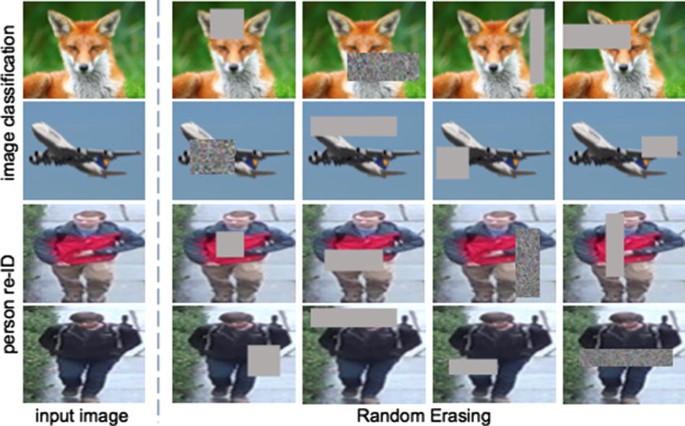
This is the bread and butter of image-based AI. By flipping, rotating, or cropping images, you teach the model that an object’s identity doesn’t change based on its orientation.
-
Flipping: Horizontal flips are great for objects, but vertical flips can be “illegal” for things like text or landscapes.
-
Rotation: Essential for aerial or satellite imagery where “up” is relative.
-
Zooming/Scaling: Helping the model identify objects whether they are close-up or far away.
2. Color Space Manipulations
Real-world lighting is never consistent. By adjusting brightness, contrast, and saturation, you prevent your model from becoming “allergic” to low-light conditions or overexposed environments.
3. Advanced Synthesis: SMOTE and GANs
For tabular data or highly specialized fields like medical imaging, we move beyond simple flips. SMOTE (Synthetic Minority Over-sampling Technique) is a lifesaver for imbalanced datasets, creating “bridge” data points between existing ones. Meanwhile, GANs (Generative Adversarial Networks) can literally dream up entirely new, realistic data points that never existed in the first place.
Reality Check: More Data Can Sometimes Mean More Problems
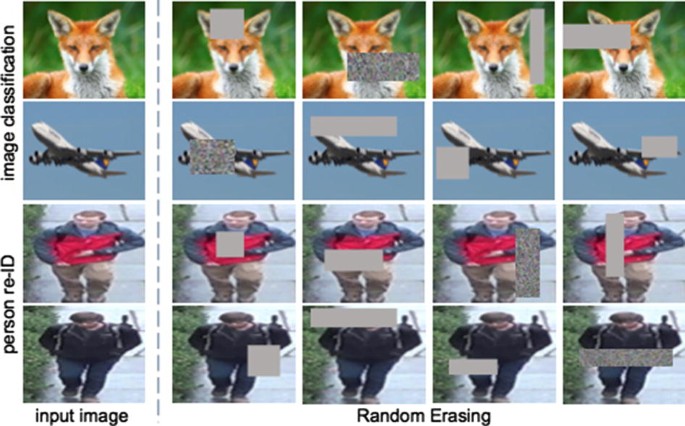
Here is a hard truth: Data augmentation cannot fix bad data. If your original 100 images are mislabeled or biased, augmenting them into 1,000 images just gives you 1,000 pieces of biased junk. There’s a common misconception that augmentation is a “magic wand” for small datasets. In reality, it is an amplifier. It amplifies the features present in your data. If those features are irrelevant or wrong, your model will simply become “confidently incorrect” at a much larger scale.
The Secret Sauce: Domain-Specific Augmentation
The biggest mistake beginners make is applying every augmentation technique available. This is a recipe for disaster.
Augmentation Must Respect Reality
If you are building a model to recognize road signs, flipping an “Exit” sign horizontally makes it unreadable and teaches the model something that will never happen in real life. In Natural Language Processing (NLP), replacing words with random synonyms (Back Translation) is powerful, but if you lose the context, you lose the meaning.
Actionable Tip: Always visualize your augmented data before training. If a human can no longer recognize the object after augmentation, your AI won’t either.
The Future of Synthetic Intelligence
As we move toward a world where data privacy becomes stricter (think GDPR and the decline of third-party cookies), the ability to generate high-quality synthetic data through augmentation will be the ultimate competitive advantage. We are moving away from “Big Data” and toward “Smart Data.”
Data augmentation is the bridge between a laboratory experiment and a product that works in the hands of a user. It turns a fragile algorithm into a robust solution capable of navigating the chaos of reality.