The Dropout Layer Why Forgetting is the Key to Smarter AI
Imagine a championship sports team where one superstar player does 90% of the work. Every time the ball is in play, everyone just passes it to him. On paper, they win. But the moment that superstar gets injured or a different opponent figures out his specific rhythm, the entire team collapses because no one else knows how to lead.
In the world of machine learning, this “superstar dependency” is a death sentence called overfitting. A dropout layer is the coach who intentionally benched that superstar during practice, forcing every other player to step up, take responsibility, and learn to play the game independently. It is the art of intentional imperfection to achieve long-term brilliance.
The Reality Check: Dropout is Not a Data Filter
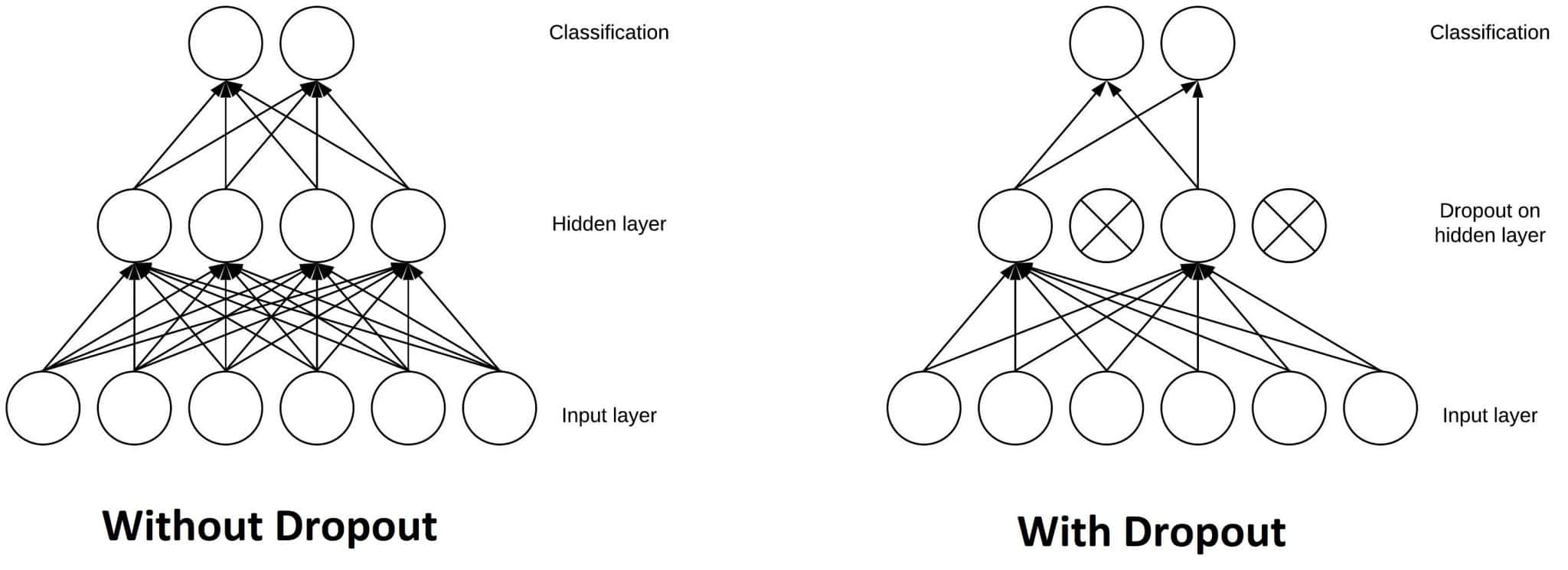
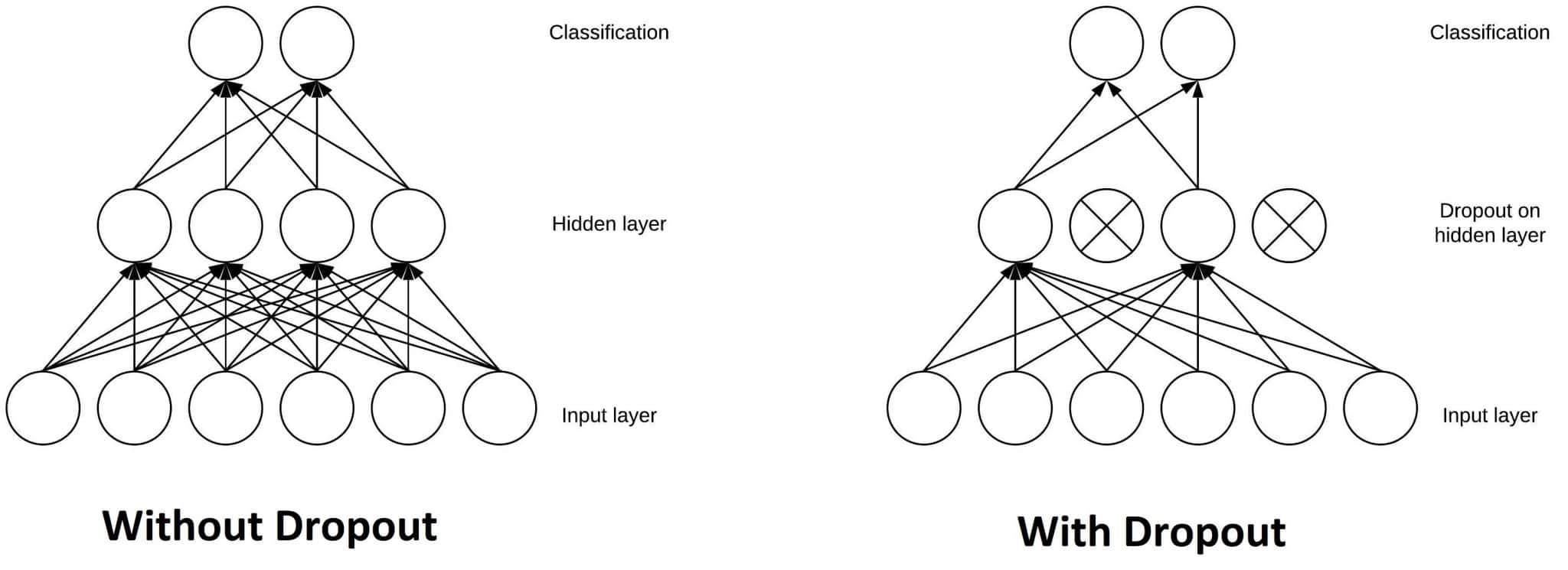
A common misconception among beginners is that a dropout layer is used to “clean” or “filter” bad data. That is flat-out wrong. Dropout doesn’t touch your input data. Instead, it temporarily “kills” a random selection of neurons within the network during the training phase. It isn’t about removing noise from the outside; it’s about preventing the internal architecture from becoming too lazy or too co-dependent on specific pathways.
The Mechanics of Chaos: How Dropout Actually Works
At its core, a dropout layer is a remarkably simple concept with profound mathematical consequences. During each iteration of training, the layer randomly sets a fraction of input units to zero with a frequency of p (the dropout rate).
The “Co-adaptation” Problem

Without a dropout layer, neurons often develop “co-adaptations.” This sounds sophisticated, but it’s actually a failure. It means neuron B only works well if neuron A gives it a specific signal. They become a clique. If you remove neuron A, neuron B becomes useless. By randomly dropping neurons, you break these cliques. Each neuron is forced to learn features that are useful in conjunction with many different random subsets of other neurons.
Training vs. Inference
One thing that is rarely discussed in generic tutorials is the behavior of dropout during “Inference” (when the model is actually being used by a customer). During inference, we don’t drop anything. We want the full power of the team. However, because the weights were trained under the “stress” of dropout, they are now more robust and generalized. We simply scale the weights to account for the fact that more neurons are active than during training.
The Editorial Perspective: Is Dropout Always the Answer?
While the industry treats the dropout layer like a magic pill for overfitting, I would argue that it’s often used as a bandage for poor data quality. If your model is overfitting, your first instinct should be to look at your dataset. Are you training on 100 images and expecting it to recognize a million? Dropout can help, but it cannot fix a fundamental lack of information. We should view dropout as a fine-tuning tool, not a substitute for a robust data pipeline.
Practical Implementation: The “Goldilocks” Rate
How much should you drop? This is where the science meets the art.
-
The 0.5 Standard: For hidden layers, a dropout rate of 0.5 (dropping 50% of neurons) is often the starting point. It provides the maximum amount of “chaos.”
-
Input Layers: Be careful here. Dropping too much from the input layer (usually 0.1 or 0.2 is max) can lead to the model losing the very signal it’s trying to learn.
-
Deep vs. Shallow: The deeper your network, the more valuable a dropout layer becomes. In shallow networks, you might actually hinder learning before the model even grasps the basics.
Beyond the Basics: Spatial Dropout and Alpha Dropout
Most people stop at the standard dropout layer, but the field has evolved.
-
Spatial Dropout: If you are working with Convolutional Neural Networks (CNNs), standard dropout might not be enough because adjacent pixels are highly correlated. Spatial dropout drops entire feature maps instead of individual pixels, forcing the AI to look at the whole object rather than tiny patches.
-
Alpha Dropout: Specifically designed for Self-Normalizing Neural Networks (SNNs), this version maintains the mean and variance of the inputs, ensuring that the “forgetting” process doesn’t break the mathematical stability of the network.
The Human Element: Training for Resilience
In a way, the dropout layer reflects a very human psychological truth: we learn best when things aren’t perfectly predictable. If every exam you ever took had the exact same questions, you wouldn’t learn the subject; you’d learn the exam. By introducing randomness, we force the machine to understand the “logic” of the world rather than the “luck” of the data.
Final Thought
Incorporating a dropout layer is an admission that our models are prone to vanity—they want to look perfect on the training data they know. By forcing them to work with “missing pieces,” we build an AI that can handle the messy, unpredictable, and imperfect reality of the real world. Next time your model is failing to generalize, don’t just add more data—try taking some of the brain away.