
The Simplicity Trap Beyond the Underfitting Issue in Machine Learning
In the frantic race to build the next groundbreaking AI, most developers are terrified of “Overfitting”—the digital equivalent of a student who memorizes the textbook but fails the exam because they didn’t understand the concepts. But there is a quieter, more stubborn ghost in the machine that often goes ignored: the underfitting issue.
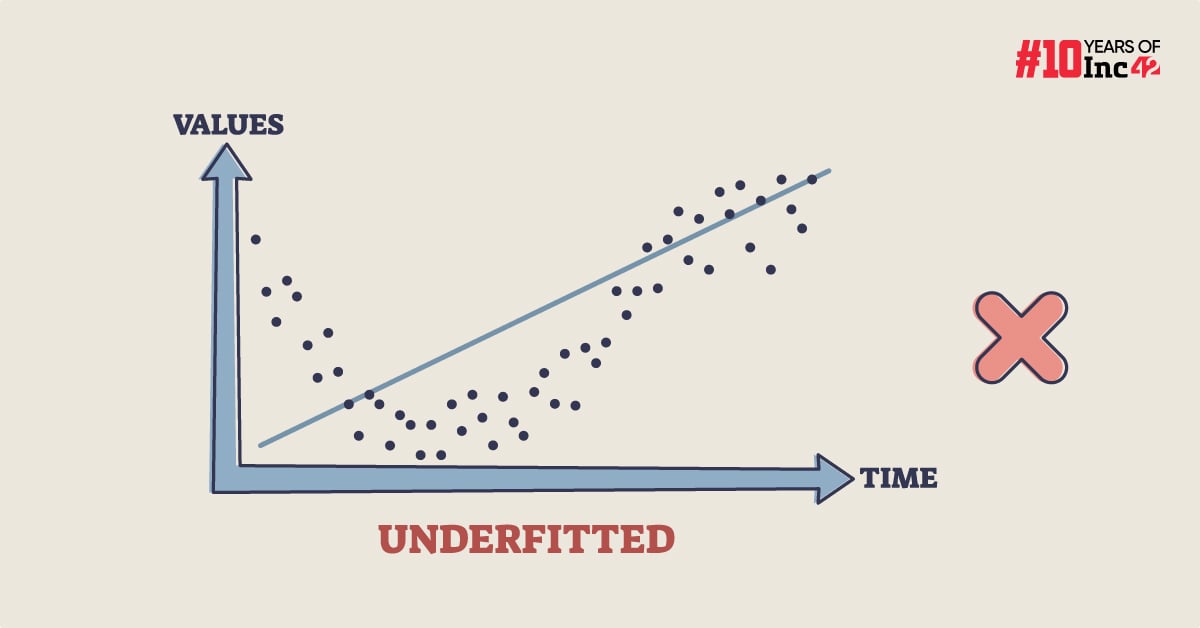
While overfitting is a problem of being too specific, underfitting is a problem of being tragically broad. It occurs when a model is so simple that it fails to capture the underlying trend of the data. If an overfitted model is a student who memorizes too much, an underfitted model is the one who didn’t even bother to open the book, assuming that every question can be answered with a “yes” or “no.”
The Red Flags: How to Spot an Underfitting Issue
You can’t fix a problem you don’t recognize. The most frustrating thing about the underfitting issue is that it disguises itself as “stable” performance. Unlike overfitting, where you see a huge gap between training and testing scores, underfitting is consistently bad across the board.
If your training error is high and your validation error is equally high, you aren’t looking at a data problem—you’re looking at a capacity problem. The model has high “bias.” It has made up its mind about the world before it even saw the data, and no amount of evidence is changing its rigid, simplistic worldview.
Why Complexity is Not a Dirty Word

In many areas of life, simplicity is a virtue. In machine learning, simplicity can be a cage.
There is an editorial tendency among data scientists to obsess over Occam’s Razor—the idea that the simplest explanation is usually the right one. However, if you use a linear regression model to predict something as chaotic as the stock market or human speech patterns, you are bringing a knife to a nuclear physics fight.
The Architecture of Failure
An underfitting issue usually stems from one of three structural weaknesses:
-
Model Under-capacity: Using a linear model for non-linear data.
-
Feature Deficiency: You aren’t giving the model enough “clues” to solve the mystery.
-
Over-regularization: You’ve tied the model’s hands so tightly with penalties (like L1 or L2) that it can’t move enough to fit the data points.
The Hidden Danger: The “More Data” Fallacy
Reality Check: There is a common misconception that “more data cures all.” If your model is underfitting, adding more data is actually a waste of cloud computing budget.
Think of it this way: if you are trying to map the geography of the Earth using only a flat piece of paper, adding more satellite photos of mountains won’t make the paper 3D. You don’t need more photos; you need a globe. When dealing with an underfitting issue, the solution is almost always to increase the complexity of the model or the quality of the features, not the volume of the rows in your CSV file.
Practical Tactics to Break the Chains of Underfitting
If you’ve identified that your model is underperforming due to simplicity, here are the levers you need to pull:
1. Feature Engineering (The Rare Art)
This is the most “human” part of data science. Instead of just feeding raw numbers into the machine, create “interaction features.” If you are predicting house prices, don’t just give the AI “Square Footage” and “Year Built.” Give it “Renovated Age”—a combined feature that tells a much more complex story.
2. Increasing Model Complexity
Sometimes, you just need a bigger brain. If you’re using a shallow neural network, add more layers. If you’re using a decision tree that only goes three levels deep, let it grow. Moving from a linear kernel to a polynomial or RBF kernel in an SVM can often solve an underfitting issue in minutes.
3. Reducing Regularization
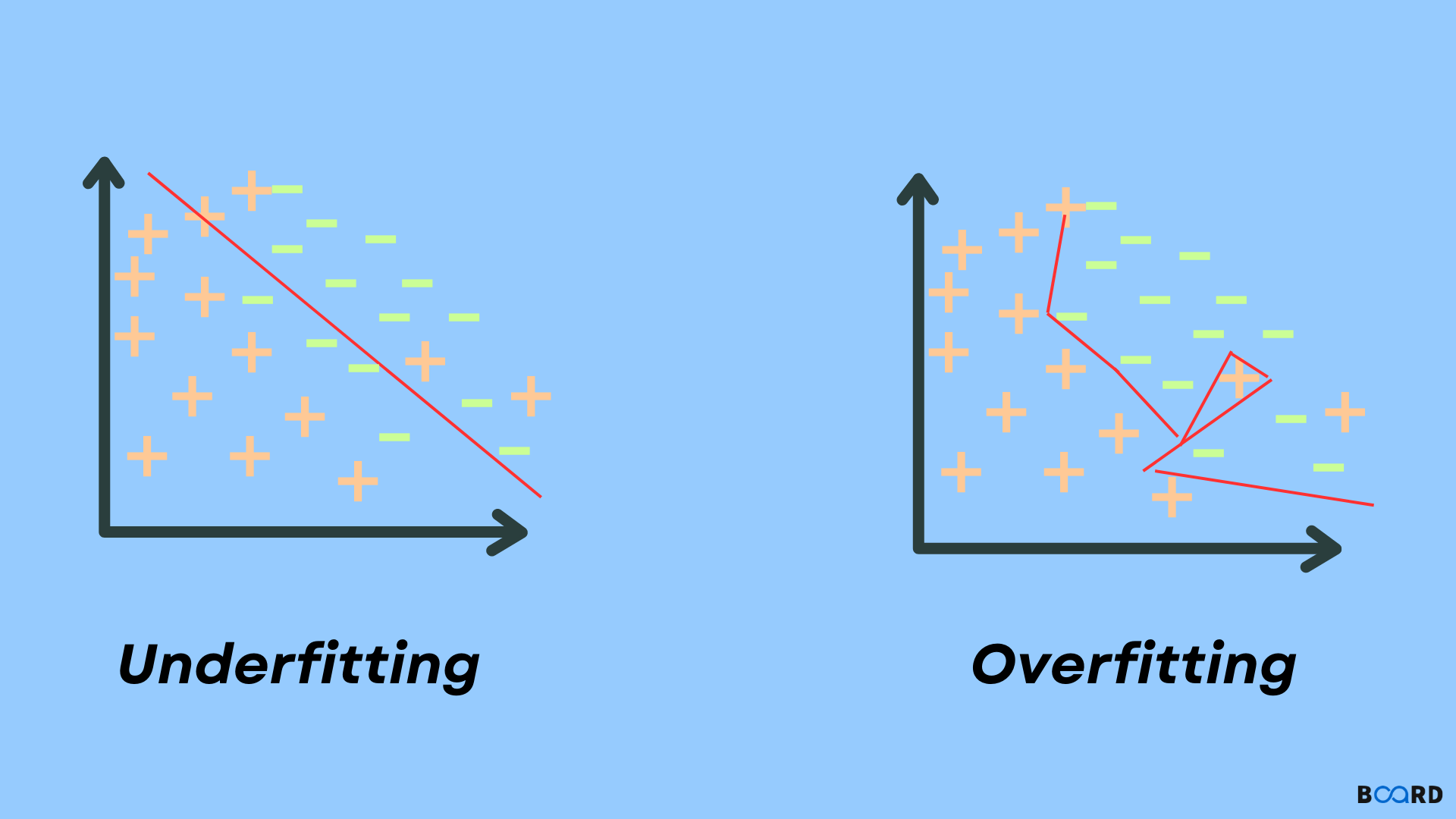
Regularization is meant to prevent overfitting, but too much of it will strangle your model’s ability to learn. If your “Lambda” or “Alpha” parameters are too high, dial them back. Give the model some room to breathe and make a few mistakes in training so it can eventually find the pattern.
The Ethical and Business Cost of Simplicity
In the business world, an underfitted model is often more dangerous than an overfitted one. Why? Because an overfitted model usually breaks spectacularly and obviously during testing. An underfitted model, however, provides a “comfortably mediocre” result that might be deployed into production without anyone noticing it’s missing 40% of the potential insights.
In healthcare or finance, an underfitting issue means missing the subtle nuances of a patient’s symptoms or the quiet warning signs of a market crash because the model was told to look for “general trends” only.
Finding the “Goldilocks” Zone
The journey of machine learning is the search for the “Sweet Spot”—the narrow valley between the rigid stubbornness of underfitting and the hallucinatory noise of overfitting.
To solve the underfitting issue, you must be willing to let your model be complex. You must trust the math enough to let it explore the non-linear, messy, and often contradictory nature of real-world data. Don’t let the fear of overfitting turn your AI into a digital simpleton.