Semantic Segmentation: Teaching Machines to See the World, One Pixel at a Time
Imagine showing a picture of a crowded street to a toddler. They can point out a car, a person, or a dog. But if you ask them to trace the exact silhouette of that dog—down to every stray hair—against the pavement, they might struggle. For a long time, computers struggled too. They could put a box around a car, but they couldn’t tell where the car ended and the road began.
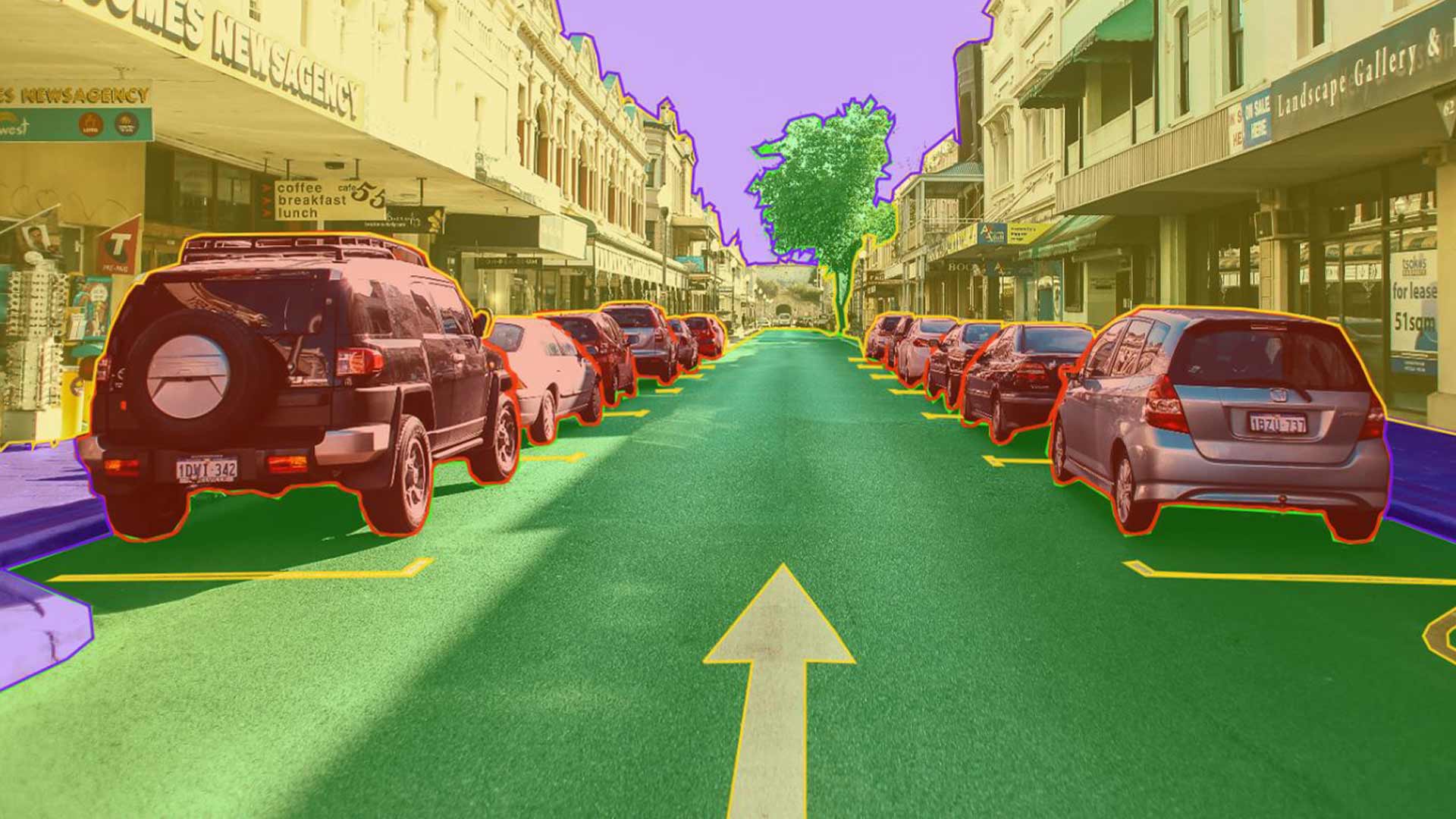
Semantic segmentation is the technology that finally gave AI a pair of scissors and the patience of a saint. It is the process of linking each individual pixel in an image to a class label. It’s not just “there is a tree in this box”; it’s “these specific 45,600 pixels are the tree.”
Why Bounding Boxes Aren’t Enough Anymore
In the early days of Computer Vision, we were obsessed with object detection. We were happy if an algorithm could draw a rectangle (a bounding box) around a pedestrian. It was a “good enough” approach for basic surveillance. But “good enough” is a death sentence in modern applications like autonomous driving or robotic surgery.
If a self-driving car only sees a bounding box around a cyclist, it doesn’t know exactly how close the cyclist’s elbow is to the side mirror. Semantic segmentation provides a dense, pixel-wise map. By assigning a category to every pixel—road, sidewalk, sky, vehicle—the machine gains a granular understanding of its environment. It stops seeing a collection of shapes and starts seeing a continuous, navigable world.
The Architecture: How the Magic Happens
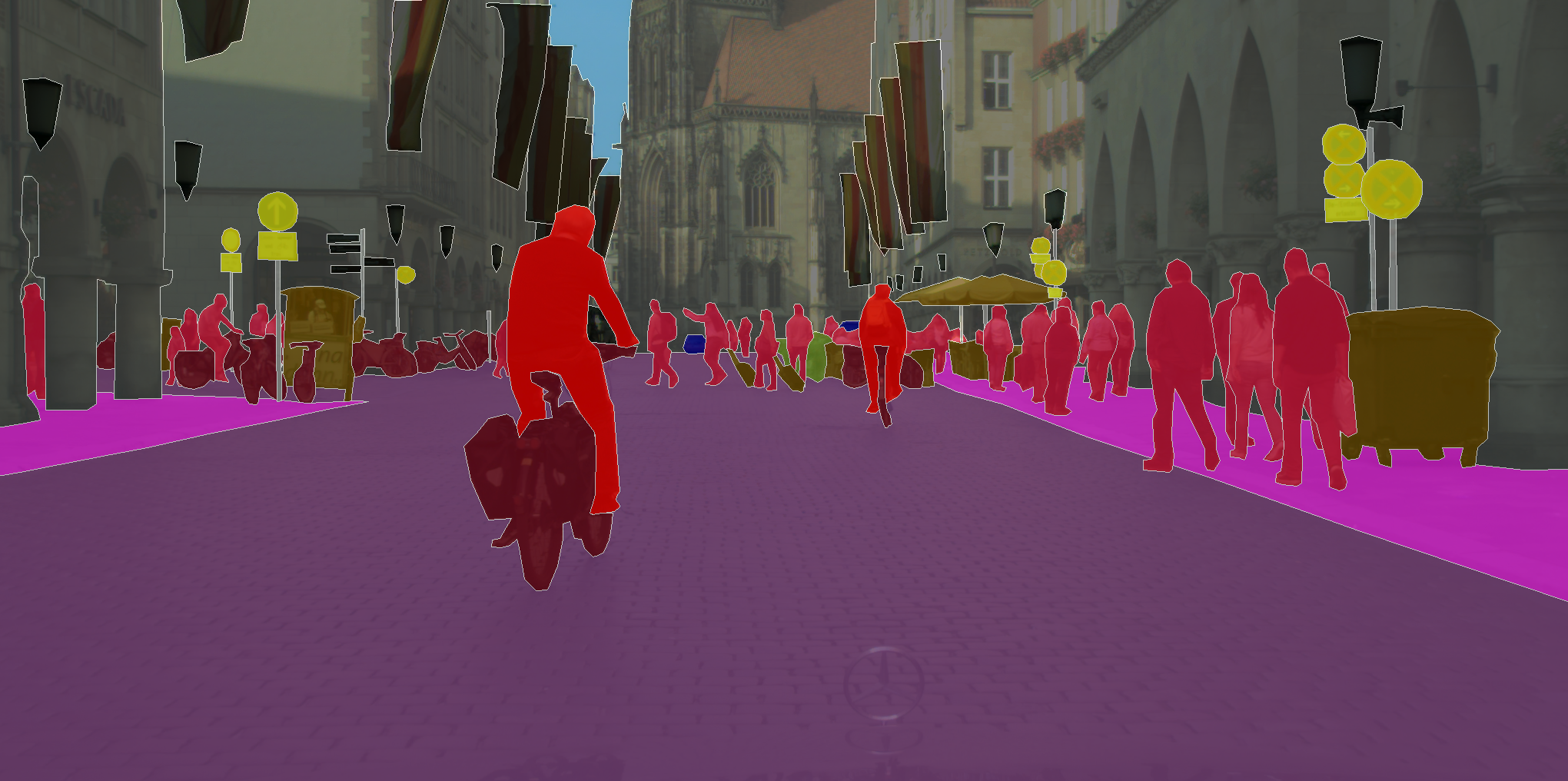
To achieve this level of precision, we don’t use standard neural networks. We use specialized architectures designed to preserve spatial information.
1. Fully Convolutional Networks (FCNs)
The FCN was a game-changer. Traditional networks end with “dense” layers that flatten the image into a list of numbers, losing all sense of “where” things are. FCNs replace these with more convolutional layers, allowing the network to output a map that matches the input image size.
2. The U-Net (The Medical Marvel)
Originally designed for biomedical image segmentation, the U-Net features a “contracting” path to capture context and a symmetric “expanding” path that enables precise localization. It looks like a “U,” and it’s remarkably efficient when you have limited data but need extreme accuracy.
3. DeepLab and Atrous Convolution
Developed by Google, DeepLab uses “atrous” (or dilated) convolutions. Think of this as a filter with holes in it. It allows the network to see a wider area of the image without losing the fine details of the pixels, solving the trade-off between “seeing the forest” and “seeing the trees.”
Reality Check: The “Perfect Mask” Myth
There is a common misconception that semantic segmentation is a solved problem and that every output is a perfect, crisp mask. It isn’t. In reality, these models often struggle with “boundary noise.” Objects with thin structures (like power lines, hair, or bicycle spokes) are notoriously difficult for AI to segment perfectly. Furthermore, semantic segmentation lacks “instance” awareness. If you have two dogs standing next to each other, a semantic segmentation model will just see one big blob of “Dog” pixels. It doesn’t inherently know where the first dog ends and the second begins. For that, you’d need Instance Segmentation, a more complex cousin of the tech we’re discussing today.
Real-World Applications: More Than Just Cool Maps
While it looks great in tech demos, semantic segmentation is doing the heavy lifting in industries you might not expect:
-
Precision Agriculture: Drones use segmentation to distinguish between crops and weeds. Instead of spraying an entire field with chemicals, farmers can target only the pixels identified as “weed,” reducing costs and environmental impact.
-
Virtual Backgrounds: That Zoom background that hides your messy room? That’s semantic segmentation in real-time. The AI has to constantly decide which pixels are “human” and which are “wall.”
-
Medical Imaging: Radiologists use these models to highlight tumors in MRI scans. When a surgeon needs to know the exact volume of a mass, pixel-level data is the only data that matters.
The Editorial Take: The Data Bottleneck
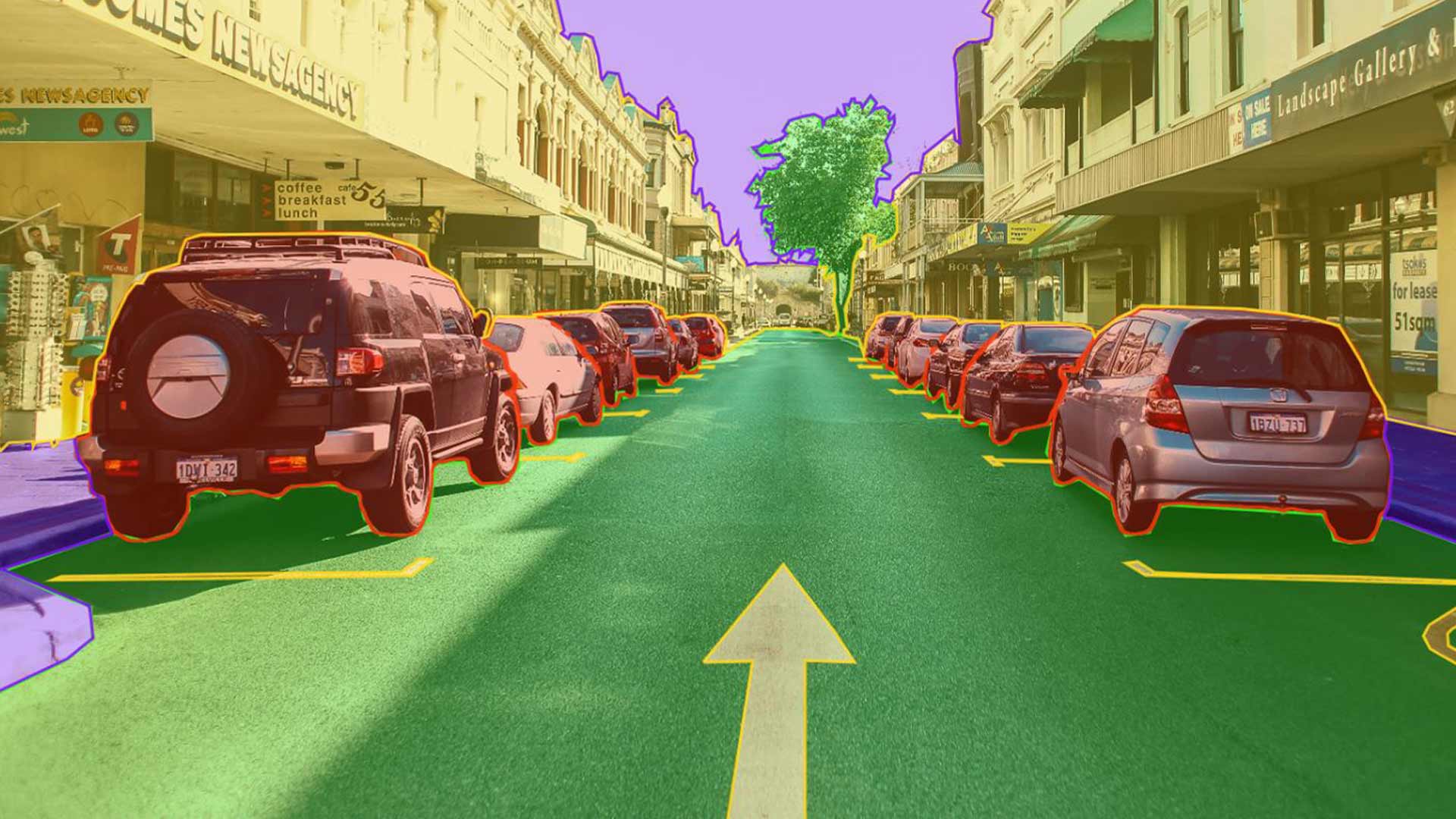
Here is the uncomfortable truth: building a great semantic segmentation model is a logistical nightmare. Unlike object detection, where you just draw a box, segmenting an image requires a human annotator to painstakingly “paint” over every object in thousands of photos.
We are currently seeing a shift toward Weakly Supervised and Self-Supervised Learning. The future isn’t about hiring more people to click on pixels; it’s about creating AI that can learn the difference between a sidewalk and a street just by “watching” hours of video, without a human holding its hand.
How to Get Started (The Practical Path)
If you’re a developer looking to dive in, don’t start from scratch.
-
Use Pre-trained Models: Start with models trained on the COCO or Cityscapes datasets.
-
Pick Your Framework: PyTorch and TensorFlow both have robust libraries (like
segmentation_models) that offer plug-and-play architectures. -
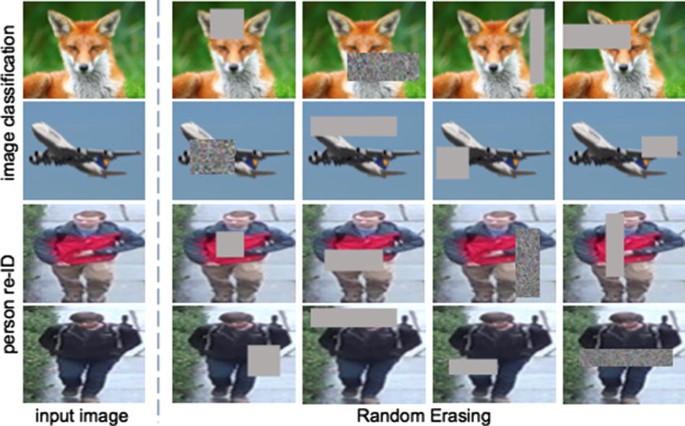
Focus on Data Augmentation: Since pixel-perfect labels are rare, use techniques like rotation, scaling, and color jittering to make your model more resilient to messy, real-world images.
In the end, semantic segmentation is about moving AI from “guessing” to “knowing.” It’s the difference between seeing a blur and seeing the world in high definition. As hardware gets faster and our algorithms get leaner, we’re moving toward a world where every camera—from your phone to the drone over a farm—understands exactly what it’s looking at, down to the very last pixel.