Decoding the Chaos: Why Text Classification is the Silent Engine of Modern AI
Every single second, the internet coughs up about 3.5 million emails, thousands of tweets, and millions of customer reviews. If you tried to read them all to find out if your customers were happy or if your server was crashing, you wouldn’t just be tired—you’d be obsolete. We are drowning in words, yet starving for meaning.
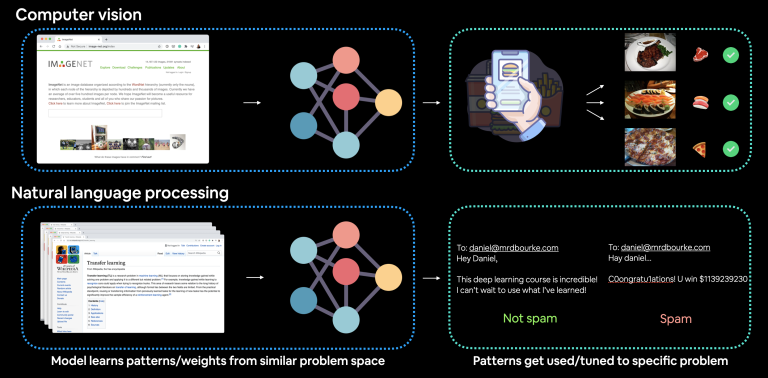
This is where text classification steps in. It is the invisible librarian of the digital age, a process where AI assigns predefined categories to free-text. Whether it’s your Gmail knowing exactly what is “Spam” or a trading bot sensing a market crash from a single headline, this technology is the bridge between raw noise and actionable intelligence.
The Anatomy of Meaning: How Machines Read

In the old days, we taught computers to “read” like a rigid dictionary. If a text contained the word “bad,” it was classified as negative. But language is slippery. “That concert was the bomb” means something very different than “There is a bomb on the plane.”
Modern text classification has moved past simple keyword matching. It now utilizes Natural Language Processing (NLP) to understand context, sentiment, and even sarcasm. It breaks down sentences into vectors—mathematical coordinates in a multi-dimensional space—where words with similar meanings sit close to each other. When a new piece of text arrives, the model looks at where it lands in this “galaxy of meaning” and labels it accordingly.
The Reality Check: AI Doesn’t Actually “Understand” You
There is a massive misconception that because an AI can classify a legal document or a medical report, it “understands” the content. It doesn’t. AI is a world-class pattern matcher. It recognizes statistical relationships between characters and sequences. If you feed a text classification model garbage data, it will give you highly confident, categorized garbage. It lacks “common sense”; it only possesses “data sense.”
The Modern Toolkit: From Naive Bayes to Transformers
If you’re building a classifier today, you have choices that range from “quick and dirty” to “state-of-the-art”:
-
Classical Machine Learning: Algorithms like Naive Bayes or Support Vector Machines (SVM) are the reliable workhorses. They are fast, cheap to run, and surprisingly effective for simple tasks like spam detection.
-
Deep Learning: CNNs and RNNs dominated for a while, treating text like a sequence of signals.
-
The Transformer Revolution: This is the current gold standard. Models like BERT and RoBERTa don’t just read left-to-right; they look at the entire sentence at once (Self-Attention). This allows the model to realize that the word “bank” in “river bank” is different from “investment bank” based on the words surrounding it.
Editorial Opinion: Everyone wants to use the biggest, shiniest BERT model for everything. Don’t. If a simple Linear Regression model gets you 95% accuracy on your support tickets, don’t burn $500 a month in GPU costs just to get to 96% with a Transformer. ROI matters more than “cool” tech.
Beyond Sentiment: Practical Use Cases You Might Miss
While most people think of text classification as just “Happy vs. Sad” (Sentiment Analysis), its utility goes much deeper:
-
Intent Detection: In chatbots, this identifies if a user wants to buy something, complain about something, or just talk to a human.
-
Topic Labeling: News aggregators and research platforms use this to organize millions of articles into niches like “Quantum Physics” or “Macroeconomics” automatically.
-
Content Moderation: Social media platforms use high-speed classifiers to flag hate speech or toxic behavior before it even hits the public feed.
-
Language Identification: Instantly detecting which of the 7,000+ human languages a text is written in so it can be routed to the right translator.
The Hard Part: Garbage In, Garbage Out
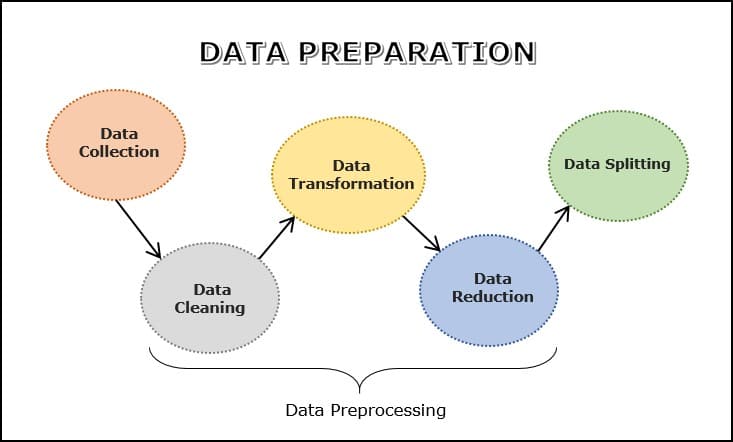
The secret sauce of successful text classification isn’t the code—it’s the data. Most developers spend 10% of their time coding and 90% cleaning their dataset.
If your training data is biased, your classifier will be biased. If your labels are inconsistent, your model will be confused. This is often referred to as “Data Centric AI.” Instead of obsessing over a better algorithm, spend that time making sure your “Spam” folder actually only contains spam.
Actionable Steps for Implementation
Ready to turn your pile of text into a goldmine of insights? Here is the roadmap:
-
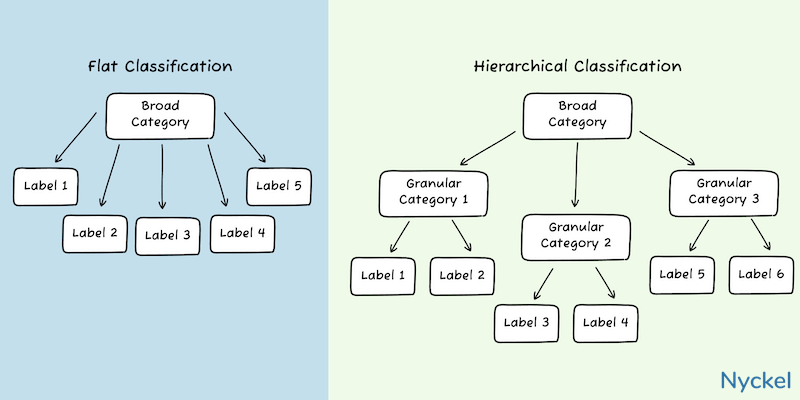
Define Your Taxonomy: Don’t just say “I want to categorize feedback.” Be specific. Do you want to categorize by Product Feature, Pricing, or Usability?
-
Start with a Baseline: Use a simple library like Scikit-learn to build a basic model in an afternoon. This is your “floor.”
-
Scale with Hugging Face: When you’re ready for the heavy lifting, use the Hugging Face library to fine-tune a pre-trained Transformer model on your specific data.
-
Monitor for Drift: Language changes. Slang changes. A classifier that worked in 2023 might fail in 2026 because the way people talk has evolved. Regularly re-test your model against fresh data.