Sentiment Analysis: The Art of Teaching Machines to Feel the Room
Data is the new oil, but most of it is remarkably “noisy.” We are currently drowning in a sea of tweets, reviews, and comments that are emotionally charged, deeply sarcastic, and often contradictory. If you treat this data as just a collection of keywords, you aren’t just missing the point—you are losing money.
Sentiment analysis is the bridge between cold, hard data and the messy reality of human emotion. It is a subfield of Natural Language Processing (NLP) that identifies, extracts, and quantifies the emotional states expressed in text. At its core, it’s about answering one deceptively simple question: How does this person actually feel?
The Fallacy of the “Thumbs Up”
For years, businesses relied on star ratings. A four-star review meant success; a one-star review meant failure. But stars are blunt instruments. A customer might give four stars but leave a comment saying, “The product is great, but the shipping delay made me want to scream.”
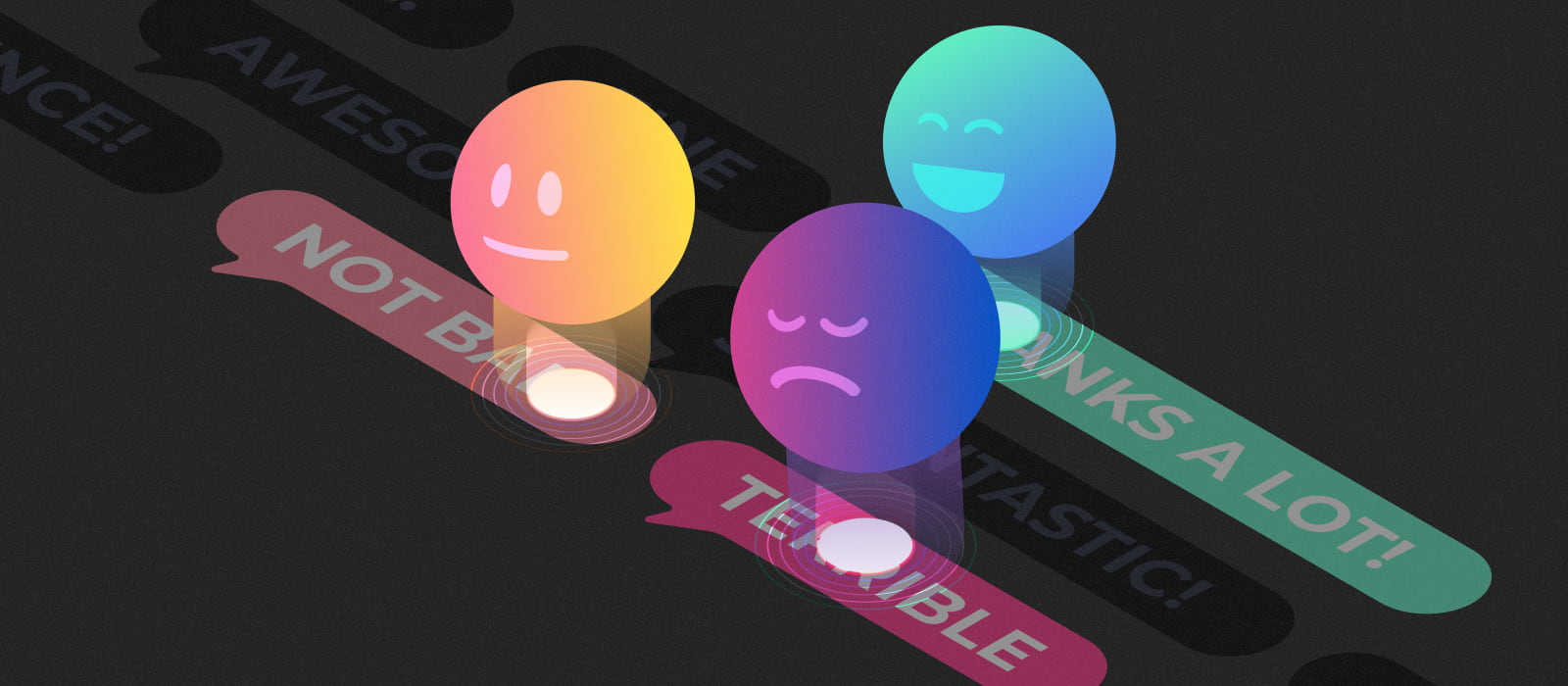
Traditional metrics miss that “scream.” Sentiment analysis, however, dives into the text to extract the nuance. It recognizes that “great” is positive, but “want to scream” is a massive red flag for the logistics department. By categorizing text into positive, negative, or neutral—and increasingly into specific emotions like anger, joy, or frustration—businesses can finally move past the binary “like vs. dislike” mentality.
How the Engine Works: From Rules to Deep Learning
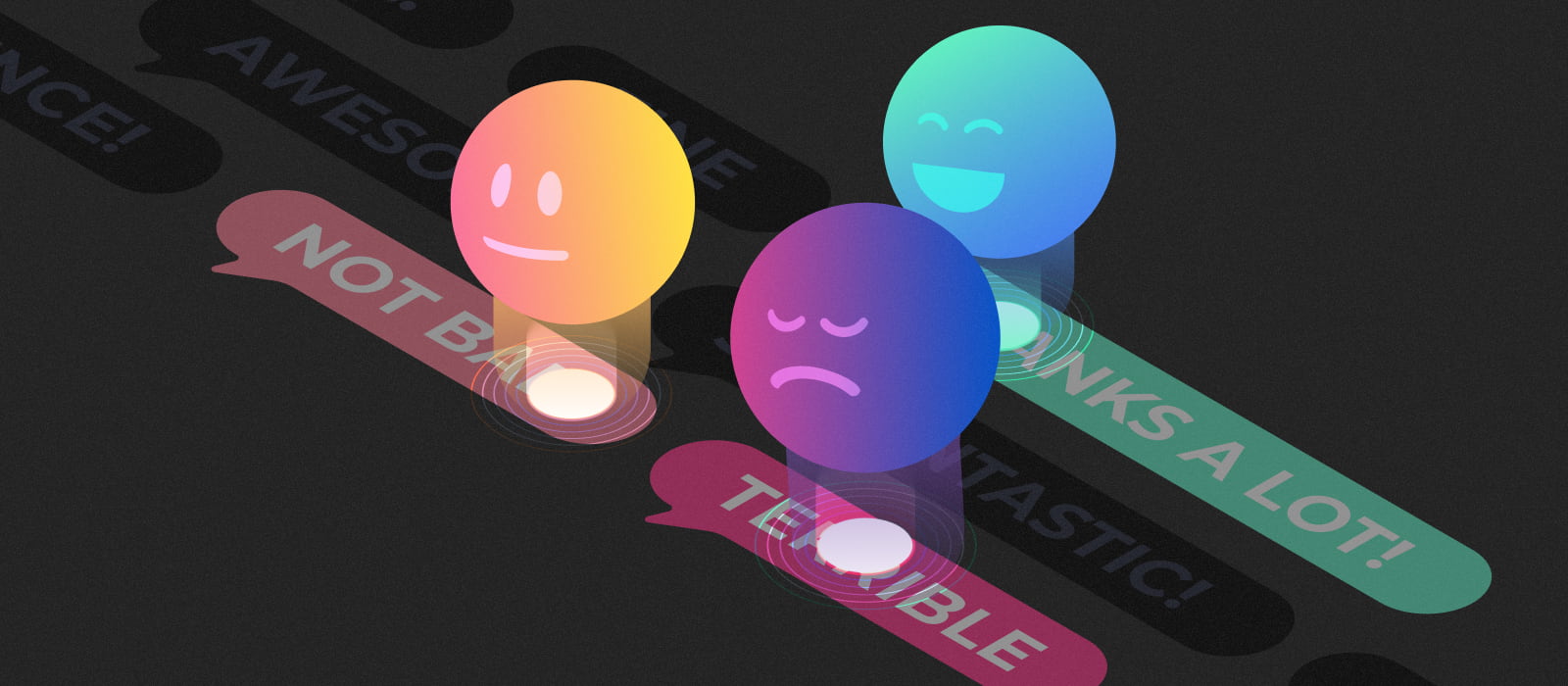
Understanding sentiment analysis requires looking under the hood. There are generally three ways machines learn to “feel”:
1. Rule-Based Systems
These are the old-school librarians of the AI world. They use a dictionary of words tagged with a sentiment score (e.g., “excellent” = +0.9, “horrible” = -0.9). If the total score of a sentence is positive, the sentiment is positive. It’s fast and transparent, but it’s easily fooled. Tell a rule-based system “Not bad at all,” and it might get confused by the word “bad.”
2. Automatic (Machine Learning) Systems
Unlike rule-based systems, these don’t rely on manual definitions. They learn from experience. By feeding a model thousands of “angry” emails, it starts to recognize patterns that humans might not even notice. It looks at word proximity, frequency, and structure to predict the emotional outcome.
3. Hybrid Models
The gold standard. These systems combine the clinical accuracy of rules with the adaptive nature of machine learning. They are robust enough to handle the jargon of specific industries—like how “cracked” is bad for a phone screen but “cracked the code” is good for a software review.
Reality Check: The Sarcasm Problem
Here is the hard truth that many software vendors won’t tell you: AI is still remarkably bad at understanding sarcasm. If a customer tweets, “Oh great, another 3-hour flight delay, exactly what I wanted!”, most sentiment analysis tools will see the words “great” and “exactly what I wanted” and flag it as a glowing positive review.
The “Sarcasm Gap” remains one of the biggest hurdles in NLP. True sentiment isn’t found in individual words; it’s found in the friction between what is said and the context of the situation. Until AI can fully grasp irony, humans will still need to be the ultimate editors of the data.
Why Your Business is Currently “Emotionally Blind”
Most companies use sentiment analysis as a reactive tool—checking the weather after the storm has passed. But the real value lies in its proactive application:
-
Crisis Aversion: If sentiment regarding your brand suddenly drops by 20% on a Tuesday morning, you don’t wait for the news cycle to catch up. You find the source of the “negative” pixels immediately.
-
Product Development: Stop guessing what features to add. Use sentiment analysis to scan your competitors’ reviews. What are people complaining about in their products? That’s your opportunity.
-
Customer Support Prioritization: Not all tickets are created equal. An “angry” ticket from a high-value client should be routed to a human agent instantly, while a “neutral” query can wait for the chatbot.
Moving Beyond Positive and Negative

The future of the industry is moving toward Aspect-Based Sentiment Analysis (ABSA). Instead of giving a whole paragraph a single score, ABSA breaks it down.
Example: “The food was divine, but the waiter was incredibly rude.”
-
Aspect: Food -> Sentiment: Positive.
-
Aspect: Service -> Sentiment: Negative.
This granularity is what separates a generic marketing report from a strategic roadmap. It tells you exactly what to fix without breaking what’s already working.
Practical Steps to Implement Sentiment Analysis
If you want to stop guessing and start measuring, here is how you begin:
-
Define Your Source: Don’t try to analyze the whole internet. Start with your own customer support logs or a specific subreddit dedicated to your niche.
-
Clean the Data: Remove the “noise”—HTML tags, emojis (unless your tool can read them), and duplicate bot-generated posts.
-
Choose Your Depth: Do you just need a “vibe check” (Polarity), or do you need to know why they are mad (Aspect-Based)?
-
Human-in-the-loop: Always have a human audit a small percentage of the results to ensure the machine hasn’t missed a cultural shift or a new slang term.
In a world where everyone is shouting into the digital void, the brands that win are the ones that actually listen. Sentiment analysis isn’t just a tech buzzword; it’s the closest thing we have to a digital empathy machine.