Paraphrase Generation Teaching Machines the Art of Saying the Same Thing Differently
There is a specific kind of mental fatigue that hits when you have a brilliant idea but your vocabulary feels like a locked cage. We’ve all been there—staring at a paragraph that is technically correct but carries the grace of a brick. This frustration stems from the gap between our intent and our expression. It’s a psychological bottleneck that humans have struggled with for centuries, but for modern Artificial Intelligence, this bottleneck is becoming a playground for semantic exploration.
This is the world of paraphrase generation. It’s not just a tool for students looking to dodge a deadline; it is a sophisticated branch of Natural Language Processing (NLP) that attempts to solve one of the hardest problems in linguistics: how to decouple the meaning of a sentence from its structure.
The Evolution: From Simple Thesaurus Swapping to Semantic Understanding
In the early days of the internet, “paraphrasing” tools were notoriously bad. They operated on a primitive “synonym-replacement” logic. If you gave it the word “fast,” it gave you “quick.” If you gave it “bank,” it might give you “river edge” even if you were talking about money.
Modern paraphrase generation has left those dark ages behind. Thanks to Transformer architectures (the same tech behind ChatGPT), machines now look at the entire context of a paragraph. They don’t just swap words; they rebuild the entire logical architecture of the thought.
The “Embeddings” Revolution

How does a computer “understand” that “The sun is setting” and “Daylight is fading” mean the same thing? It uses something called vector embeddings. It maps sentences into a high-dimensional mathematical space where sentences with similar meanings sit close to each other, even if they share zero identical words.
The Mechanics: How Machines Rewrite History (and Sentences)
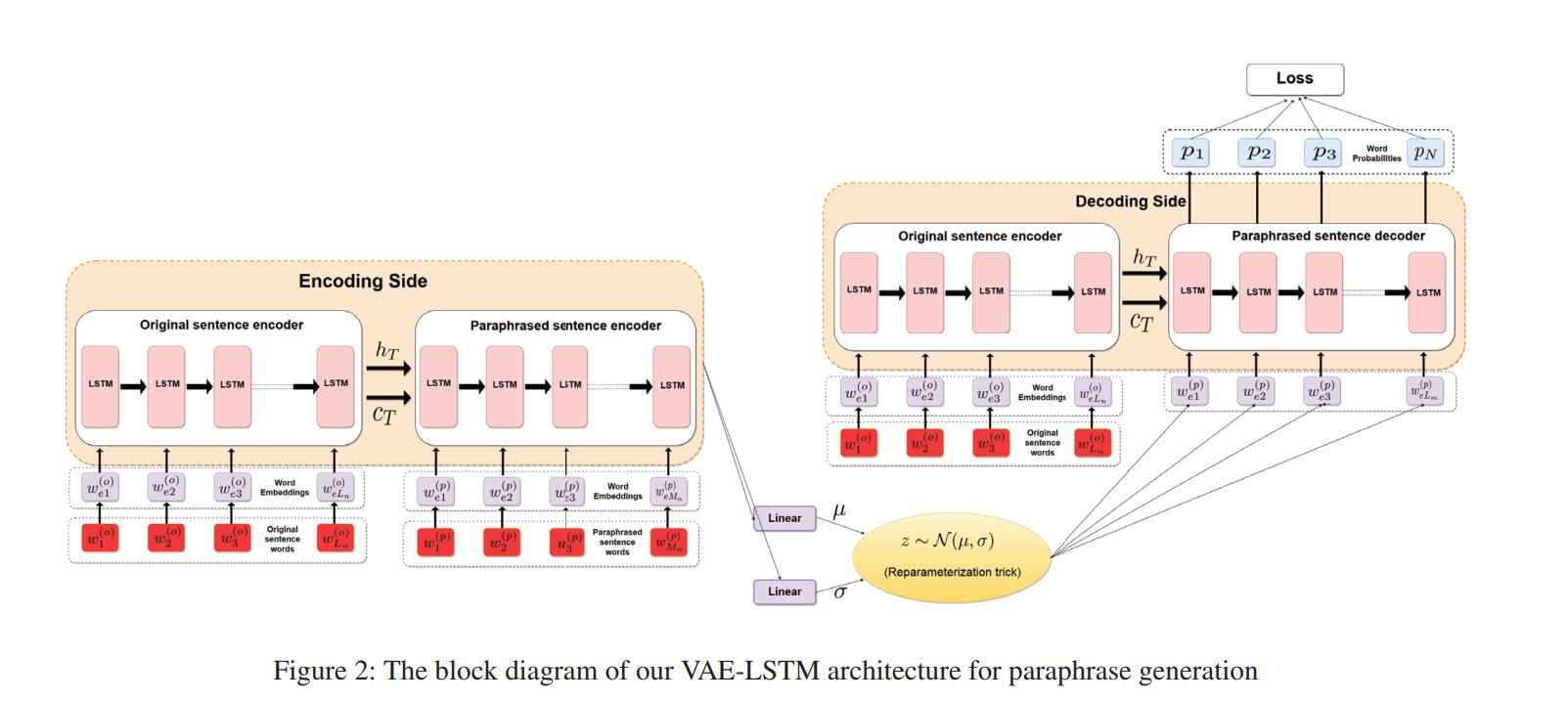
To achieve high-quality paraphrase generation, AI systems generally follow a “Sequence-to-Sequence” (Seq2Seq) model. Think of it as a translator that translates English… into English.
-
The Encoder (Digestion): The AI breaks down your original sentence into a series of mathematical representations, stripping away the specific words to find the “pure meaning” or latent intent.
-
The Bottleneck (The Essence): The system holds that intent in a temporary digital “vacuum.”
-
The Decoder (Reconstruction): The AI then builds a brand-new sentence from scratch using that stored intent, often employing “Beam Search” to find the most natural-sounding path through billions of word combinations.
Reality Check: Paraphrasing is Not a “Plagiarism Eraser”
Here is a necessary dose of truth: Paraphrase generation is a tool for clarity, not a disguise for theft. There is a widespread misconception that if you run a stolen paragraph through a high-end paraphraser, it becomes “original.”
The Reality: Modern plagiarism detectors don’t just look for matching words; they look for matching ideas and logical flows. If the underlying structure and unique insights aren’t yours, changing “happy” to “joyful” won’t save you. More importantly, using these tools without human oversight often results in “hallucinated” facts where the machine changes a technical term into a common word that ruins the entire meaning of the text.
Why Paraphrase Generation is the Future of Branding
For businesses, this technology is about more than just rewriting blog posts. It’s about Adaptive Communication. ### One Message, Ten Voices Imagine writing a single product description and using paraphrase generation to automatically adjust the tone:
-
Professional for LinkedIn.
-
Witty and Snarky for Twitter (X).
-
Simple and Clear for a customer support FAQ.
This isn’t about laziness; it’s about meeting your audience where they are. It’s the ability to scale empathy by ensuring your message resonates with different psychological profiles without having to write every single version from scratch.
The Rare Discussion: The Problem of “Semantic Drift”
Something rarely discussed in basic tutorials is “Semantic Drift.” Every time you paraphrase a paraphrase, the meaning shifts slightly. It’s like the childhood game of “Telephone.”
If you aren’t careful, a sentence about “reducing carbon emissions” can drift into “lowering smoke levels,” and eventually into “making things less cloudy.” This is why the human-in-the-loop model remains the gold standard. The AI provides the possibilities; the human provides the “Ground Truth.”
Actionable Strategies: How to Master the Machine
If you want to use paraphrase generation effectively, stop treating it like a “set and forget” button.
-
The Context Injection: Before paraphrasing, ensure your input is grammatically sound. Garbage in, garbage out applies here more than anywhere else.
-
Constraint-Based Generation: Use tools that allow you to lock certain “keywords” (like brand names or legal terms) so the AI doesn’t accidentally replace them with a “creative” synonym.
-
Tone Mapping: Always define the target persona before you hit generate. Are you talking to a CEO or a high schooler? The AI needs that “North Star” to choose the right vocabulary.
Conclusion: Reclaiming the Human Voice
At the end of the day, paraphrase generation is a mirror. It shows us how many ways a single human thought can be expressed. By leveraging this technology, we aren’t losing our voice; we are expanding it. We are moving toward a future where “writer’s block” is a relic of the past, and our only limit is the quality of our original ideas.