Hobbiton Movie Set Guide Walking Through the Real Shire from The Lord of the Rings and The Hobbit
A Hobbiton Movie Set Guide often begins with a simple question: what would it feel like to step directly into the peaceful world of the Shire? Rolling green hills, tiny round doors carved into grassy slopes, and smoke rising gently from chimneys—these scenes once lived only in the imagination of readers and filmmakers. Today, they exist in the countryside of New Zealand.
Located near the small farming town of Matamata, the Hobbiton Movie Set stands as one of the most beloved film locations in the world. The site served as the filming location for both the The Lord of the Rings and The Hobbit trilogies directed by Peter Jackson.
What makes Hobbiton unique is that it does not feel like a temporary movie set. Instead, it resembles a living village frozen in time. Carefully maintained gardens surround colorful Hobbit holes. Stone pathways wind between cottages. The famous Green Dragon Inn welcomes visitors with warm drinks and rustic charm.
Understanding this Hobbiton Movie Set Guide means exploring the history behind the filming location, discovering the details hidden within the set design, and learning how visitors can experience the magic of Middle-earth in real life.
How Hobbiton Was Discovered
A Farm That Became Middle-earth
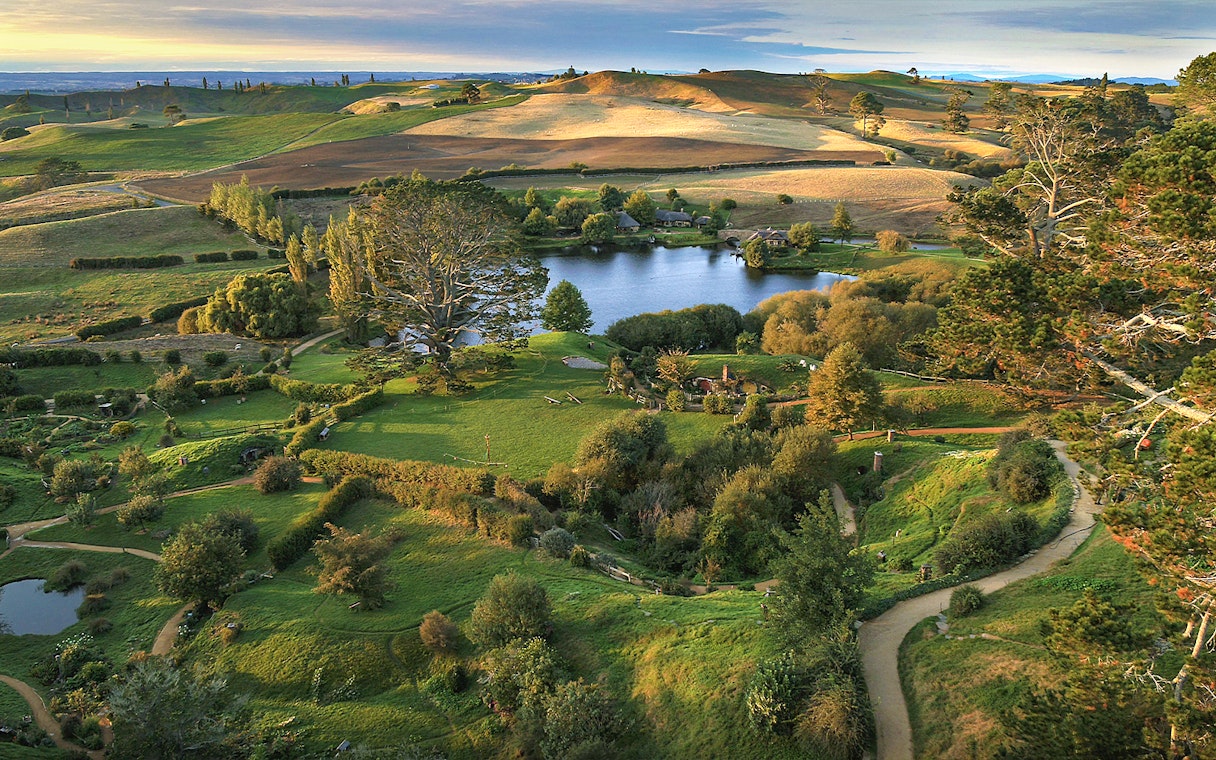
The story behind Hobbiton begins in 1998 when director Peter Jackson searched New Zealand for landscapes that could represent the peaceful homeland of the Hobbits. During an aerial scouting flight, the production team spotted the rolling farmland of the Alexander family farm near Matamata.
The property’s gentle hills, large oak tree, and natural lake perfectly matched the description of the Shire found in the novels by J. R. R. Tolkien.
After negotiations with the farm owners, construction crews began transforming the land into Hobbiton. Workers carved dozens of Hobbit holes directly into the hillsides and created winding paths through gardens and fences.
The farm became a film set, but it also became a permanent piece of cinematic history.
The Hobbit Holes and Village Design
Small Doors with Big Details
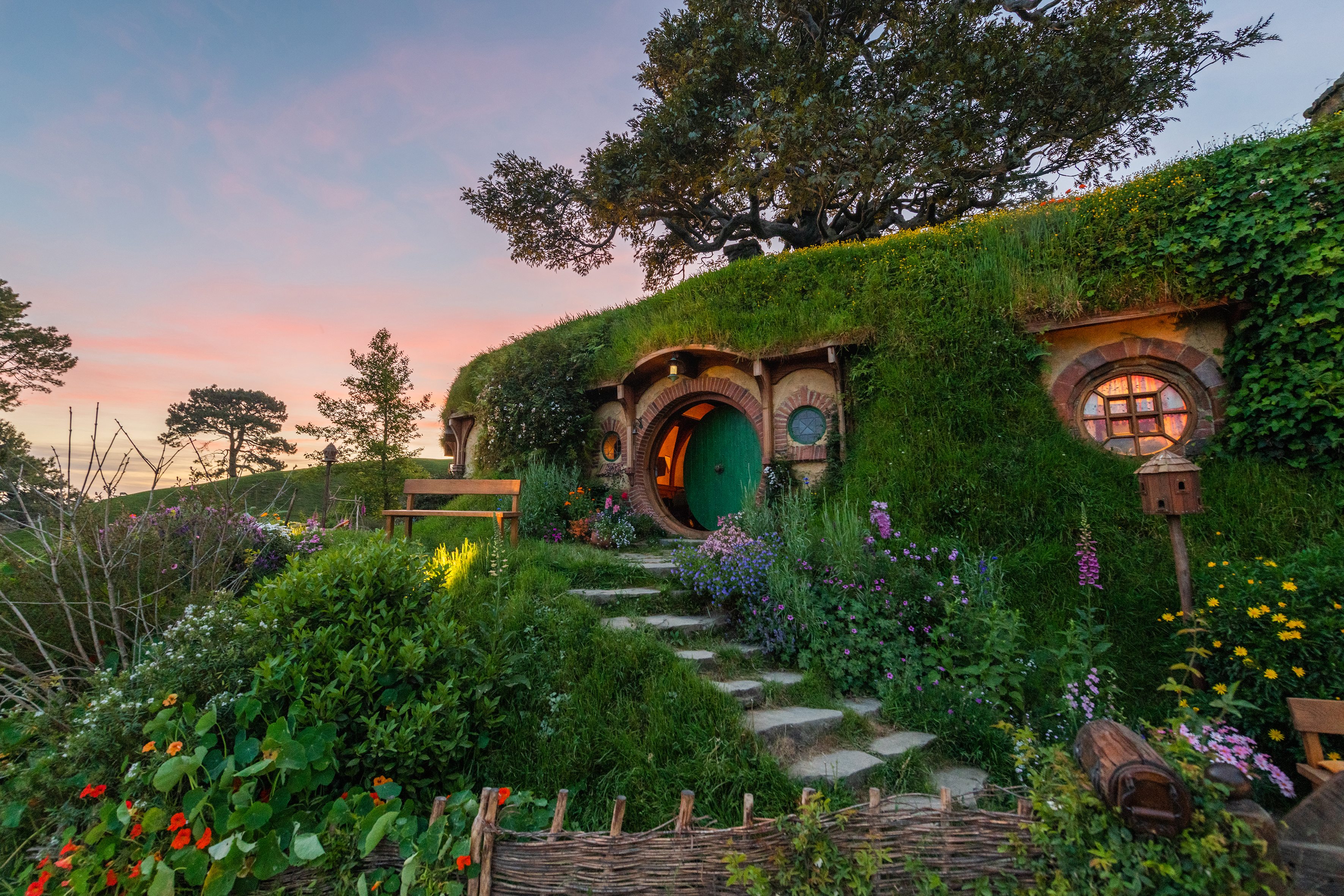
One of the most charming aspects of Hobbiton lies in the Hobbit holes themselves. Each round door features unique colors and decorations. Some houses display gardening tools, others show stacked firewood or hanging laundry.
Although many Hobbit holes appear functional from the outside, most interior scenes in the films were actually filmed in studio sets. The outdoor designs focus on creating an immersive environment rather than full houses.
The Famous Bag End
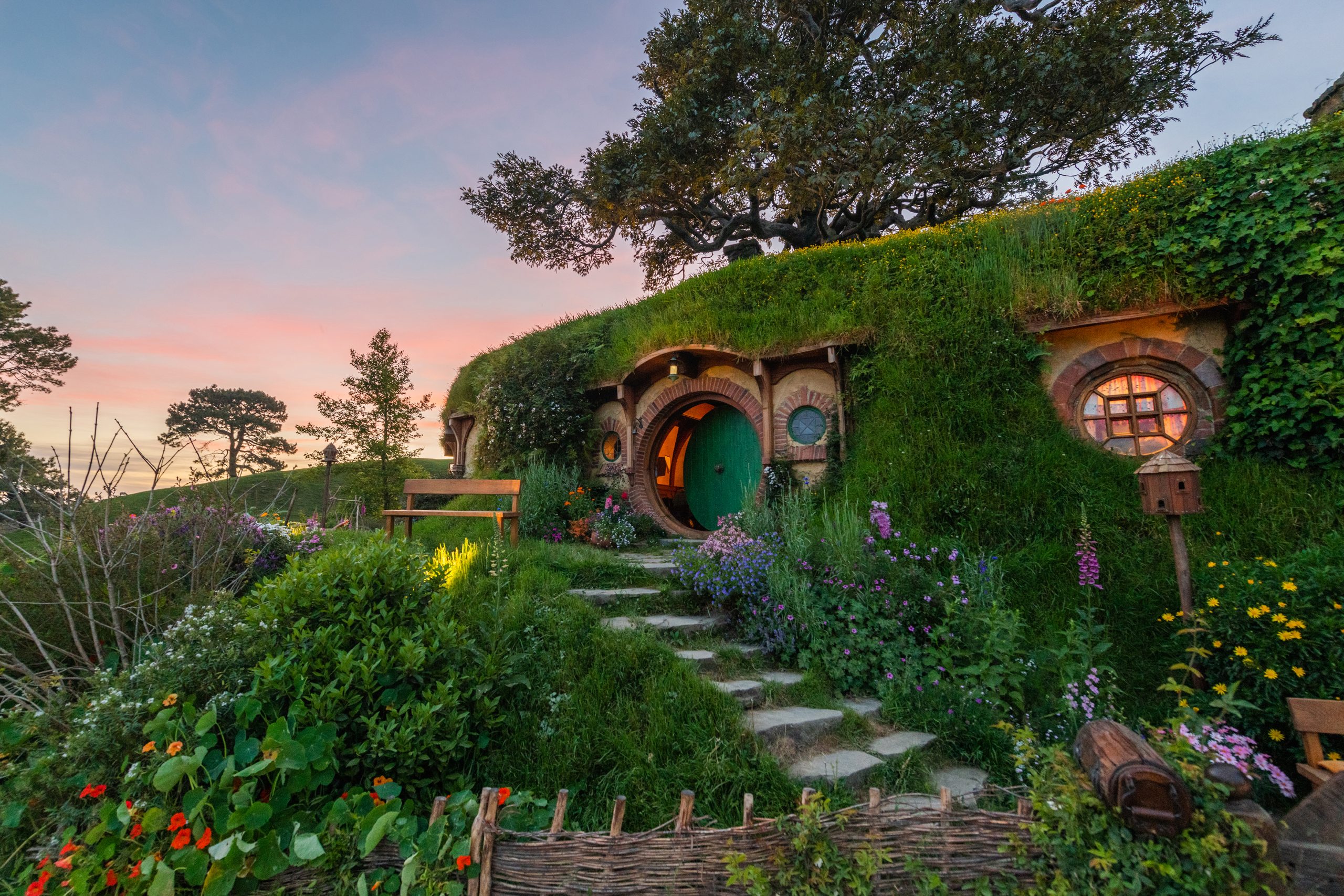
Perhaps the most iconic location within the village is Bag End, the home of the character Bilbo Baggins and later Frodo Baggins.
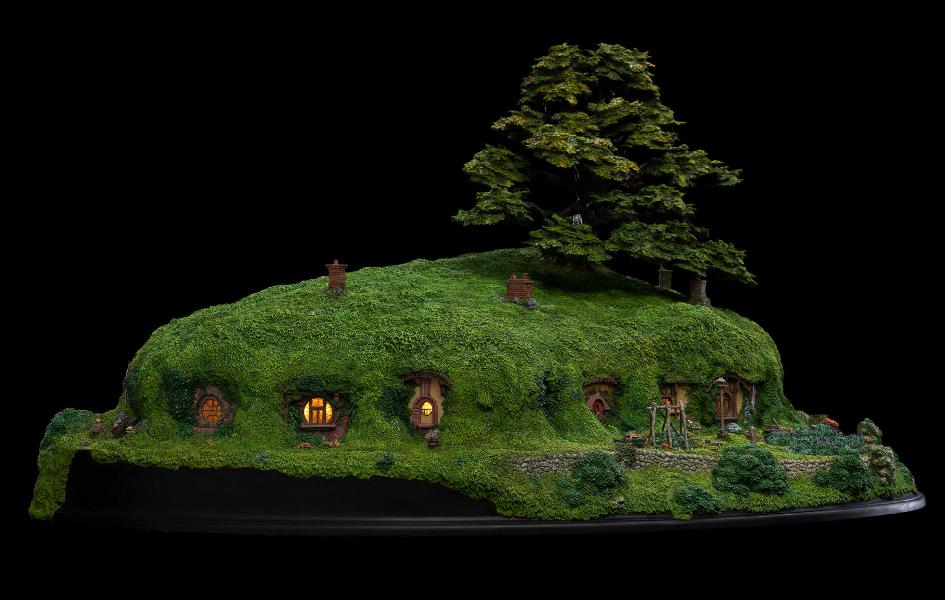
Bag End sits at the top of the hill overlooking the entire village. The large green round door and ancient tree above the hill became one of the most recognizable images in fantasy cinema.
Any Hobbiton Movie Set Guide must highlight this location as the heart of the Shire.
The Green Dragon Inn Experience

A Tavern Straight from Middle-earth
At the edge of the village stands the The Green Dragon Inn, a fully constructed tavern where visitors end their tour.
Inside, wooden beams, fireplaces, and rustic furniture recreate the cozy atmosphere seen in the films. Staff serve specially brewed ales, cider, and ginger beer created exclusively for the Hobbiton experience.
A Moment of Immersion
Sitting inside the Green Dragon feels less like visiting a movie attraction and more like stepping into the world of Tolkien’s stories. Travelers often spend time relaxing by the fire while reflecting on the journey through the Shire.
Moments like this make the Hobbiton Movie Set Guide experience feel personal and memorable.
Behind the Scenes of the Film Production
Rebuilding for The Hobbit Films
After the filming of The Lord of the Rings trilogy ended, much of the set was initially dismantled. However, when production began for The Hobbit films years later, filmmakers rebuilt Hobbiton using permanent materials.
Today’s village features durable structures, real gardens, and long-lasting landscaping. This change transformed Hobbiton into a permanent tourist destination.
Hidden Details Throughout the Village
Set designers placed countless small details across the village to create realism. Fruit trees grow beside houses. Tiny vegetable gardens line the paths. Even the mailboxes and fences display individual personality.
These details demonstrate how filmmaking artistry can create environments that feel truly alive.
Visiting Hobbiton Today
Visitors must join guided tours departing from the Hobbiton visitor center. Buses transport guests across the private farmland before reaching the village.
Guides share stories about filming locations, actor experiences, and production techniques. The walking tour typically lasts about two hours and concludes at the Green Dragon Inn.
Travelers often combine a Hobbiton visit with exploration of nearby destinations in New Zealand’s North Island.
Why Hobbiton Became a Global Attraction
Hobbiton represents more than a film set. It symbolizes the power of storytelling and imagination. Tolkien’s fictional world inspired millions of readers long before the films brought Middle-earth to life on screen.
By preserving the set, New Zealand created a physical gateway into that fantasy world.
For fans of cinema, literature, or fantasy landscapes, Hobbiton offers a rare opportunity to step into a beloved story.
Conclusion
A Hobbiton Movie Set Guide reveals how a quiet New Zealand farm transformed into one of the most iconic fantasy locations ever created for film. From the colorful Hobbit holes and peaceful gardens to the welcoming Green Dragon Inn, every detail invites visitors to imagine life in the Shire.
The rolling hills of Matamata now attract travelers from every corner of the world, proving that storytelling can reshape real landscapes.
For anyone who has dreamed of walking through Middle-earth, a visit to Hobbiton delivers an unforgettable experience. The journey through this charming village reminds us that sometimes the most magical places begin with a simple story—and a little imagination.