Scottish Highlands Train Journey A Cinematic Rail Adventure Through Scotland’s Wildest Landscapes
Scottish Highlands Train Journey experiences belong to a rare category of travel where the journey itself becomes the story. Trains glide slowly through dramatic landscapes where mountains rise above mist-covered valleys and ancient lochs reflect shifting skies. Scotland’s Highlands stretch across vast, sparsely populated terrain, and railways provide one of the most captivating ways to explore this region.
Travelers often imagine Scotland through images of castles, moors, and rugged coastlines. The train routes that cross the Highlands reveal those scenes in a continuous panoramic sequence. Instead of focusing on destinations alone, passengers watch the landscape unfold mile by mile. Rolling hills give way to steep mountains. Quiet villages appear briefly before disappearing behind forests and rivers.
The Scottish Highlands Train Journey blends natural beauty with railway heritage. Historic locomotives travel along tracks first built during the nineteenth century, when engineers pushed rail lines into remote areas of northern Britain. Today these same routes allow modern travelers to witness Scotland’s wilderness without rushing through it.
The Legendary Route from Fort William to Mallaig

The Famous West Highland Line
The railway connecting Fort William and Mallaig stands among the most celebrated train routes in the world. This section of the West Highland Line carries passengers across dramatic Highland scenery that feels untouched by modern development.
The journey begins near the towering presence of Ben Nevis, the highest mountain in the United Kingdom. As the train departs Fort William, forests gradually open into sweeping valleys surrounded by rugged peaks.
Crossing the Glenfinnan Viaduct
One of the most iconic moments of the Scottish Highlands Train Journey occurs when the train crosses the Glenfinnan Viaduct. This graceful curved bridge stretches across a valley overlooking Loch Shiel. Built in the late nineteenth century, the viaduct remains an engineering masterpiece.
The scene gained global recognition through film appearances, particularly in fantasy movies that showcased the dramatic Highland landscape. When the train slowly curves across the viaduct, passengers often gather by the windows to capture photographs of the sweeping view.
Traveling the Jacobite Steam Train

A Journey Back in Time
Many travelers choose the Jacobite Steam Train for its nostalgic atmosphere. This historic steam locomotive recreates the romance of early railway travel. As the train departs the station, clouds of steam rise above the engine while the whistle echoes across the valley.
Wooden interiors and vintage carriages enhance the experience. Passengers sit comfortably while landscapes roll past wide windows, creating a cinematic view of the Highlands.
Why Steam Trains Feel Special
Steam trains move slightly slower than modern services, which allows passengers to absorb every detail of the scenery. Rivers twist through valleys, sheep graze across green hillsides, and distant mountains fade into mist.
Experiencing the Jacobite train transforms the Scottish Highlands Train Journey into a living piece of railway history.
Highlands Landscapes Along the Railway

Rannoch Moor’s Wild Beauty
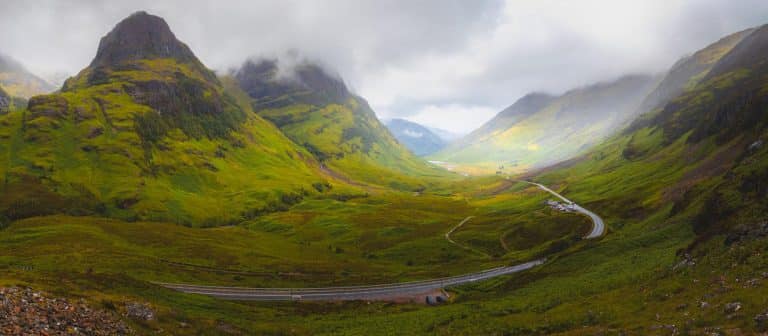
One of the most remote landscapes visible from Highland railways is Rannoch Moor. Vast open moorland stretches across the horizon with almost no signs of human settlement. Peat bogs, small lakes, and scattered grasses create a hauntingly beautiful environment.
The train appears almost fragile within this enormous wilderness. Passengers often experience a sense of calm as the landscape unfolds slowly beyond the windows.
Lochs and Glens
The Highlands contain countless lochs—deep freshwater lakes carved by glaciers thousands of years ago. Trains pass beside shimmering water surfaces where reflections mirror surrounding mountains.
Valleys known as glens guide many railway lines through the region. These natural corridors allow trains to navigate between steep mountain ridges.
Observing these landscapes forms the heart of the Scottish Highlands Train Journey, where every mile reveals another chapter of Scotland’s geological history.
Small Highland Villages Along the Route
The Coastal Village of Mallaig
The journey often concludes in the fishing port of Mallaig. This small village sits beside the Atlantic Ocean and offers fresh seafood restaurants overlooking the harbor. Ferries depart from Mallaig toward nearby islands such as Isle of Skye.
Travelers often walk along the harbor watching fishing boats return with their daily catch. The relaxed pace contrasts beautifully with the dramatic mountain scenery encountered earlier in the journey.
Rural Life in the Highlands
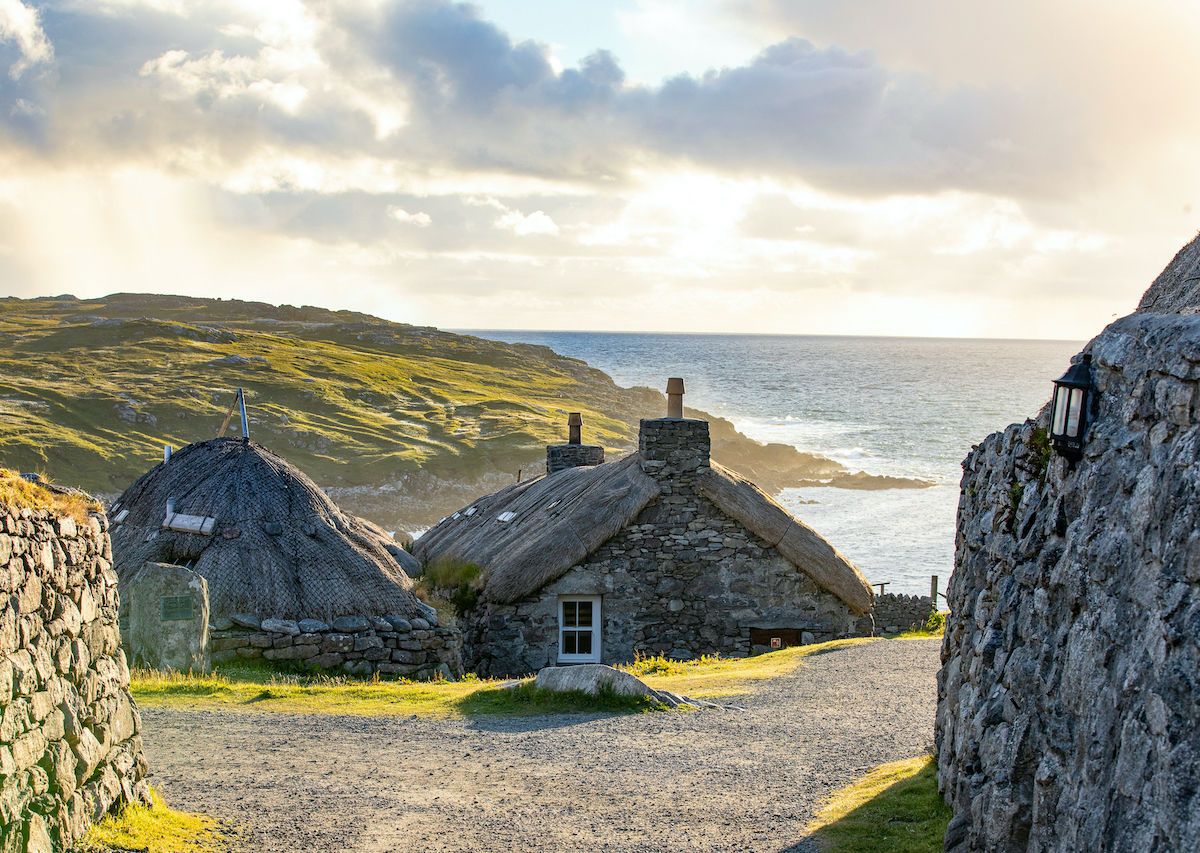
Throughout the route, trains pass quiet communities where stone cottages cluster beside rivers and hills. Sheep graze on slopes while narrow roads wind through glens. These villages preserve traditions that reflect centuries of Highland culture.
The presence of these communities adds warmth to the Scottish Highlands Train Journey, reminding passengers that the landscape remains home to generations of local residents.
The History Behind Highland Railways
Railways reached the Highlands during the nineteenth century as engineers sought to connect remote regions with larger cities. Construction required overcoming challenging terrain. Workers built bridges, tunnels, and viaducts across mountains and valleys.
These railways played a significant role in economic development. They transported goods, connected fishing villages with markets, and allowed travelers to explore Scotland’s northern landscapes.
Today the same railways attract visitors who want to experience history alongside scenery.
Tips for Planning a Scottish Highlands Train Journey
Travelers often begin their journey in Glasgow or Edinburgh before connecting to Highland routes. Booking tickets in advance helps secure seats, especially during summer when demand increases.
Choosing window seats enhances the experience because nearly every section of track offers spectacular views. Early morning departures often provide the best lighting for photography.
Passengers should bring cameras, warm clothing, and time to simply enjoy the scenery without rushing.
Conclusion
Scottish Highlands Train Journey experiences reveal one of Europe’s most dramatic landscapes through the gentle rhythm of railway travel. From the towering presence of Ben Nevis to the graceful arches of the Glenfinnan Viaduct, each moment unfolds like a scene from a cinematic adventure.
The journey combines engineering history, natural beauty, and cultural heritage. Passengers watch mountains rise beyond misty lochs while historic trains glide through valleys and across bridges.
For travelers seeking a slower, more immersive way to explore Scotland, the Scottish Highlands Train Journey offers a remarkable reminder that sometimes the most memorable destination is the journey itself.