The Paradox of Generative AI: Why Your Brand Needs a Soul in an Age of Algorithms
The era of the “blank page” is officially dead. We have reached a point where staring at a flashing cursor, waiting for inspiration to strike, is a choice rather than a necessity. Today, a single sentence typed into a prompt box can generate a 2,000-word essay, a photorealistic landscape, or a functional piece of software code in seconds. Generative AI has effectively turned the creative process—once a grueling marathon of trial and error—into a vending machine experience. But as the world becomes flooded with instant content, we are forced to ask a dangerous question: If everyone can create everything instantly, does anything actually remain valuable?
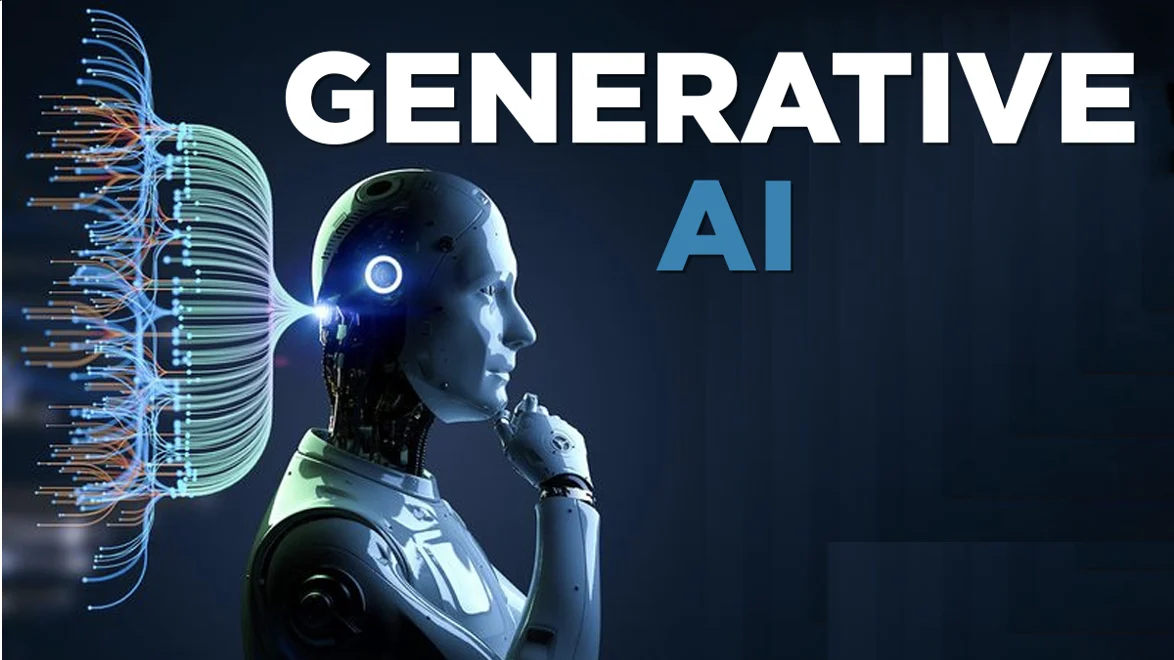
At its simplest, generative AI refers to a category of artificial intelligence that doesn’t just analyze existing data but uses it to create new, original-looking content. Whether it’s text, images, or audio, these models are trained on the sum total of human digital footprints to predict what should come next in a sequence. It’s the ultimate productivity hack, but as we dive deeper, we find that the “originality” it offers is often just a very sophisticated remix.
Beyond the Chatbot: The Mechanics of Creation
To truly harness generative AI, one must understand that it isn’t “thinking.” It is calculating. When you use a Large Language Model (LLM), the system is predicting the most statistically probable next word based on billions of examples. It’s like an incredibly well-read librarian who has memorized every book ever written but has never actually stepped outside to experience the world.
Diffusion and Transformers
The tech stack behind this revolution is two-fold. In the world of images, “Diffusion” models work by starting with a sea of digital noise and slowly refining it into a clear image based on your description. In the world of text, “Transformers” allow the AI to understand the context of a sentence, realizing that the word “bank” means something different in a financial article than it does in a story about a river. This contextual awareness is why modern AI feels so eerily human-like compared to the clunky bots of five years ago.
Reality Check: The “Fact” Mirage
Here is a reality check that many tech evangelists gloss over: Generative AI is not a search engine. While Google tries to find a source for a fact, a generative model is designed to be coherent, not necessarily truthful. This leads to “hallucinations”—confidently stated lies that sound perfectly logical.
Editorial Opinion: We are entering the “Era of the Editor.” In the past, the most valuable skill was the ability to produce. In the future, the most valuable skill will be the ability to verify and curate. If you treat AI as an oracle, you will eventually be embarrassed by its errors. If you treat it as a high-speed intern, you become an unstoppable force.
The Business Impact: From Content Mills to Strategy
In the marketing and business world, the initial reaction to generative AI was fear. Copywriters feared for their jobs; designers feared for their portfolios. However, the dust is settling, and a new landscape is emerging.
Automating the Mundane
The real win for businesses isn’t replacing the creative director; it’s replacing the grunt work. AI is exceptional at:
-
Generating 50 different versions of an ad headline for A/B testing.
-
Summarizing 100-page industry reports into three actionable bullet points.
-
Creating placeholder imagery for storyboards.
By offloading these tasks to generative AI, creative teams can spend more time on strategy—the “Why” behind the “What.” An algorithm can tell you what kind of image is statistically likely to get clicks, but it can’t tell you which image will spark a genuine emotional movement in your specific community.
The Hidden Cost: The Homogenization of Culture
One thing rarely discussed in the hype cycles is the “Ouroboros effect.” If generative AI is trained on human content, and humans start using AI to create most of their content, eventually AI will be trained on its own output. This creates a feedback loop of mediocrity.
When everything is “perfectly optimized” by an algorithm, everything starts to look and sound the same. We see it in the “AI-style” of digital art and the “AI-voice” of generic blog posts. The irony of the AI revolution is that as technology becomes more prevalent, the flaws, quirks, and “weirdness” of human-made content will become the ultimate luxury good.
Practical Steps to Master the Machine
If you want to stay relevant in an AI-saturated market, you need to change your approach. Don’t just “use” AI; collaborate with it.
-
Iterative Prompting: Never take the first output. Treat the first response from a generative AI as a rough sketch. Challenge it, ask it to take a different persona, or tell it to argue against its own previous point.
-
The 80/20 Rule: Let AI do the first 80% of the work—the structure, the research, the formatting. But the final 20%—the soul, the personal anecdotes, and the controversial opinions—must come from you.
-
Audit for Bias: Remember that these models reflect the biases of the internet. Always check if the output is leaning too heavily into stereotypes or narrow viewpoints.
The Horizon: Ethics and Ownership
The next two years will be defined by legal battles over intellectual property. Who owns a painting made by a prompt? If a generative AI was trained on a specific photographer’s style, does that photographer deserve a royalty? These aren’t just legal questions; they are the foundation of how we value human effort in the 21st century.
As we move forward, the winners won’t be those who hide from the technology, nor those who outsource their entire brain to it. The winners will be the “Centauors”—those who combine the raw processing power of generative AI with the irreplaceable nuance of human judgment.