Dataset Preparation The High-Stakes Art of Cleaning Digital Chaos
Your fancy, multi-billion parameter neural network is essentially a sophisticated parrot. If you feed it trash, it will regurgitate trash with terrifying confidence and professional-grade formatting. In the world of machine learning, we spend far too much time romanticizing the “brain” (the model) and almost no time talking about the “food” (the data). The truth is uncomfortable: a mediocre model with pristine data will outperform a world-class model fed with a messy, biased, or incomplete dataset every single time.
Dataset preparation is the invisible labor that accounts for roughly 80% of a data scientist’s day. It is unglamorous, tedious, and absolutely non-negotiable. If you think you can skip the “cleaning” phase to get to the “training” phase faster, you aren’t just cutting corners—you’re building a skyscraper on a swamp.
The Anatomy of a High-Quality Dataset
Before we even touch a line of Python code, we have to understand what “good” looks like. A dataset isn’t just a CSV file or a folder of images; it’s a representative slice of reality. If that slice is lopsided, your AI will be too.
Data Cleaning: The Digital Exorcism
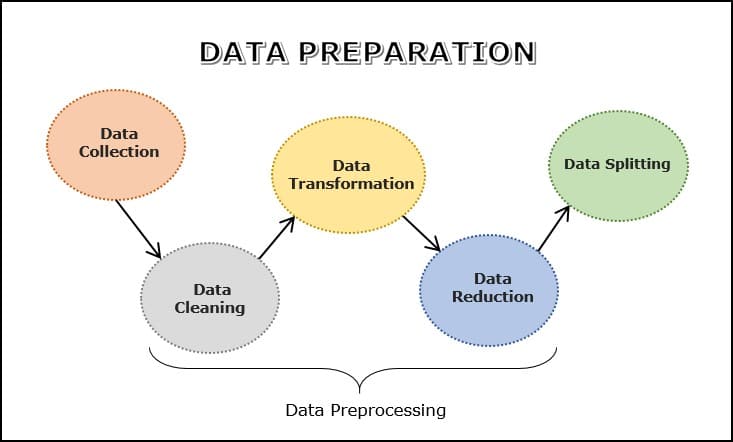
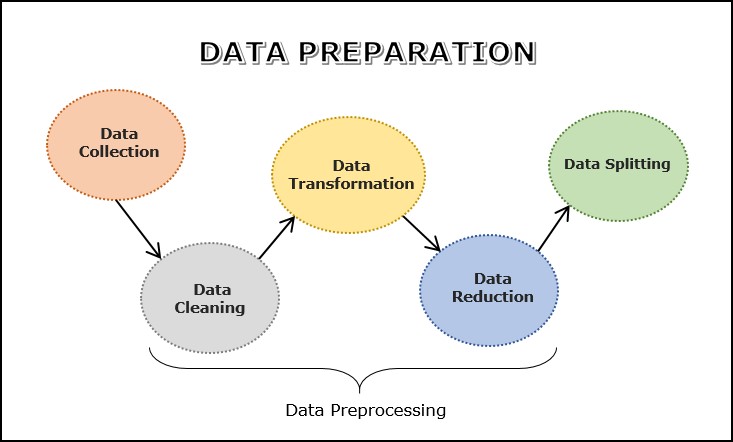
The first step in dataset preparation is usually scrubbing. This involves identifying missing values, removing duplicates, and fixing outliers. But there’s a nuance here that many miss: an outlier isn’t always an error. Sometimes an outlier is the most important data point in your set (like a fraudulent transaction in a sea of legitimate ones). The goal isn’t to make the data “pretty,” but to make it “honest.”
Editorial Opinion: The Obsession with Quantity
There’s a dangerous belief in the industry that “Big Data” solves everything. I’d argue that we have a “Quality” problem, not a “Volume” problem. Most companies would see better results if they deleted half their junk data and spent that saved storage cost on hiring expert human annotators to verify the remaining half.
The Reality Check: AI Doesn’t “Fix” Bias
Here is the hard truth: dataset preparation is where bias is born, not where it dies. If you are building a recruitment AI and your historical data only contains successful male candidates, your AI will learn that “being male” is a requirement for success. You cannot expect an algorithm to have better morals than the data it was fed. Neutralizing bias requires a manual, intentional audit of your labels and distributions before the first epoch of training ever begins.
The Technical Lifecycle: From Raw Chaos to Model-Ready
To move from a messy pile of information to a functional training set, you need a repeatable pipeline. This is where the heavy lifting happens.
Feature Engineering and Selection

Not every piece of data is useful. In fact, “noise” is the enemy of accuracy. Feature selection is the process of deciding which variables actually matter. For example, if you’re predicting house prices, the color of the front door is likely noise, while the proximity to a subway station is a signal. Dataset preparation is as much about what you throw away as what you keep.
Normalization and Scaling
Machine learning models are sensitive to scale. If one column in your data ranges from 0 to 1 and another ranges from 0 to 1,000,000, the model will mistakenly assume the larger numbers are more important. Scaling your data—bringing everything into a unified range (like 0 to 1)—is a simple but vital step to ensure the model’s “weights” remain balanced.
Labeling: The Human Bottleneck
If you are working on supervised learning, your labels are your ground truth. This is the most expensive and time-consuming part of dataset preparation.
-
The In-House Approach: Using your own experts to label data ensures high quality but scales poorly.
-
Crowdsourcing: Faster and cheaper, but introduces “label noise” where different people interpret the same image or text differently.
-
Programmatic Labeling: Using rules or smaller models to label large datasets. It’s the future, but it requires a very high level of oversight to prevent “cascading errors.”
Splitting Your Data: Avoiding the “Overfitting” Trap
One of the most common rookie mistakes in dataset preparation is improper splitting. You cannot test a student using the exact same questions they studied in the textbook.
-
Training Set (70-80%): This is the textbook. The model learns from this.
-
Validation Set (10-15%): This is the practice quiz. You use it to tune your hyperparameters and see if the model is on the right track.
-
Test Set (10-15%): This is the final exam. You only look at this once at the very end. If you keep going back to the test set to “tweak” things, you are “leaking” information, and your results will be a lie.
Practical Actions for 2026
If you’re currently staring at a mountain of raw data, here’s how to start:
-
Visualize First: Use scatter plots or histograms. Your eyes can often spot a data error faster than a script can.
-
Automate the Boring Stuff: Use data profiling tools to automatically find null values or mismatched data types.
-
Document the Lineage: Keep a “data diary.” If you change a value or drop a column, write down why. Six months from now, you won’t remember.
-
Version Control Your Data: Just like you use Git for code, use tools like DVC (Data Version Control) for your datasets. Being able to roll back to a “clean” version of a dataset is a lifesaver.
The Bottom Line: Respect the Process
We often talk about AI in mystical terms—as if it’s a ghost in the machine. But in reality, AI is just a mirror. It reflects the care, the precision, and the ethics we put into our dataset preparation. If we want AI that is fair, accurate, and useful, we have to stop treating data prep like a chore and start treating it like the foundational craft that it actually is.