The Invisible Grind What Really Happens During AI Model Training?
What if I told you that most artificial intelligence is essentially a high-speed game of “guess and check” repeated billions of times?
We often talk about AI as if it were a sentient brain emerging fully formed from a silicon womb. In reality, it is more like an incredibly fast, slightly stubborn student trying to pass an exam without ever being told the rules—only whether their answers were “right” or “wrong.” This grueling, resource-intensive process is what we call AI model training, and it is currently the most expensive and consequential “education” system on the planet.
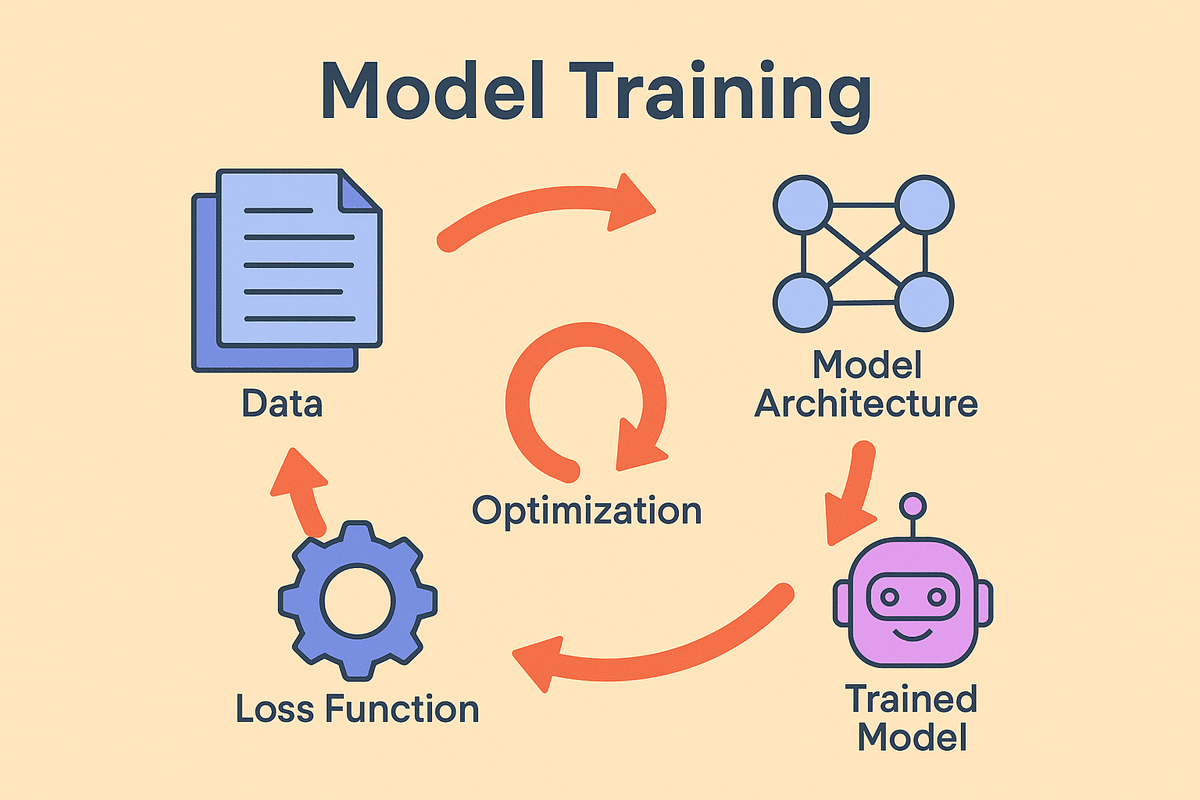
At its core, AI model training is the process of feeding an algorithm vast amounts of data so it can learn to recognize patterns, make predictions, and eventually, simulate human-like reasoning. But don’t let the marketing hype fool you; it’s not magic. It’s math, massive amounts of electricity, and a very specific type of digital discipline.
Editorial Opinion: In my experience, the industry is far too obsessed with the size of the model (parameters) and not nearly obsessed enough with the integrity of the training set. A smaller model trained on pristine data will outperform a trillion-parameter behemoth trained on internet “trash” every single time.
The Reality Check: “More Data” is Often a Trap
There is a dangerous misconception that simply throwing more data at a model will make it smarter. This is the “Bigger is Always Better” fallacy. In truth, AI model training follows the principle of GIGO: Garbage In, Garbage Out. If you train a medical AI on biased or outdated records, the model won’t just be wrong—it will be confidently dangerous. Quality control in the training phase is more important than the algorithm itself.
The Phases of Digital Enlightenment
Training an AI model isn’t a single “p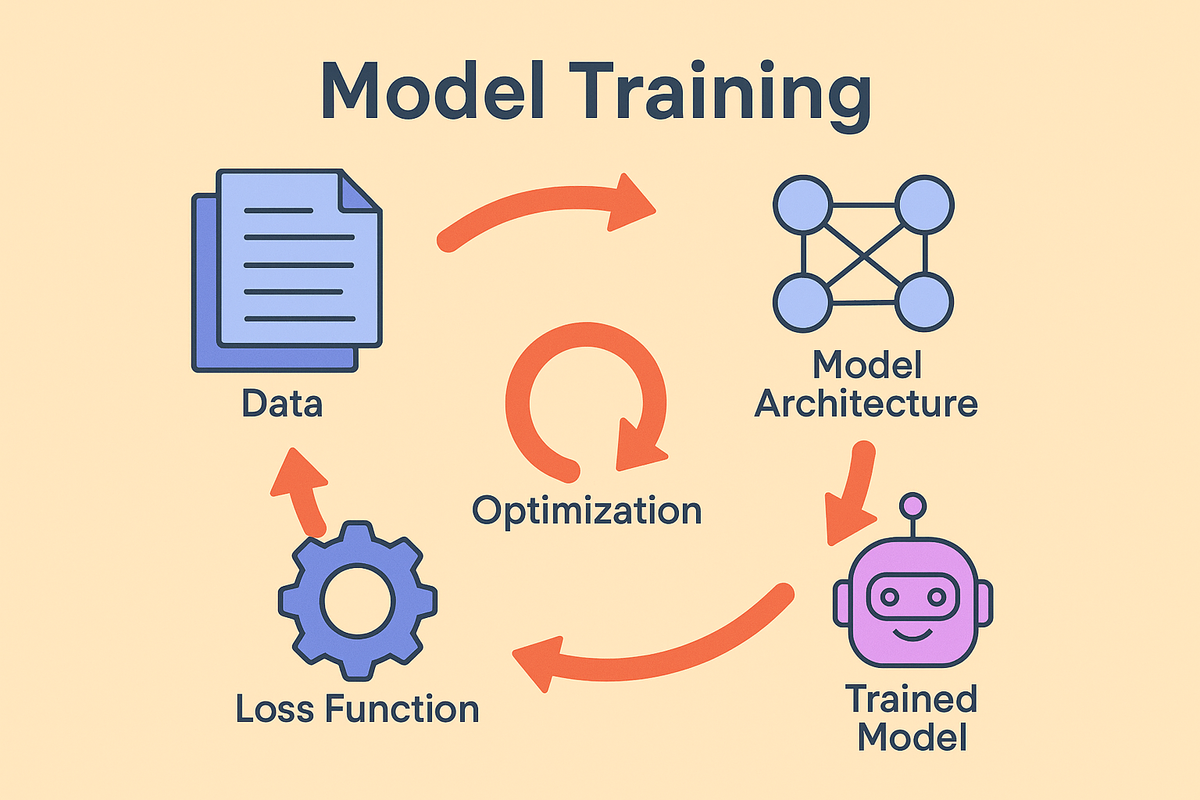 lay” button. it’s a tiered journey:
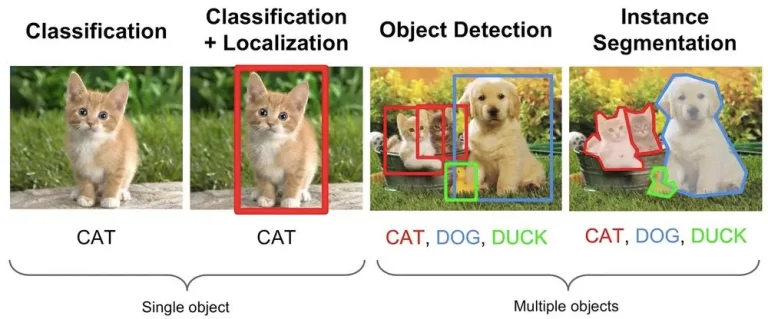
1. Data Pre-processing: The Unsung Hero Before a single GPU starts humming, data must be cleaned, labeled, and normalized. This is where 80% of the real work happens. If you’re training an image recognizer, this means humans (or other AIs) checking that a picture of a cat is actually labeled “cat.” Without this, the model has no baseline for truth.
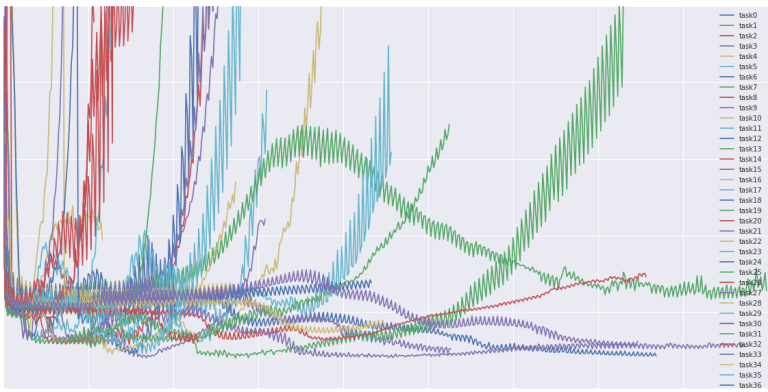
2. The Forward and Backward Pass During the actual AI model training, the model makes a prediction (Forward Pass). It then compares that prediction to the correct answer. The difference between the two is called the “loss.” The model then uses an optimization algorithm to go back and adjust its internal weights to minimize that loss (Backward Pass). Repeat this a few billion times, and you have a model that “understands” the task.
3. Validation and Hyperparameter Tuning This is where the editorial eye comes in. Engineers tweak the “learning rate”—basically telling the AI how fast it should change its mind. Too fast, and it misses the nuances; too slow, and it takes an eternity to learn anything.
The Hidden Costs: Compute and Carbon
Something rarely discussed in casual tech circles is the sheer physical toll of AI model training. Training a large-scale model can consume as much energy as several hundred households do in a year. This has turned AI into a game of “Compute or Die.” For businesses, the practical action here isn’t to build from scratch. Instead, many are turning to Transfer Learning—taking a model that has already been trained on a massive general dataset and “fine-tuning” it on a smaller, specific dataset. This is the smart way to leverage AI without needing a billionaire’s budget.
Why Contextual Fine-Tuning is the Future
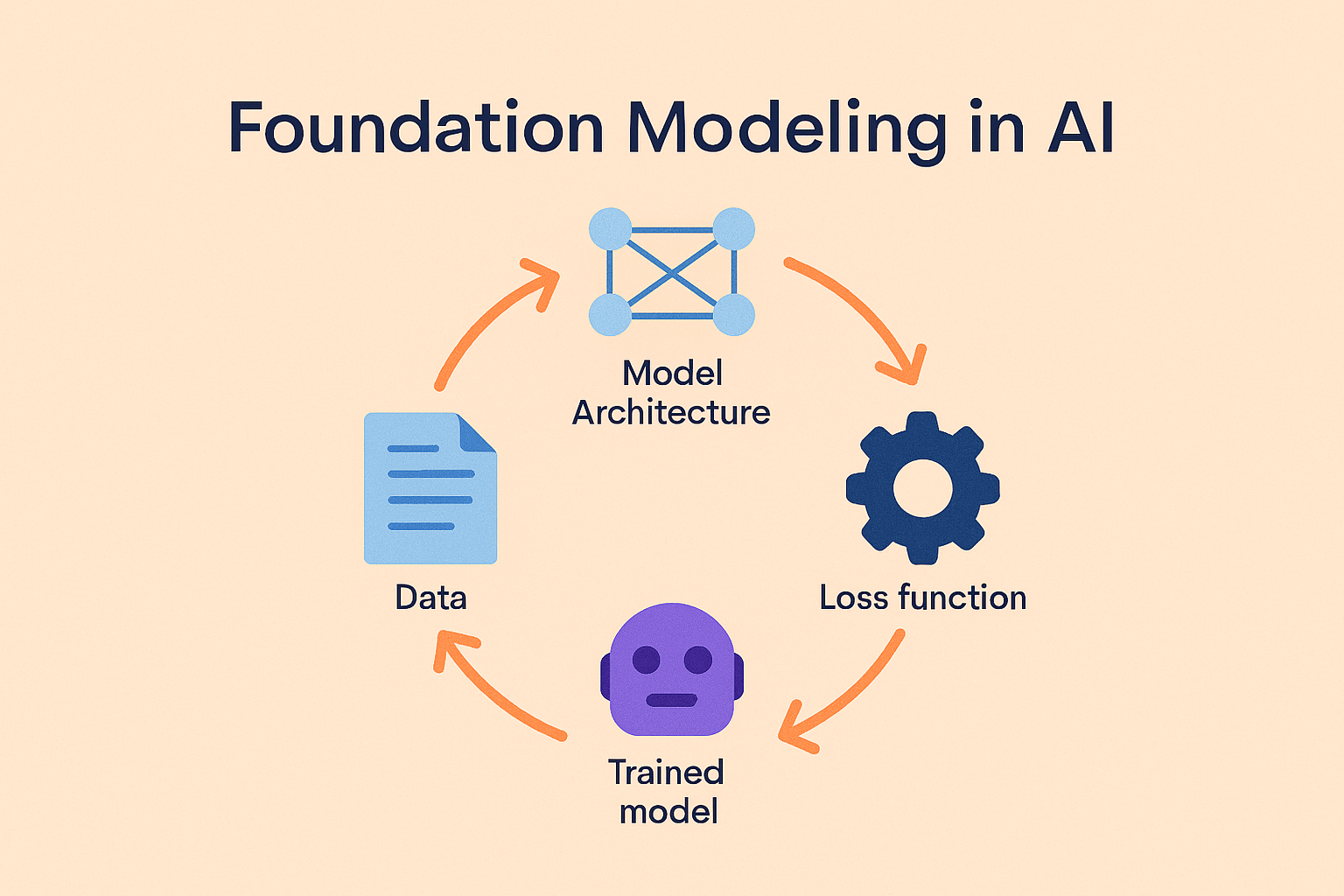
The era of the “Generalist AI” is slowly giving way to specialized experts. While foundational models provide the base intelligence, the real value lies in the final 5% of training. This is where you feed the model your company’s specific tone, your industry’s unique jargon, and your customers’ specific needs.
Tindakan praktis yang bisa dilakukan bagi developer atau bisnis: Berhenti mencoba melatih “The Next ChatGPT.” Fokuslah pada pelatihan model yang sangat sempit dan sangat dalam. Precision beats generalization in the professional marketplace.
The Goal: Generalization, Not Memorization
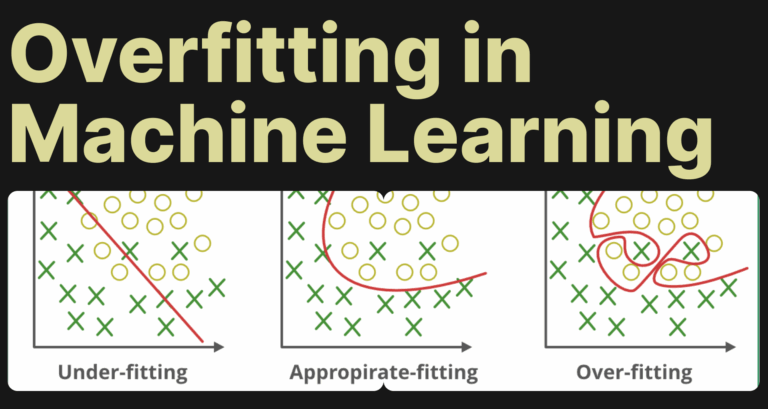
The ultimate test of successful AI model training is “generalization.” If a model only performs well on the data it has already seen, it hasn’t learned; it has just memorized. We call this “overfitting.” A truly well-trained model can see a piece of data it has never encountered before and make a highly accurate prediction based on the underlying patterns it learned during its “schooling.”