The Architecture of Attention Why the Transformer Model Rules the World
In 2017, a team of researchers at Google published a paper with a deceptively simple title: “Attention Is All You Need.” They didn’t know it yet, but they had just handed the world the keys to the kingdom of Generative AI. Within five years, that single document rendered decades of previous research into Recurrent Neural Networks (RNNs) almost entirely obsolete. It was a technological extinction event, and the transformer model was the meteor.
If you’ve used ChatGPT, translated a website, or had a half-decent conversation with a voice assistant lately, you’ve interacted with a transformer. It is the engine under the hood of almost every “magic” AI moment we experience today. But what exactly makes this architecture so dominant, and why did it succeed where others failed?
The End of Sequential Thinking
Before the transformer model, AI processed language like a human reading a book: one word at a time, left to right. If a sentence was too long, the AI would “forget” the beginning by the time it reached the end. This was the fatal flaw of RNNs and LSTMs (Long Short-Term Memory).
Breaking the Bottleneck
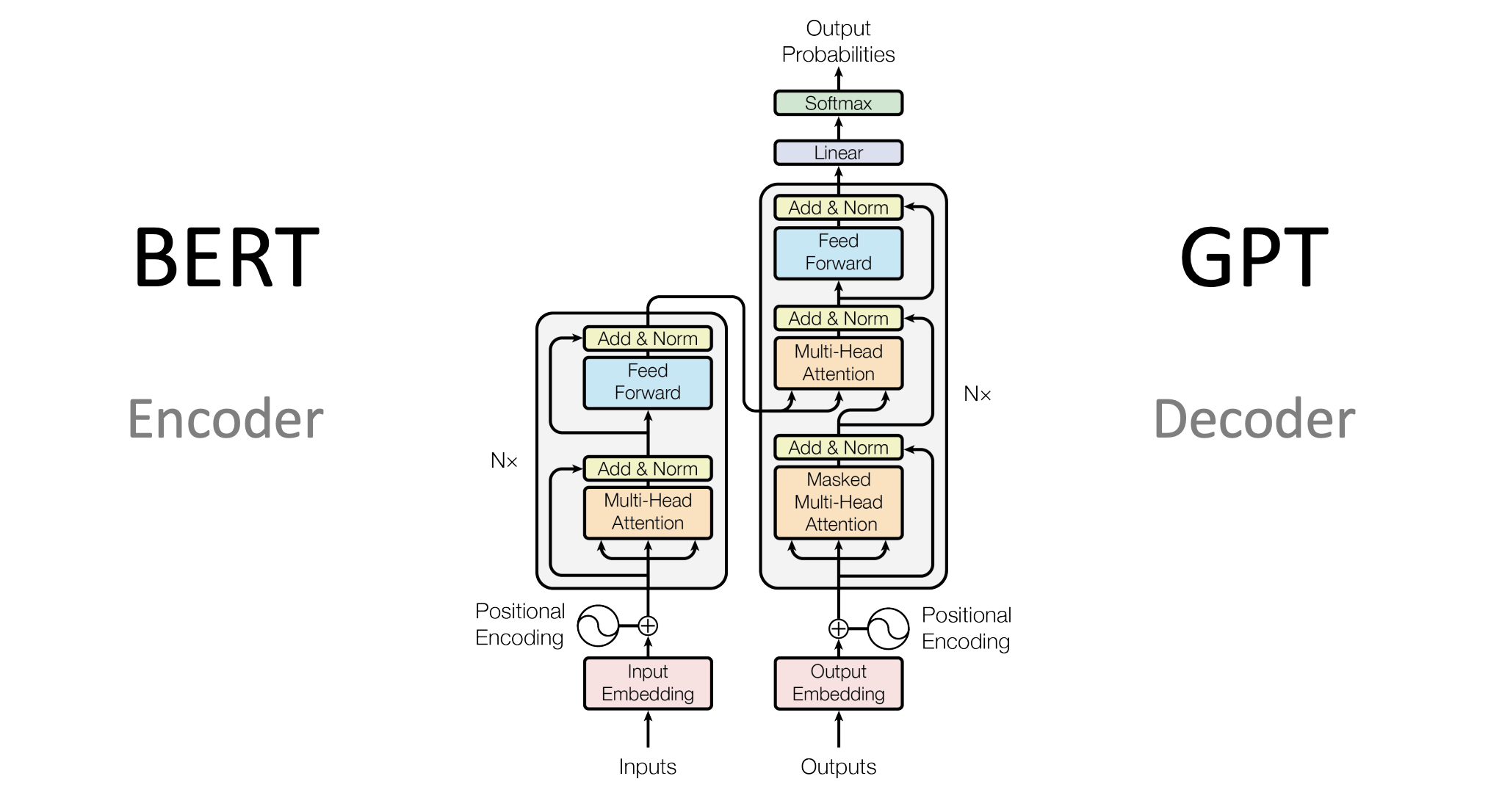
The Transformer changed the game by introducing parallelization. Instead of reading words in a sequence, it looks at the entire paragraph at once. Imagine the difference between a single librarian reading books one by one versus a thousand scanners digitizing an entire library simultaneously. This shift didn’t just make AI faster; it made it capable of understanding context at a scale previously thought impossible.
Editorial Opinion: The Speed Trap
While the industry celebrates the speed of Transformers, I believe the real victory isn’t efficiency—it’s “contextual nuance.” The ability to relate a pronoun on page 50 to a noun on page 1 is what makes AI feel “smart,” and that is purely a byproduct of the Transformer’s unique structure.
How Self-Attention Actually Works (Without the Math Headache)
The heart of any transformer model is a mechanism called “Self-Attention.” In simple terms, it’s a weighting system. When the model processes the word “bank,” it looks at the surrounding words to decide if we’re talking about a river or a financial institution.
The “Query, Key, and Value” Dance
Think of Self-Attention like a high-end search engine inside the model.
-
The Query: What am I looking for? (The current word)
-
The Key: What do the other words offer? (The context)
-
The Value: How much weight should I give this relationship?
By calculating these relationships for every word in a sentence simultaneously, the model creates a “map” of meaning. This is why a transformer model can handle the complexities of sarcasm, metaphors, and technical jargon with much higher accuracy than its predecessors.
Reality Check: It’s Not “Understanding”
A common misconception is that the Transformer “understands” language like we do. It doesn’t. It is performing massive matrix multiplications to find statistical patterns. It doesn’t know what a “dog” is; it just knows that the word “dog” has a high probability of being near the word “bark” or “leash.” We must stop confusing statistical brilliance with sentient comprehension.
The Building Blocks: Encoders and Decoders
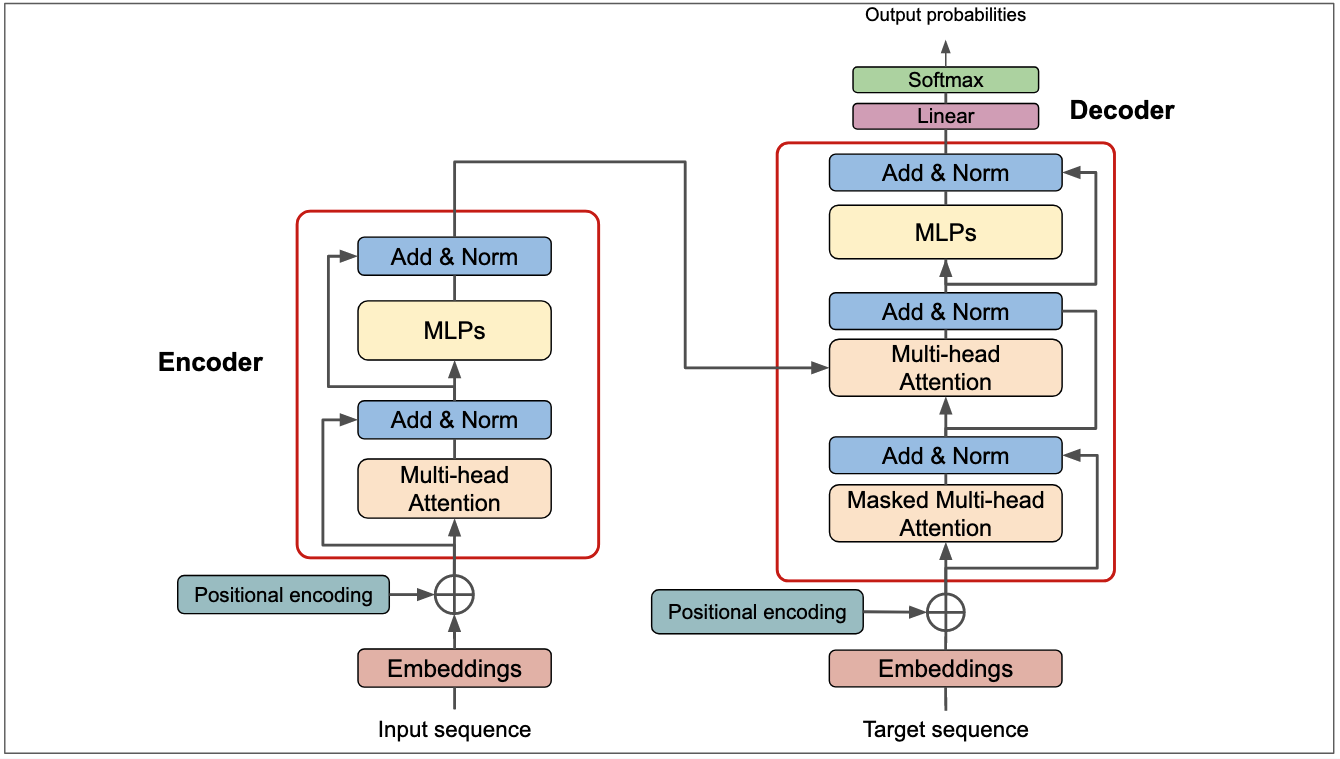
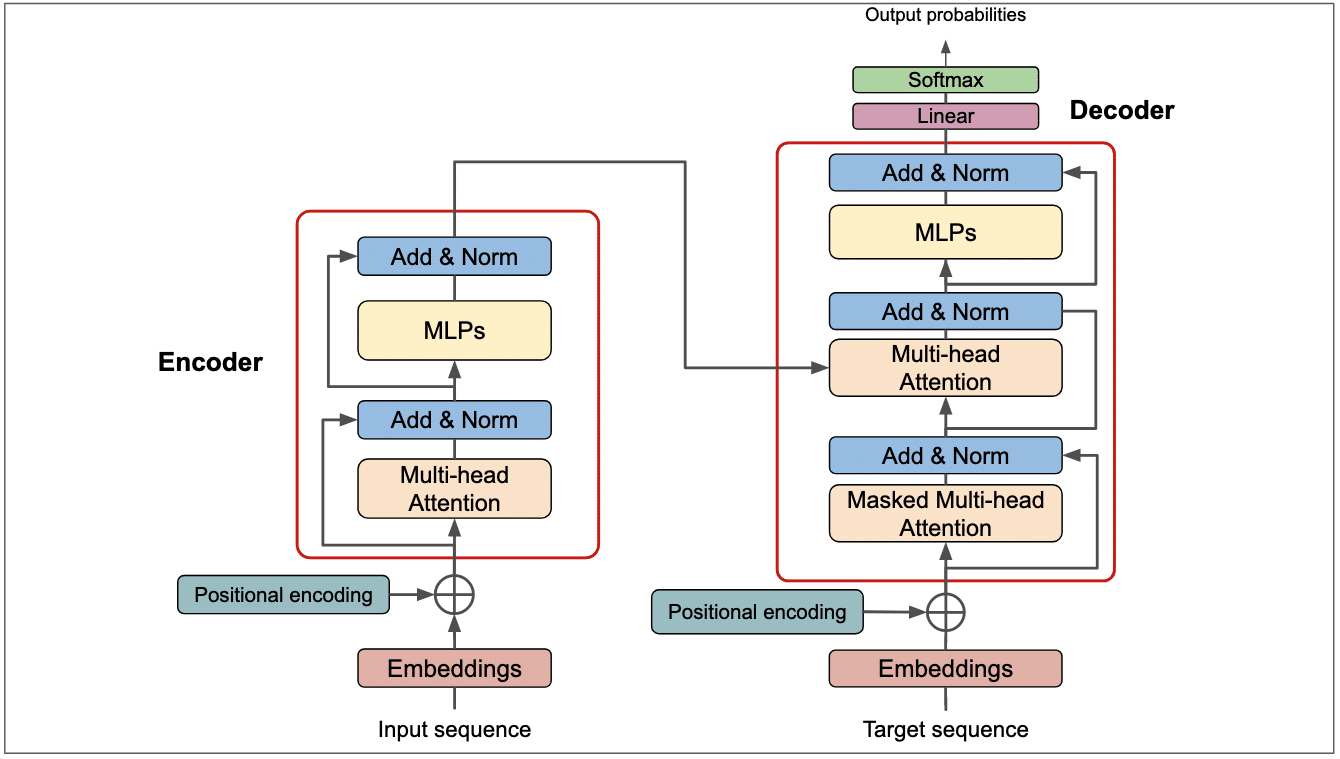
While the term transformer model is used as a blanket statement, it’s actually composed of two main parts, often working in tandem:
-
The Encoder: This part “reads” and compresses the input into a mathematical representation. It’s like a chef taking raw ingredients and preparing them for the stove.
-
The Decoder: This part takes that representation and “unpacks” it into the output, like the chef plating the final meal.
Models like BERT (developed by Google) use only the encoder to understand text deeply. Models like the GPT series use only the decoder to generate text fluently. The original Transformer used both to translate languages.
Beyond Text: The Rise of the Vision Transformer (ViT)
One of the most exciting, yet rarely discussed, developments is that the transformer model isn’t just for words anymore. In the last few years, we’ve seen the rise of Vision Transformers.
By breaking an image into small “patches” and treating them like words in a sentence, the Transformer can “see.” This has led to massive leaps in medical imaging, autonomous driving, and even satellite surveillance. The “Attention” mechanism turns out to be a universal solvent for data—if you can turn it into a sequence, a Transformer can master it.
Practical Action: How to Leverage Transformer Tech
If you are a business leader or a developer, simply “knowing” about the transformer model isn’t enough. You need to know how to deploy it:
-
Don’t Build from Scratch: Unless you have $100 million and a small power plant, don’t try to train a foundational Transformer. Use “Transfer Learning.” Take a pre-trained model and fine-tune it on your specific data.
-
Watch the Context Window: The “memory” of these models is limited by the context window. When building apps, focus on “RAG” (Retrieval-Augmented Generation) to feed the Transformer the right information at the right time.
-
Optimize for Latency: Large Transformers are slow. For real-time applications, look into “Distillation”—creating smaller, faster “student” models from a large “teacher” Transformer.
The Future: What Comes After Transformers?
Is the transformer model the final form of AI? Likely not. As powerful as they are, they are computationally expensive. They require massive amounts of electricity and water for cooling.
We are already seeing the emergence of “State Space Models” (SSMs) and architectures like Mamba, which aim to provide the same “Attention” benefits with much lower hardware requirements. However, for now, the Transformer remains the undisputed king of the hill. It is the bridge that took us from “clunky chatbots” to “digital assistants that can write code, create art, and pass exams.”