The Art of Ignoring How the Attention Mechanism Became the Brain of Modern AI
Have you ever tried to have a deep conversation in a crowded, noisy coffee shop? Your brain is performing a biological miracle every second: it filters out the clinking of spoons, the hiss of the espresso machine, and the chatter at the next table to focus solely on the movement of your friend’s lips. You aren’t “hearing” everything; you are strategically paying attention. For decades, computers couldn’t do this. They tried to “swallow” information whole, processing every word or pixel with equal importance, which led to a catastrophic mess of misunderstood context.
The introduction of the attention mechanism changed everything. It gave machines the ability to look at a sentence or an image and say, “This part matters, and that part is just noise.” This subtle shift is the reason why Google Translate no longer sounds like a broken robot and why ChatGPT can maintain a coherent conversation.
The Problem with Traditional Memory
Before we had the attention mechanism, AI relied heavily on architectures like RNNs (Recurrent Neural Networks) and LSTMs. Think of these as a person trying to memorize a long sentence by repeating it one word at a time. By the time they get to the 50th word, the memory of the 1st word has started to fade.
This is known as the “bottleneck” problem. In a long paragraph, the machine would lose the relationship between a subject at the beginning and a verb at the end. It was like trying to read a book through a straw; you can see the letters, but you lose the story.
How the Attention Mechanism Mimics Human Focus
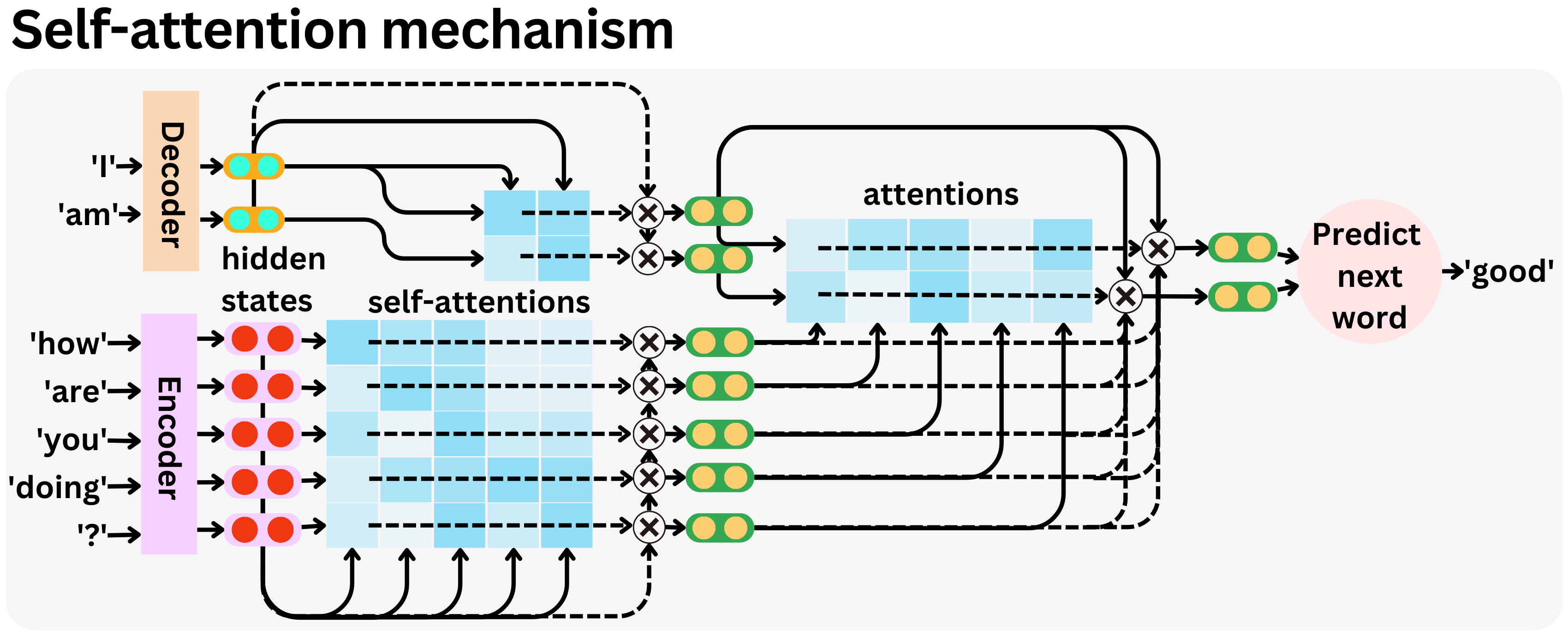
In 2014, and more famously with the “Attention is All You Need” paper in 2017, researchers proposed a new way. Instead of processing data in a fixed sequence, why not let the model look at the entire dataset at once and “score” the importance of each part?
The Query, Key, and Value System
To understand how the attention mechanism works, imagine you are in a library.
-
Query: This is what you are looking for (the current word being processed).
-
Key: This is the label on every book on the shelf (all other words in the sentence).
-
Value: This is the information inside the book.
The system calculates a “compatibility” score between your Query and all the Keys. If the score is high, the AI pays more “attention” to that Value. For example, in the sentence “The animal didn’t cross the street because it was too tired,” the attention mechanism helps the machine realize that “it” refers to “the animal,” not “the street,” because the “tired” Key has a stronger mathematical bond with “animal.”
Reality Check: It’s Math, Not Magic
A common misconception is that the attention mechanism allows AI to “understand” context the way humans do.
Reality Check: AI doesn’t “understand” that a tired animal wants to sleep. It simply observes that in billions of lines of text, the word “tired” frequently appears in closer statistical proximity to living beings than to paved roads. It’s a high-stakes game of probability, not a spark of consciousness.
Editorial Opinion: We often romanticize AI, but the beauty of the attention mechanism is actually its cold, hard efficiency. It proved that “context” is just a series of weighted relationships. By mastering the weights, we mastered the illusion of understanding.
Why Transformers Changed the World
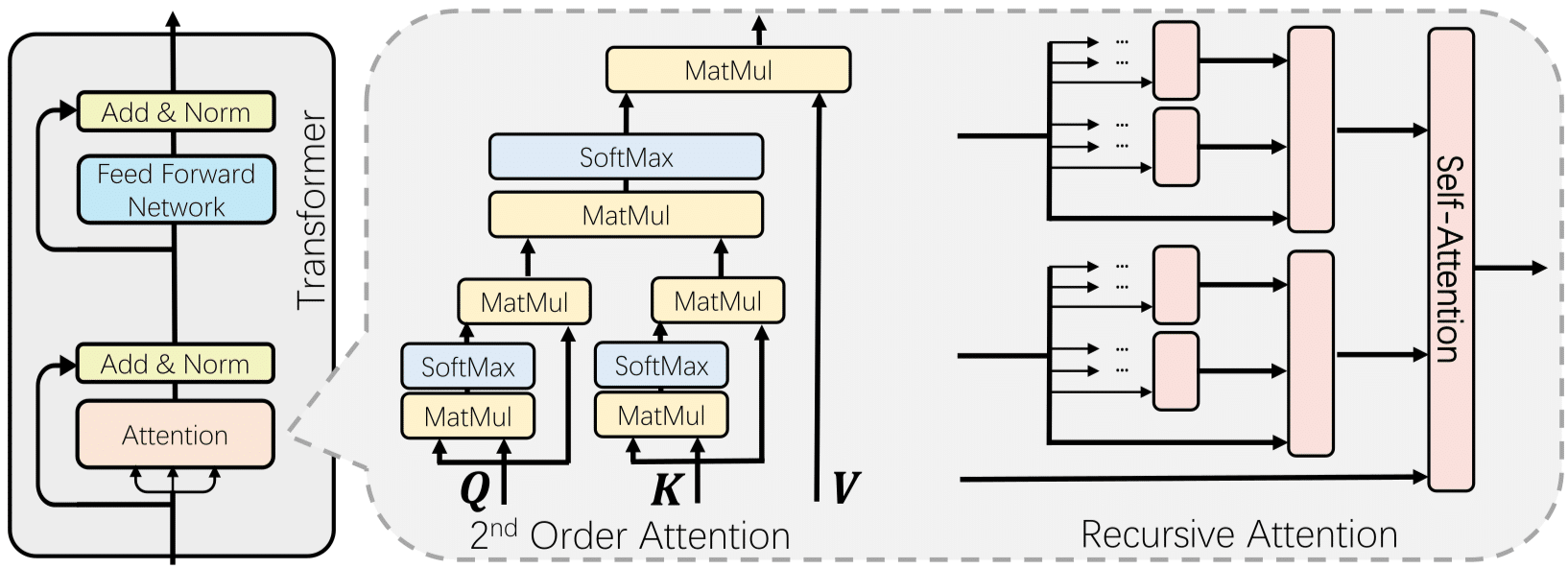
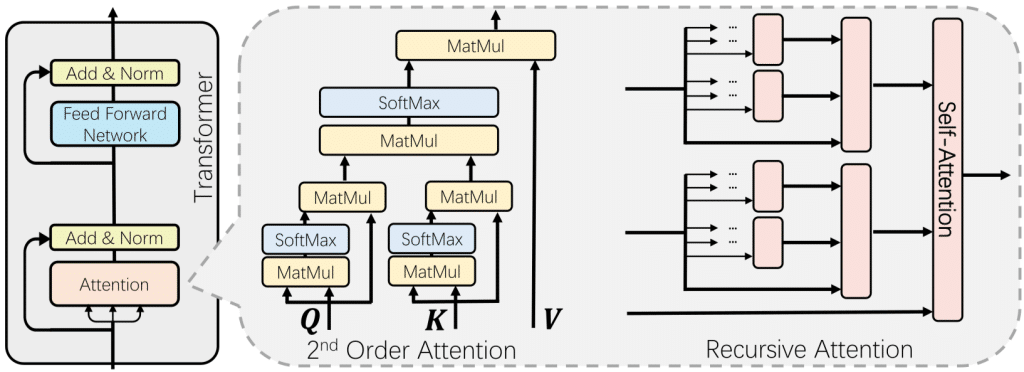
The attention mechanism is the engine inside the “Transformer” architecture. Unlike previous models, Transformers allow for parallel processing. Because the model can look at all words simultaneously through self-attention, it can be trained on massive GPUs at speeds that were previously impossible.
This shift didn’t just improve translation; it revolutionized:
-
Computer Vision: Helping AI identify objects by focusing on edges and textures that matter.
-
Drug Discovery: Paying attention to specific protein foldings that might react with a new medicine.
-
Coding: Understanding the logical flow of a script to suggest the next line of code.
The “Self-Attention” Phenomenon
The most powerful version of this is “Self-Attention.” This is where the model looks at a single input sequence and relates different positions of that sequence to find a better representation of it.
Imagine reading a mystery novel. When you reach the final chapter, your mind “self-attends” to the clues mentioned in Chapter 1. You are updating your understanding of the whole story based on the new context. That is exactly what a Transformer does—it constantly re-evaluates the “weight” of every word in a sentence based on every other word.
Practical Implications: Why Should You Care?
If you aren’t a developer, why does the attention mechanism matter to you?
-
Search Precision: Modern search engines no longer just look for keywords; they use attention to understand the intent of your query.
-
Productivity: Tools like Copilot or Jasper work because they “attend” to your previous paragraphs to ensure the tone remains consistent.
-
Future of Interaction: We are moving toward a world where you can talk to your computer naturally. Without attention, those computers would have the “memory of a goldfish,” forgetting what you said two minutes ago.
The Road Ahead: Efficiency and “Sparse” Attention
The only downside? The attention mechanism is expensive. Calculating the relationship between every single word in a 1,000-page book requires massive computing power. The next frontier is “Sparse Attention”—teaching AI to be even more like humans by ignoring even more irrelevant data, focusing only on the most critical “anchors” of information.
As we move forward, the goal isn’t to make AI see more. It’s to make AI see better.