Decoding the Digital Smile: Why Emotion Detection is AI’s Hardest Challenge Yet
If you’ve ever forced a smile for a photo while feeling absolutely miserable inside, you’ve already outsmarted most of the world’s current AI.
We are living in an era where emotion detection is no longer science fiction. It is the invisible force behind customer service bots that apologize when you sound frustrated, and cars that nudge you when you look tired. But here is the stinging truth: machines don’t actually know how you feel. They are simply world-class pattern matchers, trained to correlate the crinkle of your eyes or the pitch of your voice with a label in a database. Understanding this distinction is the difference between building a tool that helps people and a tool that merely invades their privacy.
The Mechanics of Binary Empathy
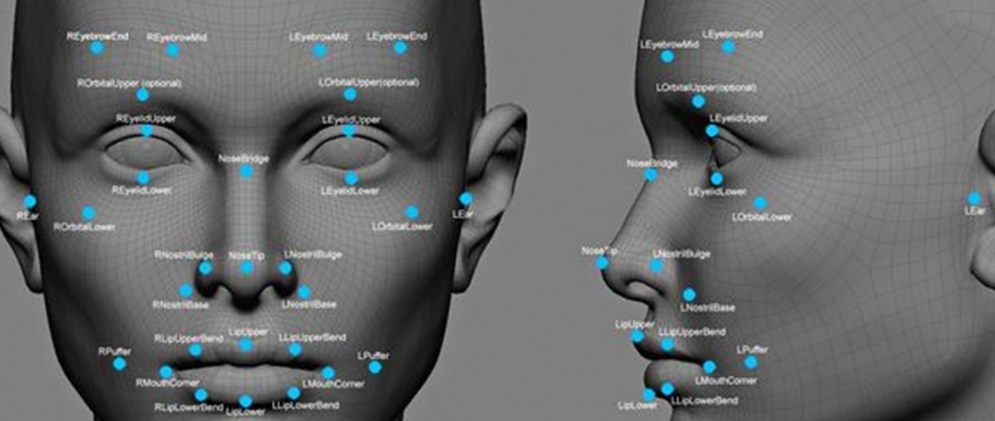
At its core, emotion detection—often referred to as Affective Computing—relies on three primary data streams: facial expressions, vocal tonality, and physiological signals.
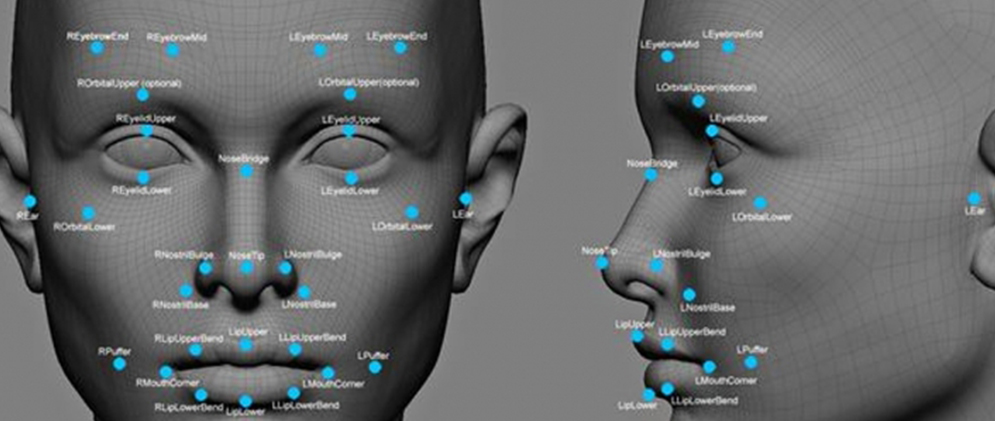
Most modern systems use Deep Learning to analyze video frames. They look for “Action Units” (AUs), which are specific movements of facial muscles. For example, a “Duchenne smile” involves both the zygomatic major muscle (mouth) and the orbicularis oculi (eyes). If the AI sees both, it logs “Happiness.”
Editorial Opinion: We’ve become too reliant on these visual labels. The industry treats human emotion like a set of Legos that can be disassembled and categorized. In reality, emotion is a fluid, cultural, and deeply personal spectrum that a camera sensor can only scratch the surface of.
Reality Check: The “Universal Expression” Myth

There is a massive misconception that certain facial expressions are universal—that a “scowl” always means anger. This is scientifically flawed.
Research has shown that people across different cultures, or even individuals in different contexts, express the same emotion in vastly different ways. A person might scowl when they are concentrating intensely, not just when they are mad. If we build emotion detection systems based on the assumption that everyone expresses joy or sadness the same way, we aren’t creating “empathetic” AI; we are creating biased machines that punish people for having “non-standard” faces.
Beyond the Face: The Multi-Modal Approach
The most sophisticated applications of emotion detection are moving away from cameras and toward multi-modal analysis. This is where things get interesting—and a bit eerie.
-
Vocal Analytics: Analyzing the “prosody” of speech. It’s not about what you say, but the jitter, shimmer, and tempo of your voice.
-
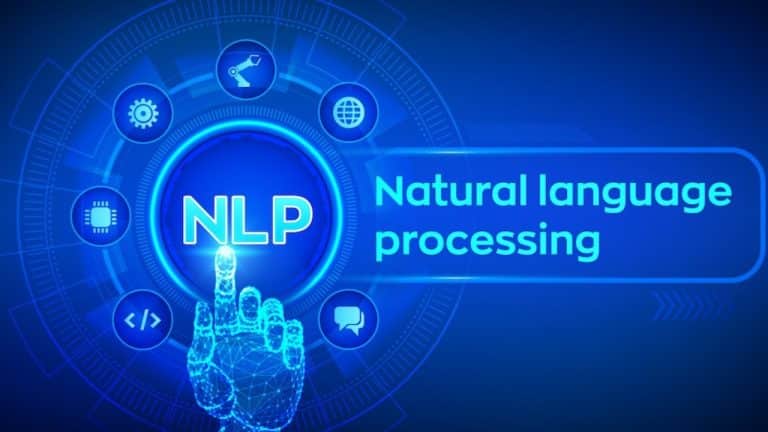
Natural Language Processing (NLP): Sentiment analysis that looks for linguistic cues.
-
Wearable Integration: Monitoring heart rate variability (HRV) and skin conductance to detect stress before the user even realizes they are anxious.
While these tools are revolutionary for mental health monitoring or high-stress jobs like air traffic control, they also raise a red flag. When an AI can detect your internal stress levels through a smartwatch, the boundary between “helpful assistant” and “corporate surveillance” becomes dangerously thin.
Practical Applications: Where Theory Meets the Street
If you’re looking to integrate emotion detection into a product or workflow, you need to think beyond the “cool factor.”
-
Customer Experience (CX): Instead of just counting “happy” customers, use AI to flag “escalation” moments where a human agent needs to step in immediately.
-
Education: AI tutors that can sense when a student is frustrated (not just failing) can adjust the difficulty of a lesson in real-time.
-
Safety: In-cabin monitoring in vehicles to detect micro-sleep or extreme road rage.
Pro-tip: Never use emotion detection as the sole basis for a high-stakes decision (like hiring or security). It should always be a “suggestive” data point, not a “definitive” one.
The Ethical Frontier: Privacy in the Age of Affect
The thing that is rarely discussed in technical whitepapers is the “Right to Emotional Privacy.” If a billboard on the street can read your mood and change its ad based on your sadness, have we lost the last private space we own—our minds?
As developers and strategists, the goal shouldn’t be to build a machine that “knows” everything. It should be to build systems that respect the user. This means “Edge AI”—processing the emotion data locally on the device and deleting it immediately, rather than sending your “frustration” to a cloud server forever.
The Horizon: From Detection to Understanding
The future of emotion detection isn’t about better cameras; it’s about better context. The next generation of AI will need to understand that a tear can mean joy at a wedding or grief at a funeral. We are moving from detection (the “what”) to cognition (the “why”).
Until AI can understand the story behind the smile, it’s just a very expensive mirror.