The Unspoken Code Why Natural Language Processing is Finally Getting the Joke
Imagine walking into a room and saying, “Great, the floor is wet.” Depending on your tone, the puddle, and who you’re talking to, that sentence could be a compliment (if you’re a janitor who just finished mopping) or a sarcastic bite of frustration (if you just slipped in your socks). For decades, computers were stone-cold literalists. They saw the words, but they missed the “weather” behind them.
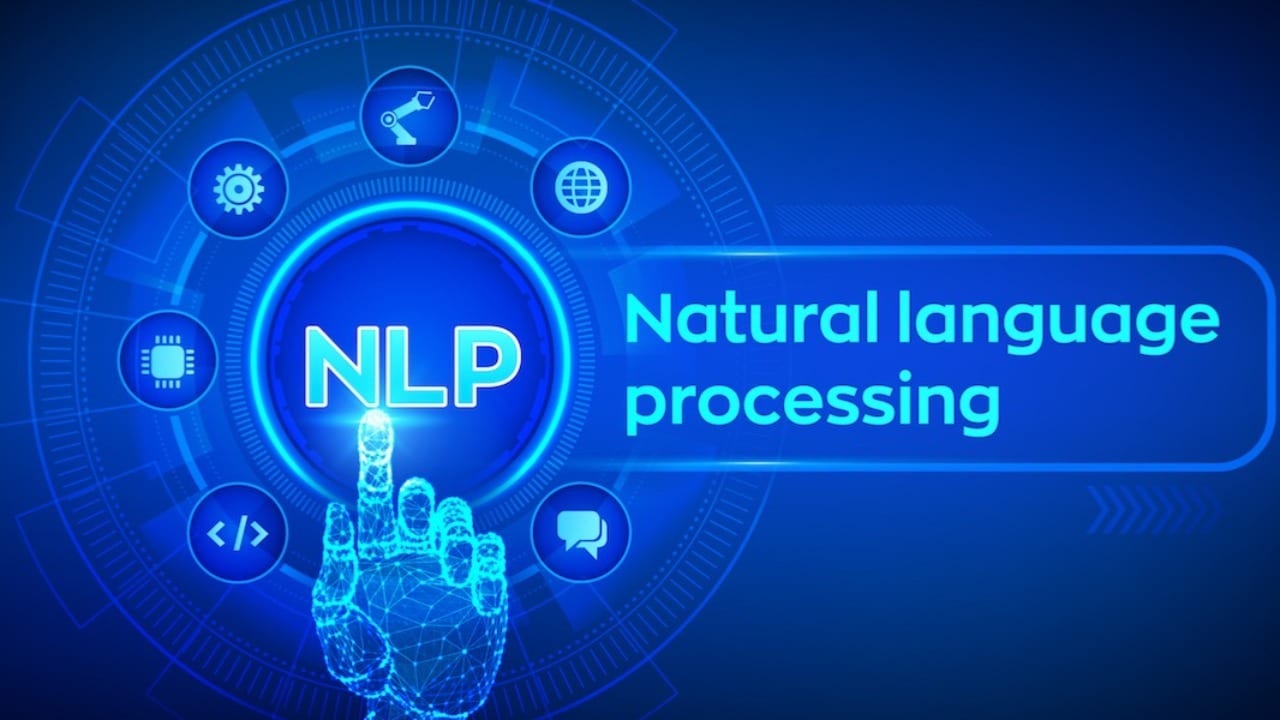
Natural language processing (NLP) is the ambitious bridge built to close that gap. It is the branch of artificial intelligence that gives machines the ability to read, understand, and derive meaning from human languages. But today, NLP is moving away from being a mere translation tool and evolving into something much more profound: an interpreter of human intent.
The Evolution from Rules to Reasoning
In the early days, NLP was a rigid librarian. We tried to teach computers language by feeding them thousands of grammar rules. If “A” happens, then “B” must be a noun. It was logical, exhaustive, and a total failure. Human language is too chaotic, too slang-heavy, and too dependent on context for a rule-book to ever keep up.
The breakthrough didn’t come from teaching machines rules; it came from teaching them patterns. With the advent of Deep Learning and Neural Networks, we stopped telling the computer what a “verb” was and started showing it billions of sentences. Through Natural Language Processing, the machine began to realize that the word “bank” usually lives near words like “river” or “money.” It started learning through association, much like a child, but at the scale of the entire internet.
The Transformer Revolution
If there is one milestone you should know, it’s the “Transformer” architecture. Before Transformers, AI read sentences like a slow reader—one word at a time, often forgetting the beginning of a sentence by the time it reached the end.
Modern NLP uses a mechanism called “Attention.” This allows the model to look at every word in a paragraph simultaneously, weighing which words are most important to the context of the others. This is why AI can now maintain the thread of a conversation or write a cohesive 1,000-word essay without tripping over its own logic every three sentences.
Breaking the “Literalist” Curse: Context is Everything
The most significant misunderstanding about natural language processing is the belief that a machine “understands” a word. It doesn’t. It understands vectors—mathematical coordinates in a multi-dimensional space.
However, the “magic” happens in how these vectors are mapped.
-
Sentiment Analysis: NLP can now detect if a customer review is angry, even if the user doesn’t use “bad” words. It picks up on the syntax of frustration.
-
Entity Recognition: It knows that “Apple” in a tech blog is a trillion-dollar company, but “Apple” in a pie recipe is a fruit.
-
Polysemy Management: This is the art of handling words with multiple meanings. A sophisticated NLP system doesn’t just translate “spring”; it looks at the surrounding “flowers” or “coils” to decide which version of the word exists in that reality.
The Hidden Engine of Modern Business
We often interact with NLP without realizing it. It’s not just about chatbots that occasionally annoy us; it’s the invisible infrastructure of the modern economy.
1. Hyper-Personalization at Scale
When a streaming service or a retail giant analyzes thousands of your past queries, they aren’t just looking at keywords. They are using NLP to categorize your “vibe.” They understand the difference between someone looking for “action movies” and someone looking for “gritty 80s noir with a synth-heavy soundtrack.”
2. Breaking the Language Barrier
Machine translation (like Google Translate or DeepL) has reached a point where the “uncanny valley” is disappearing. We are nearing a world of universal, real-time translation—a true Babel Fish moment. This isn’t just convenient for tourists; it’s transformative for global scientific collaboration and crisis response.
3. Content Governance
In an era of information overload, NLP acts as the first line of defense against hate speech and misinformation. By identifying patterns of toxic language or bot-generated propaganda, these systems help maintain the sanity of digital public squares.
The Reality Check: NLP is Still Not “Thinking”
Here is where we need to ground the hype. Despite the lyrical prose of Large Language Models (LLMs), natural language processing still lacks a “world model.”
If you tell an AI, “I put the trophy in the suitcase, but it was too big,” the AI correctly identifies that “it” refers to the trophy. If you say, “I put the trophy in the suitcase, but it was too small,” it knows “it” refers to the suitcase. This is impressive, but it’s based on statistical likelihood derived from text, not a physical understanding of how objects occupy space.
The machine is a master of “The What,” but it is still a novice at “The Why.” It can mimic empathy, but it cannot feel it. This distinction is crucial for developers and users alike: use NLP for its incredible processing power, but never outsource your final moral or logical judgment to a statistical model.
The Future: Small Data and Emotional Intelligence
Where do we go from here? The next frontier of natural language processing isn’t just “bigger models with more data.” The industry is shifting toward:
-
Low-Resource Languages: Moving beyond English to ensure AI works for the billions of people speaking Swahili, Quechua, or regional Indonesian dialects.
-
Multimodal NLP: Training machines to understand language alongside images and sounds. A person saying “I’m fine” while crying means something different than saying it while smiling.
-
Edge NLP: Running powerful language models locally on your phone or fridge without needing a massive server, prioritizing privacy and speed.
Closing Thoughts: The Human Anchor
As we refine natural language processing, we aren’t just making smarter machines; we are learning more about ourselves. Every time an AI fails to catch a joke or misinterprets a metaphor, it highlights the beautiful, chaotic complexity of human communication.
The goal of NLP isn’t to replace the human voice. It is to ensure that in a world drowning in data, we can finally be understood—even by our machines.