Computer Vision Teaching Machines to See the World, Not Just Pixels
Imagine handing a photograph of a golden retriever to a toddler. Within a millisecond, they scream “Doggy!” Now, try explaining to a machine—a collection of silicon and electricity—that the specific arrangement of orange and white pixels represents a living, breathing animal. For decades, this was the “Holy Grail” of computer science. We could make computers calculate prime numbers in nanoseconds, but they couldn’t tell the difference between a muffin and a chihuahua.
That gap is where computer vision lives. It is the field of artificial intelligence that trains computers to interpret and understand the visual world. By using digital images from cameras and videos and deep learning models, machines can accurately identify and classify objects—and then react to what they “see.”
The Evolution: From Simple Lines to Semantic Meaning
In the early days, researchers thought computer vision would be a “summer project.” They were wrong. It took nearly 60 years to get where we are today. Early systems relied on manual programming: “If you see a vertical line next to a horizontal line, it might be a box.”
Today, the approach has flipped. We don’t tell the computer what a cat looks like; we show it ten million pictures of cats and let the neural networks figure out the patterns. This shift from rule-based logic to data-driven learning is what allowed computer vision to explode in the last decade. We’ve moved from simple “image recognition” (Is this a cat?) to “semantic segmentation” (Which pixels belong to the cat, and which belong to the sofa?).
How Computer Vision Actually Works (Without the Jargon)
To a human, an image is a scene. To a computer, an image is a grid of numbers. If you have a high-definition photo, the computer sees a massive matrix of values representing colors and brightness.
-
Acquisition: The system captures an image or video stream.
-
Processing: Algorithms “clean” the image—removing noise or adjusting contrast—to make features stand out.
-
Feature Extraction: This is the magic. The AI looks for edges, then shapes, then complex structures.
-
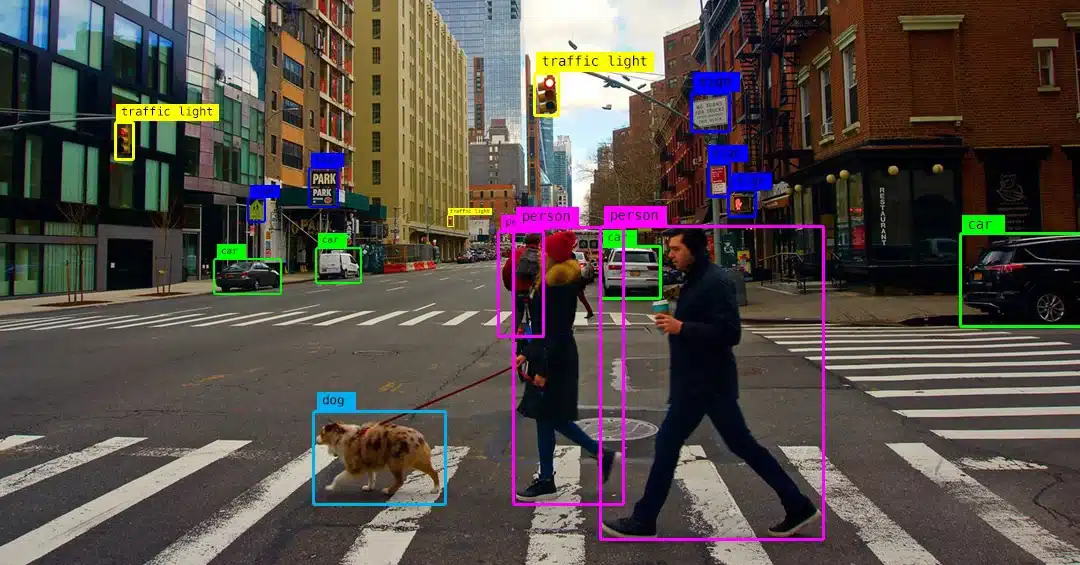
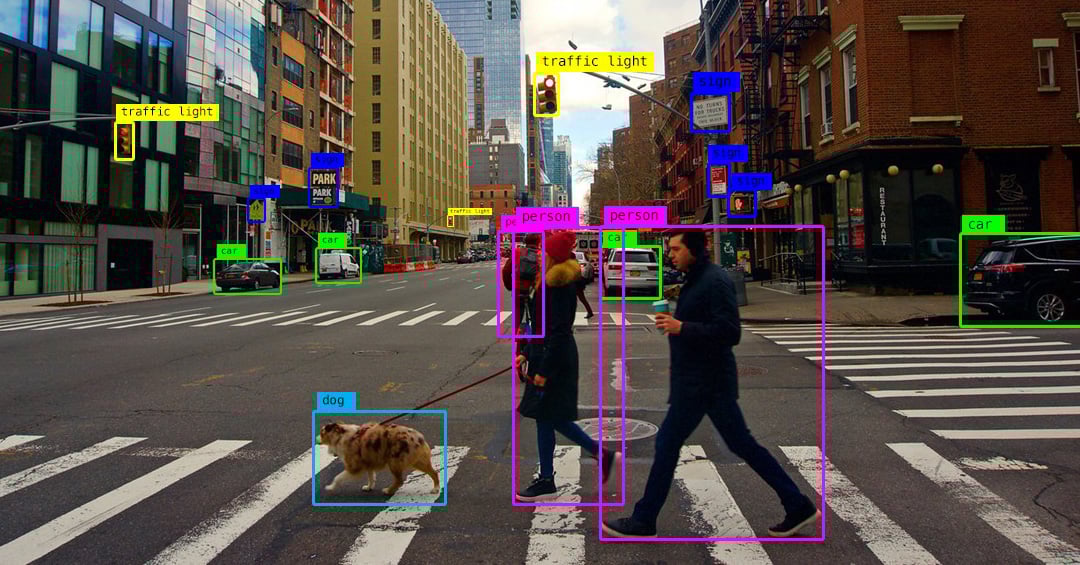
Classification/Detection: The system compares these features against its training data to say, “With 98% certainty, this is a pedestrian crossing the street.”
Reality Check: Computers Don’t “See” Like You Do
There is a common misconception that AI “understands” the world visually the same way humans do. It doesn’t. A computer vision system is essentially a world-class pattern matcher. If you show a state-of-the-art vision model a picture of a fire hydrant but change a few strategic pixels (invisible to humans), the AI might suddenly think it’s a toaster. This is known as an “adversarial attack,” and it proves that while CV is powerful, it lacks the biological “common sense” we take for granted.
Real-World Applications: More Than Just Filters
While we often interact with computer vision through Instagram filters or FaceID on our phones, its impact on the global economy is far more profound.
1. Healthcare and Medical Imaging
Radiologists are now using CV-powered tools to spot tumors in X-rays and MRIs with higher accuracy than the human eye in some cases. It’s not replacing doctors; it’s giving them a “second set of eyes” that never gets tired or caffeinated.
2. The Future of Mobility
Self-driving cars are essentially high-speed computer vision experiments. A Tesla or a Waymo vehicle processes dozens of video feeds simultaneously to identify lane lines, stop signs, and the unpredictable movement of a cyclist.
3. Retail and “Just Walk Out” Technology
Stores like Amazon Go use computer vision to track which items you pick up from the shelf. By mapping your skeletal movement and the object’s location, the system knows you’ve taken a soda, eliminating the need for a checkout line.
Why It’s Harder Than It Looks
If you want to understand the difficulty of computer vision, think about “occlusion.” If a person walks behind a tree, you know they still exist. A primitive AI might think the person has vanished or been replaced by a tree-human hybrid. Solving these spatial puzzles requires massive amounts of computing power and incredibly diverse datasets.
Furthermore, we have to talk about Editorial Opinion: The Bias in the Lens. If we train a vision system using photos only from Western countries, it will struggle to recognize objects or faces in other parts of the world. The “vision” of the machine is only as good as the library of images we feed it. We aren’t just building cameras; we are building cultural mirrors. If the data is biased, the machine’s sight will be distorted.
The Next Frontier: Visual Reasoning
The industry is currently moving toward “Vision-Language Models” (VLMs). This is where the AI doesn’t just label an image (“Man, Ball, Field”) but can describe the action and intent (“A man is about to kick a ball to his son because he wants to teach him soccer”).
We are moving away from machines that just “label” and toward machines that “comprehend.”
Conclusion: A World Seen Through Silicon
Computer vision is no longer a futuristic concept; it is the invisible infrastructure of the modern age. It monitors our crops, secures our buildings, and helps us navigate our world. As the technology matures, the line between human perception and machine detection will continue to blur.
The goal isn’t to create a machine that sees exactly like a human—it’s to create a system that can see the things we miss. From microscopic flaws in a microchip to early signs of a wildfire from a satellite feed, computer vision is expanding the horizon of what is “visible” to us.