Text Generation Navigating the New Era of Synthetic Eloquence
If you gave a million monkeys a million typewriters, eventually, they might produce Shakespeare. But if you give a modern Large Language Model (LLM) a fraction of a second, it can write a sonnet, a Python script, and a breakup letter before you’ve even finished your coffee. We’ve reached a psychological tipping point where the line between “human-written” and “machine-generated” hasn’t just blurred—it’s effectively evaporated.
At its heart, text generation is the automated process of producing coherent, human-like language using Artificial Intelligence. But to see it simply as a “writing tool” is to miss the bigger picture. It is the most significant shift in how we handle information since the printing press, turning the act of writing from a labor of construction into a labor of curation.
The Statistical Oracle: How Text Generation Actually Works
To use these tools effectively, you have to dispel the myth that the AI “knows” what it’s saying. It doesn’t. It’s not thinking; it’s predicting.
The Magic of the “Next Token”

Imagine you are typing a text message and your phone suggests the next word. Text generation is that, but on a cosmic scale. Models like GPT-4 or Gemini are trained on petabytes of human thought. When you give it a prompt, the AI looks at the sequence of words (tokens) and asks itself: “Statistically speaking, what is the most likely word to follow this one?” It does this billions of times over, constructing sentences based on patterns of probability rather than a conscious understanding of truth.
Transformers and Attention Mechanisms
The breakthrough that changed everything was the “Transformer” architecture. Old AI used to get “distracted” by long sentences, forgetting how a paragraph started by the time it reached the end. Modern models use an “Attention” mechanism, allowing them to look at every word in a prompt simultaneously to understand context. This is why AI can now maintain a consistent tone and follow complex instructions across thousands of words.
Reality Check: The Hallucination Problem is a Feature, Not a Bug
One of the most frequent complaints about AI is that it “lies” or “hallucinates” facts. Reality check: AI doesn’t lie because it doesn’t know what the truth is. Hallucination is simply the AI doing exactly what it was built to do: generate the most likely next word. If the model hasn’t been trained on a specific fact, it will “predict” a plausible-sounding answer based on its training. It prioritizes fluency over factuality by default. Thinking of AI as a search engine is a mistake; it is a reasoning engine that occasionally gets its facts wrong.
Beyond the Chatbot: Diverse Applications of Text Generation
While we mostly interact with text generation through chat interfaces, its utility stretches far into the infrastructure of our digital lives.
Code Generation and Software Engineering
Developers are arguably the biggest beneficiaries. AI can generate boilerplate code, debug errors, and even translate entire projects from one programming language to another. In this niche, text generation isn’t just about prose; it’s about the logical syntax that runs our world.
Personalized Education and Summarization
Text generation allows for “infinite versions” of the same information. A complex scientific paper can be instantly rewritten for a 5th grader, a PhD student, or a busy executive. It democratizes specialized knowledge by breaking down the barrier of jargon.
The Editorial Opinion: Why the “Human-in-the-Loop” is Non-Negotiable

There is a growing fear that AI will replace writers. My take? It will replace bad writers—those who produce generic, soul-less SEO filler. But for high-level strategy and creative storytelling, AI is a bicycle for the mind, not a replacement for the rider.
The most successful uses of text generation involve a “Human-in-the-Loop” workflow. The AI provides the raw material—the clay—and the human provides the shape, the nuance, and the emotional resonance. Without a human editor, AI-generated text eventually suffers from “Model Collapse,” where it starts to sound like a copy of a copy, losing the sharp edges of original thought.
Actionable Tactics: How to Master the Machine
To get the most out of text generation, you need to move past simple one-line commands. Mastering this tech requires a shift in how you communicate.
-
Chain-of-Thought Prompting: Instead of asking for a final answer, ask the AI to “think step-by-step.” This forces the model to layout its logic, which significantly reduces errors and hallucinations.
-
Role-Playing Context: Don’t just ask for an article. Tell the AI it is an “Expert Editorial Strategist with 20 years of experience.” Giving the model a persona helps it narrow down the “statistical space” it uses to generate words, resulting in a more specific tone.
-
The “Temperature” Check: Many professional tools allow you to adjust “Temperature.” A low temperature makes the AI predictable and factual; a high temperature makes it creative and “wild.” Know which one you need before you start.
The Ethical Frontier: Ownership and Authenticity
As we flood the internet with generated text, we face a crisis of authenticity. If an AI writes a poem, who owns the copyright? If a student uses a generator for an essay, is it cheating or is it “advanced research”?
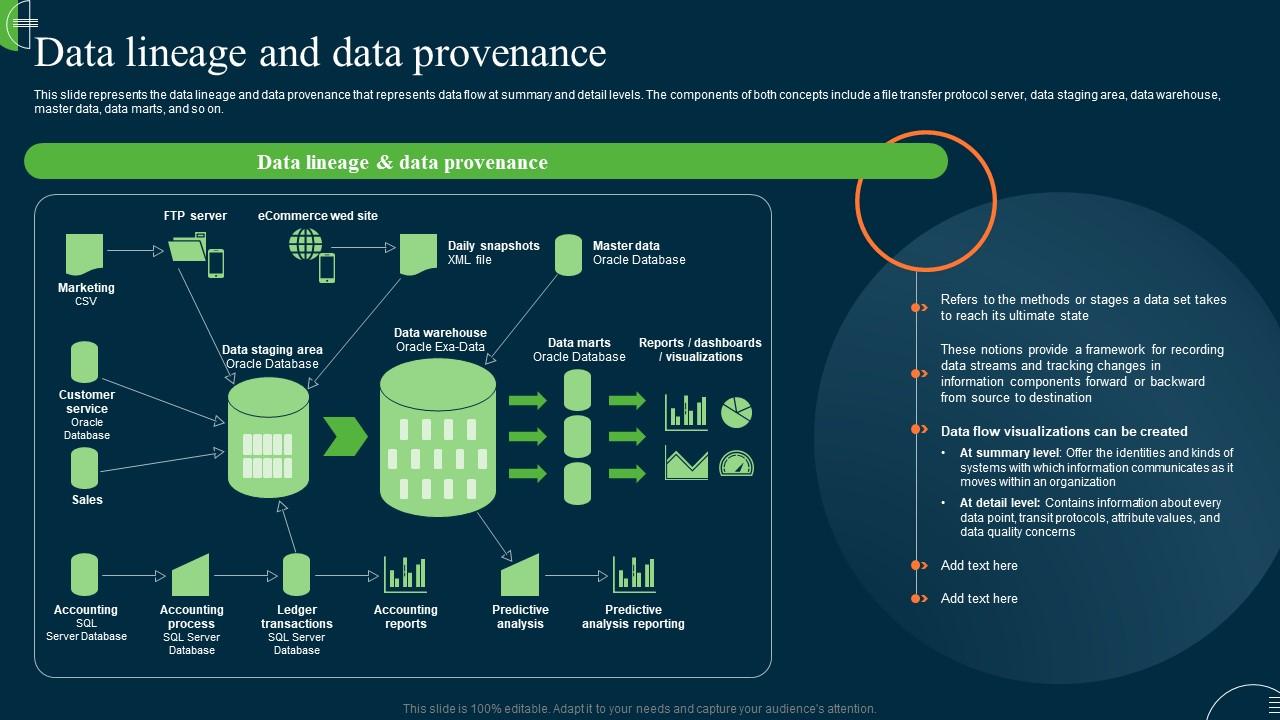
The rare discussion point here is Data Provenance. We are moving toward a world where “Human-Signed” content will carry a premium. Just as we value hand-made furniture over factory-pressed items, original human thought is becoming a luxury good in a sea of synthetic text.