
The Invisible Threat to AI Understanding AI Drift
Artificial intelligence (AI) has revolutionized countless industries, from personalized recommendations and medical diagnostics to autonomous vehicles and financial fraud detection. We rely on these intelligent systems to make decisions, automate processes, and unlock new levels of efficiency. However, beneath the surface of seemingly perfect AI performance lies a subtle yet potent threat: AI drift. If left unchecked, AI drift can silently degrade the accuracy and reliability of your models, leading to costly errors, missed opportunities, and a loss of trust in your AI investments.
What Exactly is AI Drift?

In essence, AI drift refers to the degradation of a machine learning model’s predictive performance over time. This degradation occurs because the real-world data that the model encounters starts to diverge from the data it was originally trained on. Think of it like a map: if the roads and landscape change significantly, an old map becomes less and less useful for navigation. Similarly, as the underlying patterns and distributions in your data evolve, your AI model’s ability to make accurate predictions diminishes.
There are generally two primary types of AI drift:
1. Concept Drift
Concept drift is perhaps the most intuitive form of drift. It happens when the relationship between the input features and the target variable changes. For example:
- Customer behavior: A model predicting product purchases might become less accurate if consumer preferences shift due to new trends, economic changes, or even a global pandemic.
- Fraud detection: Fraudsters constantly evolve their tactics, meaning the patterns that once signaled fraudulent activity might no longer be relevant, or new, unforeseen patterns emerge.
- Medical diagnosis: The prevalence or characteristics of certain diseases can change over time, impacting a diagnostic model’s accuracy.
2. Data Drift (Covariate Shift)
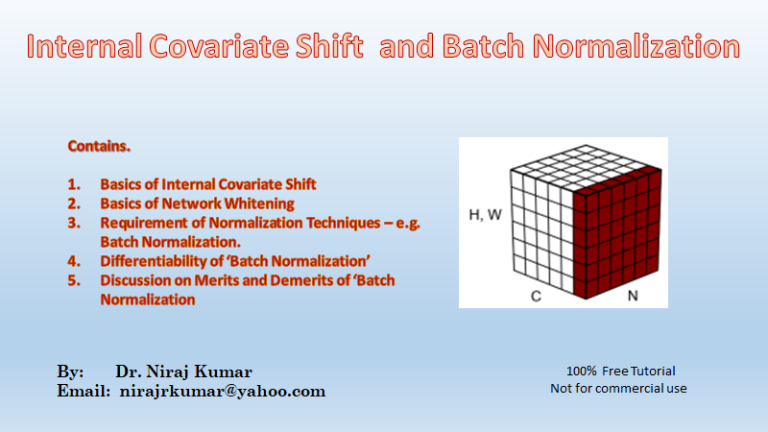
Data drift, also known as covariate shift, occurs when the distribution of the input features themselves changes, while the underlying relationship between features and the target variable remains the same. Examples include:
- Sensor degradation: A sensor used for environmental monitoring might start providing slightly different readings due to wear and tear, introducing data drift.
- Changes in data collection: Updates to software that collects data, or changes in user input methods, can subtly alter the distribution of your input features.
- Seasonal variations: In retail, sales patterns often exhibit seasonal variations. If a model isn’t retrained or adapted, it might perform poorly during off-peak seasons.
Why is AI Drift a Growing Concern?
The proliferation of AI across diverse sectors means that the impact of drift is becoming more widespread. As AI systems become more integrated into critical decision-making processes, the consequences of their degraded performance can be severe. Imagine an autonomous vehicle misinterpreting a new road sign, a financial model making incorrect investment decisions, or a healthcare AI failing to identify a critical condition. The stakes are incredibly high.
Furthermore, the dynamic nature of the modern world, fueled by rapid technological advancements, evolving consumer behaviors, and global events, makes data continuously subject to change. This constant flux means that AI drift is not a hypothetical problem; it’s an ongoing challenge that requires proactive management.
The Solution: Proactive AI Drift Detection
The good news is that AI drift doesn’t have to be an insurmountable obstacle. By implementing robust AI drift detection strategies, you can identify and address these performance degradations before they cause significant harm. Think of drift detection as the early warning system for your AI models.
Key Strategies for AI Drift Detection
Effective AI drift detection involves a combination of monitoring, analysis, and timely intervention. Here are some of the most common and effective strategies:
1. Performance Monitoring
This is the most direct way to identify drift. Continuously track key performance metrics (KPIs) of your model in production. These metrics will vary depending on your model’s purpose, but common examples include:
- Accuracy: The overall percentage of correct predictions.
- Precision and Recall: Crucial for classification tasks, especially when dealing with imbalanced datasets.
- F1-Score: A harmonic mean of precision and recall.
- Mean Squared Error (MSE) or Root Mean Squared Error (RMSE): For regression tasks.
- Area Under the ROC Curve (AUC): Another important metric for classification.
Set thresholds for these metrics. If a KPI drops below a predefined threshold, it’s a strong indicator of drift.
2. Data Distribution Monitoring
This strategy focuses on detecting changes in the input data itself. You can compare the statistical properties of incoming data with the data your model was trained on. Techniques include:
- Statistical tests: Employing tests like the Kolmogorov-Smirnov (K-S) test or Chi-squared test to compare distributions.
- Drift detection algorithms: Specialized algorithms like DDM (Drift Detection Method) or EDDM (Early Drift Detection Method) are designed to identify changes in error rates, which can signal drift.
- Monitoring feature distributions: Tracking the mean, median, standard deviation, and range of individual features over time.
3. Model Explainability and Monitoring Feature Importance
Understanding why your model makes certain predictions can also help detect drift. If the importance of certain features changes drastically, it might indicate that the underlying relationships are shifting. Tools that provide feature importance scores can be invaluable here.
4. Anomaly Detection
While not directly detecting drift, anomaly detection can flag unusual data points or patterns that might be precursors to drift or indicative of a changing data landscape. This can alert you to investigate further.
5. Ensemble Methods and Model Ensembles
Using multiple models or ensembles can sometimes offer a more robust approach. If different models within an ensemble start disagreeing significantly, it could be a sign of drift affecting individual models differently.
What to Do When Drift is Detected?
Detecting drift is only half the battle. Once identified, you need a plan of action. Common responses include:
- Retraining the model: This is the most common solution. Use newly collected, representative data to retrain your model from scratch or fine-tune it.
- Updating the model: In some cases, you might need to adjust the model architecture or algorithm to better suit the new data patterns.
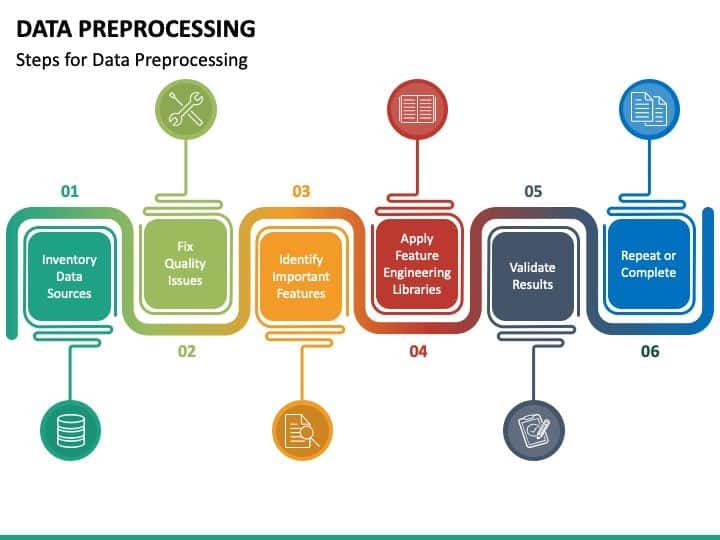
- Data preprocessing: If data drift is due to known issues (e.g., sensor calibration), you might be able to adjust the incoming data before feeding it to the model.
- Re-evaluation of the problem statement: Sometimes, drift might signal that the original problem definition or the data used to define it is no longer relevant.
The Future of AI Drift Detection
As AI continues its relentless march forward, the sophistication of drift detection methods will undoubtedly evolve. We can expect to see more automated, real-time drift detection systems, potentially leveraging advanced AI techniques themselves to monitor and adapt other AI models. The integration of drift detection into MLOps (Machine Learning Operations) pipelines will become standard practice, ensuring that AI systems remain reliable and trustworthy in an ever-changing world.
Staying ahead of AI drift is not just about maintaining performance; it’s about safeguarding the integrity and value of your AI initiatives. By embracing proactive drift detection, you ensure your AI models remain powerful, accurate, and dependable partners in your technological journey.