The Ghost in the Code Why Artificial Intelligence is More Human Than You Think
Imagine waking up to find that a machine can write your emails, design your logo, and even mimic your voice. It’s not a scene from a 90s sci-fi flick anymore; it’s just a Tuesday in 2026. But as we rush to integrate artificial intelligence into every corner of our lives, we’ve started asking the wrong question. We ask, “What can AI do?” when we should be asking, “What is it doing to us?”
Artificial intelligence isn’t just a set of algorithms; it’s a mirror. It reflects our collective knowledge, our biases, and our creativity. If you feel like the world is moving too fast, it’s because the mirror is starting to move on its own.
The Architecture of “Thought”: How AI Actually Works
To the average user, AI feels like magic. You type a prompt, and magic happens. But underneath the hood, it’s all about high-speed pattern recognition. Modern AI, specifically Generative AI, uses Large Language Models (LLMs) that function like a super-powered version of the “autofill” on your phone.
Neural Networks vs. Human Intuition

While humans learn through experience, emotion, and context, AI learns through sheer volume. It consumes billions of data points to predict that the word “Artificial” is likely to be followed by “Intelligence.” It doesn’t understand the concept of intelligence; it just calculates the probability of it.
Reality Check: AI is Not an “Entity” (Yet)
Let’s clear the air: Artificial intelligence does not have a soul, a conscious, or an agenda. Reality check: A common misconception is that AI is “thinking” like a human. It’s not. It is a sophisticated statistical engine. When an AI “hallucinates” (makes things up), it’s not lying; it’s simply following a statistical path that leads to a wrong conclusion. Thinking of AI as a conscious being is like thinking your calculator is good at math because it “likes” numbers.
The Editorial Stance: The “Mediocrity Trap”
Here is a hard truth that most tech blogs won’t tell you: AI is making the world more mediocre. Because AI is trained on existing data, it excels at producing “the average.” It writes average articles, creates average art, and gives average advice.
In my view, the real danger of AI isn’t that it will become “too smart” and take over the world. The danger is that we will become “too lazy” and accept its average output as the gold standard. To stay ahead, you shouldn’t try to beat AI at being fast; you should beat it at being weird, specific, and emotional—things an algorithm can’t simulate.
Why AI Won’t Steal Your Job (But Someone Using It Will)
The fear of replacement is real, but the history of technology tells a different story. The washing machine didn’t kill the concept of clean clothes; it just changed how we wash them. Similarly, AI is automating tasks, not entire professions.
-
In Coding: AI writes the boilerplate code, allowing developers to focus on architecture and security.
-
In Marketing: AI analyzes the data, but humans must still craft the “hook” that touches a customer’s heart.
-
In Healthcare: AI spots patterns in X-rays faster than any human, but it can’t hold a patient’s hand and explain what a diagnosis means.
How to Exist in an AI-Driven World
If you want to thrive, you need to stop being a “user” and start being a “curator.” Here’s how:
-
Develop “AI Fluency”: Learn how to talk to the machines. Prompt engineering isn’t about magic words; it’s about clear communication and logic.
-
Double Down on Soft Skills: Empathy, negotiation, and ethical judgment are the only things AI can’t replicate. The more the world automates, the more valuable the “human touch” becomes.
-
Verify, Then Trust: Never take an AI’s output at face value. Always be the “Editorial Strategist” of your own work.
Conclusion: The New Partnership
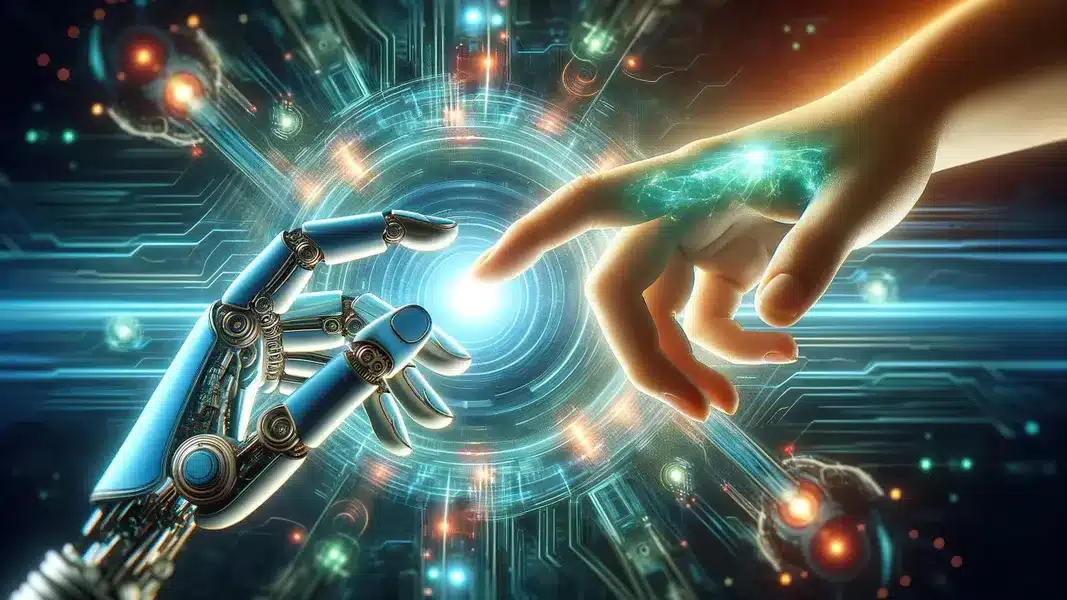
Artificial intelligence is the most powerful tool ever created, but it’s still just that—a tool. It’s a hammer that can build a house or a weapon that can break a window. The outcome depends entirely on the hand that holds it.
We aren’t entering an era where machines replace humans. We are entering an era where humans who embrace their unique “messiness” will use machines to reach heights we never thought possible.