
Unlocking the AI Black Box: A Deep Dive into Mechanistic Interpretability
Artificial Intelligence, especially deep learning, has driven incredible advancements from medical diagnostics to natural language processing. Yet, these sophisticated AI systems often remain “black boxes.” We know their inputs and outputs, but their intricate decision-making is opaque. This lack of transparency poses significant challenges, particularly in high-stakes applications.
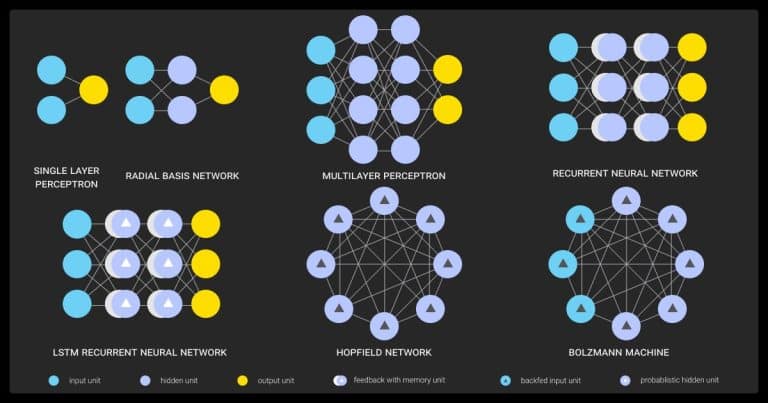
Enter mechanistic interpretability – a burgeoning field dedicated to cracking open these black boxes. It’s not enough to know an AI made a correct prediction; MI seeks to understand how and why by dissecting its internal mechanisms. It’s about reverse-engineering artificial neural networks, neuron by neuron, to uncover the “circuits” driving their behavior.
Beyond Black Boxes: The Need for Transparency

Imagine an AI diagnosing a rare disease or an autonomous vehicle making a split-second decision. In such critical scenarios, trusting AI output without understanding its rationale can be perilous. Traditional explainable AI (XAI) provides post-hoc justifications, but often doesn’t reveal granular internal workings. Mechanistic interpretability aims for a fundamental understanding of the model’s computations, akin to understanding a computer chip’s transistors.
The Core Idea: Deconstructing AI Circuits
At its heart, mechanistic interpretability posits that complex AI behaviors emerge from simpler, interpretable “circuits” within the neural network. Researchers identify these circuits, map their functions, and understand their interactions to produce specific outputs. This involves analyzing neuron activations and tracing information flow, effectively creating a “blueprint” of the AI’s internal logic.
Why Does Mechanistic Interpretability Matter?
The pursuit of understanding AI’s inner workings isn’t merely an academic exercise; it has profound implications for the development, deployment, and trustworthiness of artificial intelligence.
Building Trust and Ensuring Safety
For AI to be widely adopted in sensitive areas like healthcare, finance, and defense, it must be trustworthy. Mechanistic interpretability provides verifiable insights into AI’s decision-making, allowing developers and regulators to confirm models operate as intended, free from biases, and robust against attacks. This deeper understanding is crucial for certifying AI systems and building public confidence.
Debugging and Improving AI Models
When an AI model errs, simply knowing it was wrong doesn’t help fix the problem. Mechanistic interpretability offers a powerful debugging tool. By pinpointing specific internal circuits or neurons responsible for faulty reasoning, developers can diagnose root causes more effectively. This allows for targeted interventions, leading to more robust, reliable, and higher-performing AI systems, moving beyond trial-and-error.
Scientific Discovery and Understanding Intelligence
Beyond practical applications, mechanistic interpretability offers a unique lens to study intelligence itself. Understanding how artificial neural networks learn and process information could provide profound insights into biological intelligence. AI models could become “laboratories” for cognitive science, helping unravel mysteries of perception, memory, and reasoning, both artificial and natural.
Key Approaches and Techniques
Researchers employ a variety of sophisticated methods to explore the inner workings of AI models:
Neuron Activations and Feature Visualization
One fundamental approach involves analyzing what causes individual neurons or groups of neurons to activate. By feeding various inputs and observing activation patterns, researchers infer the “features” or concepts specific neurons represent. Feature visualization generates inputs that maximally activate a neuron, revealing its learned concept – be it an edge detector, texture, or a higher-level semantic concept like “dog face.”
Circuit Analysis and Causal Intervention
Moving beyond individual neurons, circuit analysis identifies interconnected groups of neurons that collectively perform specific computations. This often involves techniques like path tracing, following information flow, or causal interventions, where specific neurons or connections are systematically modified to observe downstream effects. By manipulating the model’s internal state, researchers establish causal links between internal components and external behavior, effectively reverse-engineering the model’s algorithms.
Challenges and The Road Ahead
Despite its promise, mechanistic interpretability is a nascent field facing significant hurdles.
Scaling to Larger Models
The sheer size and complexity of modern deep learning models, especially large language models (LLMs) with billions of parameters, make comprehensive mechanistic interpretation incredibly challenging. Astronomical interactions require advanced computational tools and novel theoretical frameworks.

Bridging the Gap to Practical Applications
While research yields compelling insights into smaller models, translating these findings into actionable improvements for real-world AI systems remains challenging. The goal is not just academic understanding, but building demonstrably safer, more reliable, and aligned AI. This requires developing robust tools and methodologies integrated into the AI development lifecycle.
The Future of Understandable AI
Mechanistic interpretability represents a critical frontier in AI research. As AI systems become powerful and pervasive, our ability to understand, control, and trust them becomes paramount. By systematically dissecting the “minds” of our artificial creations, we pave the way for more robust and ethical AI, and gain unprecedented insights into intelligence itself. The journey to truly understandable AI is long, but mechanistic interpretability offers a compelling roadmap to a future where AI’s power is matched by our comprehension.