Quebec Old Town Walk Exploring the Charming Streets of North America’s Most European City
A Quebec Old Town Walk feels less like a typical city stroll and more like stepping into a living storybook. As you enter the historic district, cobblestone streets wind between centuries-old stone buildings, colorful shopfronts, and small cafés where the scent of fresh pastries drifts into the air. Street musicians perform near historic squares, and horse-drawn carriages occasionally roll past, echoing the city’s colonial past.
Located along the St. Lawrence River, Quebec City preserves one of the oldest European settlements in North America. Its historic district, often called Old Quebec, holds the distinction of being a UNESCO World Heritage Site. Within its walls, centuries of French and British influence shaped architecture, culture, and daily life.
A Quebec Old Town Walk allows visitors to experience these layers of history slowly and intimately. Instead of rushing between attractions, travelers can wander narrow lanes, pause in historic squares, and admire buildings that have stood for hundreds of years.
Entering the Historic Heart of Old Quebec
A City Within Walls
Old Quebec remains the only fortified city north of Mexico. Stone walls and defensive gates still surround much of the historic district, creating a sense of stepping back into another era.
When travelers begin a Quebec Old Town Walk, they quickly notice the European character of the neighborhood. Narrow streets curve unpredictably, and buildings display classic French colonial architecture with steep roofs and stone façades.
Upper Town and Lower Town
Old Quebec divides naturally into two areas: Upper Town and Lower Town. Upper Town sits on the cliffs overlooking the St. Lawrence River, while Lower Town rests closer to the waterfront.
Walking between these areas reveals dramatic views of the city and river below.
The Iconic Château Frontenac

A Landmark Above the River
Towering above Old Quebec stands Château Frontenac, one of the most photographed hotels in the world. Built in the late 19th century, the castle-like structure overlooks the St. Lawrence River and dominates the city skyline.
Visitors on a Quebec Old Town Walk often begin here because the surrounding terrace provides panoramic views of the river and surrounding landscape.
The Dufferin Terrace Promenade
The wooden boardwalk known as Dufferin Terrace stretches along the cliff edge beside Château Frontenac. Musicians, artists, and performers often gather here, creating a lively yet relaxed atmosphere.
During winter, a historic toboggan slide attracts visitors seeking a thrilling ride down the snowy slope.
Exploring the Historic Lower Town
The Charm of Quartier Petit Champlain
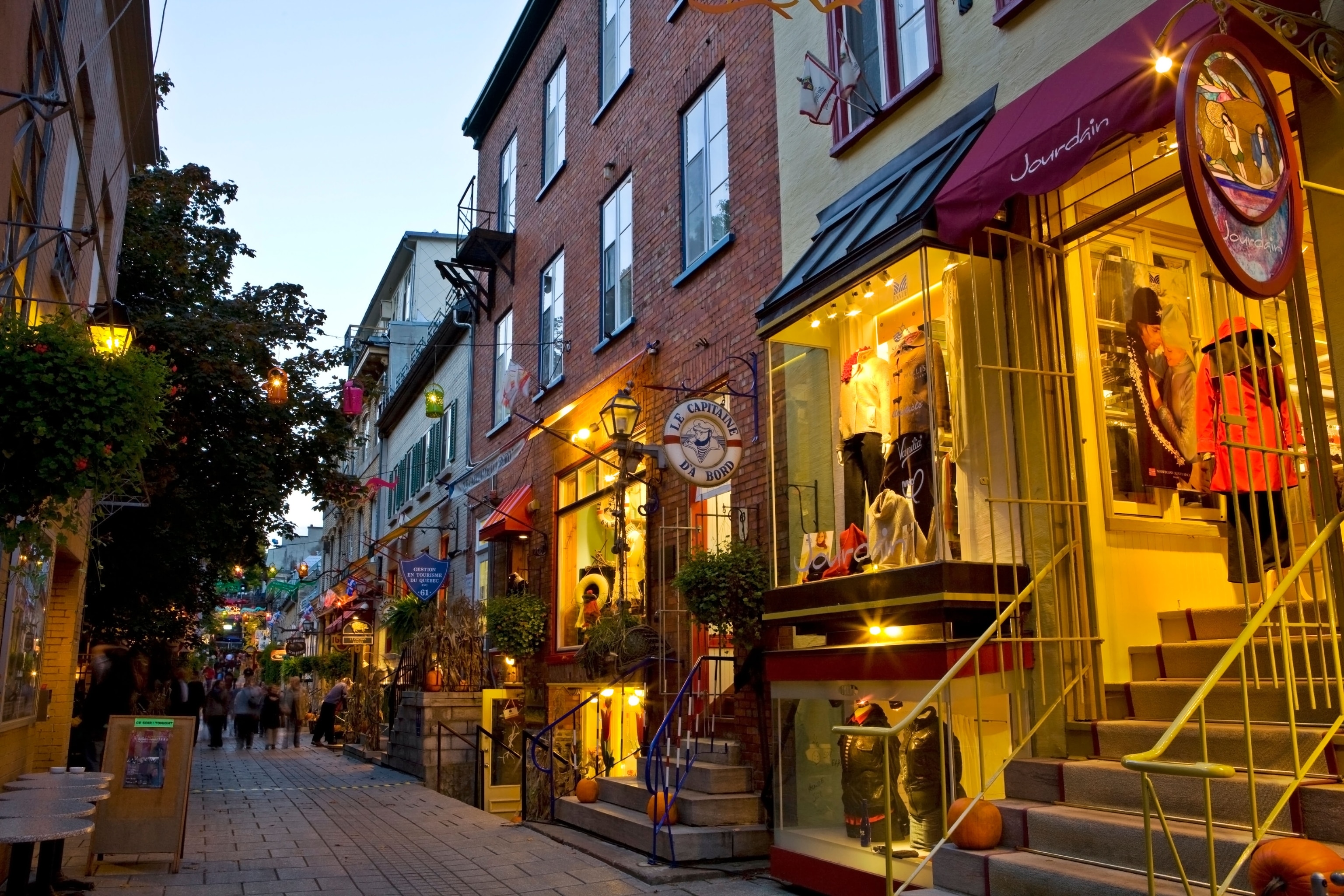
Descending toward Lower Town brings visitors into one of the most charming neighborhoods in Canada. Quartier Petit Champlain features narrow cobblestone streets lined with boutiques, art galleries, and bakeries.
Colorful decorations hang above the street year-round, creating a festive atmosphere even outside holiday seasons.
A Street from the 1600s
Petit Champlain ranks among the oldest commercial streets in North America. Buildings date back several centuries, and many businesses maintain the historical character of their storefronts.
This neighborhood often becomes the highlight of a Quebec Old Town Walk because it combines history with lively modern culture.
Historic Squares and Cultural Landmarks

The Significance of Place Royale
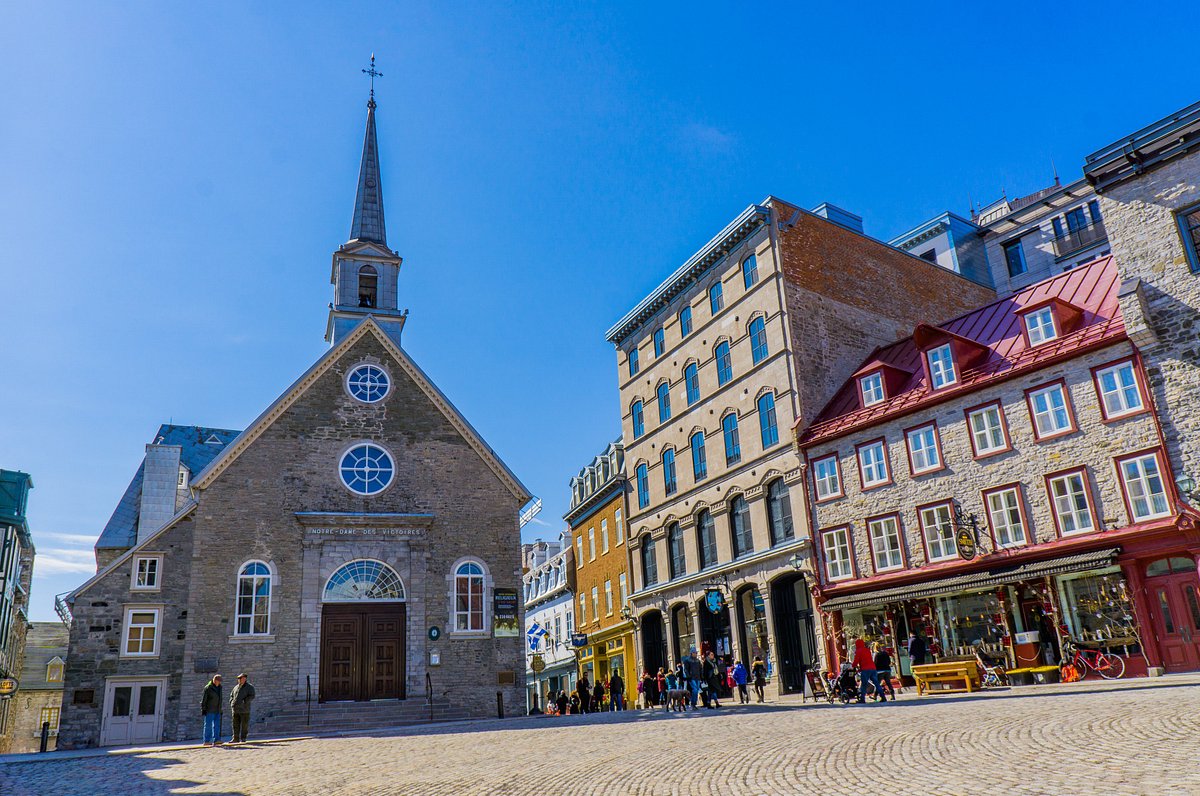
Place Royale marks the location where Samuel de Champlain founded Quebec in 1608. Today, the square remains surrounded by beautifully preserved stone buildings.
The small but historic Notre-Dame-des-Victoires Church stands proudly within the square, representing one of the oldest stone churches in North America.
Walking Through Living History
Standing in Place Royale feels like traveling through centuries of Canadian history. Cobblestones echo beneath footsteps, and surrounding architecture preserves the spirit of the early colonial era.
Moments like this give depth to a Quebec Old Town Walk.
Seasonal Beauty Throughout the Year
Summer Energy
Summer fills Old Quebec with festivals, outdoor dining, and lively street performances. Cafés place tables along sidewalks, and visitors enjoy long evening walks beneath warm skies.
Winter Magic
Winter transforms Old Quebec into a snowy wonderland. Holiday lights decorate streets, and snow blankets rooftops. The famous Winter Carnival adds vibrant celebrations to the season.
Each season offers a unique atmosphere during a Quebec Old Town Walk.
Tips for Enjoying the Walk
Comfortable walking shoes make the experience easier because many streets remain cobblestoned and slightly uneven. Starting early in the morning helps avoid crowds, especially during peak travel seasons.
Exploring slowly allows visitors to discover hidden courtyards, small art galleries, and quiet cafés tucked away along narrow streets.
Conclusion
A Quebec Old Town Walk reveals a city where history, culture, and charm blend seamlessly. From the towering Château Frontenac to the colorful streets of Petit Champlain and the historic square of Place Royale, every corner tells a story.
Unlike modern cities built for speed, Old Quebec invites visitors to slow down. Wandering its streets allows travelers to appreciate architecture, history, and atmosphere at a human pace.
For anyone visiting Quebec City, a Quebec Old Town Walk remains one of the most rewarding ways to experience one of North America’s most beautiful and historic destinations.