
Beyond the Link Why the Modern Question Answering System is Killing Traditional Search
We’ve all been there: staring at a search engine results page (SERP) with ten different blue links, clicking through three of them, and still coming up empty-handed. It feels like a chore. In an era where we can summon a car or a pizza with a single tap, why are we still “hunting and gathering” for information?
The truth is, we don’t want links; we want answers. This psychological shift is exactly why the question answering system (QA system) has moved from a niche academic project to the beating heart of modern enterprise. Whether it’s a chatbot answering customer queries or an internal AI parsing through thousands of legal documents, the goal is the same: radical precision.
The Anatomy of a Modern Question Answering System

To understand where we are going, we have to look under the hood. A question answering system is significantly more complex than a standard search engine. While a search engine finds documents containing keywords, a QA system must understand the intent of the question and synthesize a specific response.
1. The Retrieval-Augmented Generation (RAG) Era
Most high-performing systems today utilize a framework called RAG. Instead of the AI “guessing” based on its training data, it first searches a trusted database (the retrieval part) and then uses a language model to explain that information (the generation part). This is the gold standard for businesses that cannot afford to be wrong.
2. Neural Reading Comprehension
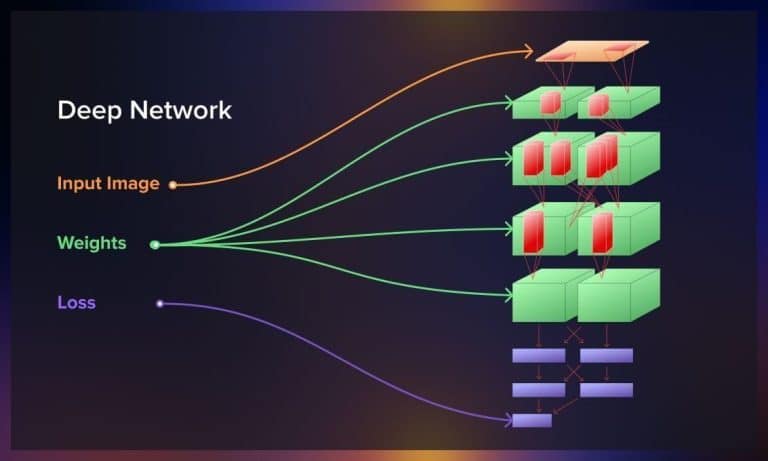
This is where the “magic” happens. Using transformers—the same tech behind GPT-4—the system reads text much like a human does. It identifies the subject, the action, and the context to extract the exact sentence that solves the user’s problem.
Reality Check: The “Confidence” Trap
There is a dangerous misconception that if a question answering system gives a fluent, confident answer, it must be correct. Fact check: AI models are designed to be helpful, which sometimes means they “hallucinate” facts with absolute certainty. A system that doesn’t say “I don’t know” is not an asset; it’s a liability. True intelligence in a QA system is measured by its ability to cite its sources and admit its limitations.
Editorial Insight: Why Most Chatbots Still Feel Like Robots
We’ve all interacted with a “dumb” FAQ bot that keeps repeating, “I’m sorry, I didn’t get that.” The reason these fail is that they are built on rigid decision trees rather than a flexible question answering system.
The editorial consensus is shifting: if your system can’t handle a follow-up question like “Why is that?” or “What about the other option?”, it isn’t a QA system—it’s just a digital filing cabinet. The future belongs to systems that maintain “state” or memory of the conversation.
Practical Implementation: Building for Precision
If you are looking to integrate or build a QA system for your organization, avoid the “generic” trap by following these steps:
-
Clean Your Data First: An AI is only as smart as the documents it reads. If your company’s internal PDFs are outdated, your QA system will be a fountain of misinformation.
-
Implement “Human-in-the-loop”: For high-stakes niches like Finance or Technology, have experts “grade” the system’s answers during the first few months.
-
Focus on Long-Tail Queries: Most users don’t ask simple questions like “What is ROI?” They ask, “How did our ROI in Q3 compare to Q2 given the market dip?” Design your system to parse these complex, multi-part questions.
The Intersection of UX and Intelligence

A common mistake is focusing 100% on the backend and 0% on the user experience. A great question answering system should provide:
-
Direct Answers: Don’t bury the lead.
-
Contextual Evidence: Show me where you found that information.
-
Actionable Next Steps: “Since you asked about X, would you like me to generate a report on Y?”
Conclusion: The End of the “Search” Era
The transition from “Searching” to “Answering” is the biggest shift in human-computer interaction since the invention of the mouse. A question answering system isn’t just a tool; it’s a productivity multiplier. By reducing the time spent scrolling through irrelevant links, we free up the human brain for what it does best: critical thinking and creative problem-solving.
As we move forward, the question won’t be “Can the AI answer this?” but rather “How can we ask better questions?”