Deep Learning Cracking the Code of the Digital Brain
Imagine teaching a toddler to recognize a cat. You don’t hand them a 500-page manual on feline anatomy or explain the geometry of whiskers. You simply point and say, “That’s a cat.” After ten, twenty, or maybe fifty cats, something clicks in that messy web of neurons. The child just knows.
For decades, we tried to teach computers the opposite way—with rigid rules and “if-then” logic. It failed miserably at complex tasks. Then came deep learning, and suddenly, the machine started “seeing” like that toddler.
What is Deep Learning, Really?
At its core, deep learning is a subfield of machine learning that is entirely obsessed with Neural Networks. If machine learning is the athlete, deep learning is the elite marathon runner who has optimized every single heartbeat.
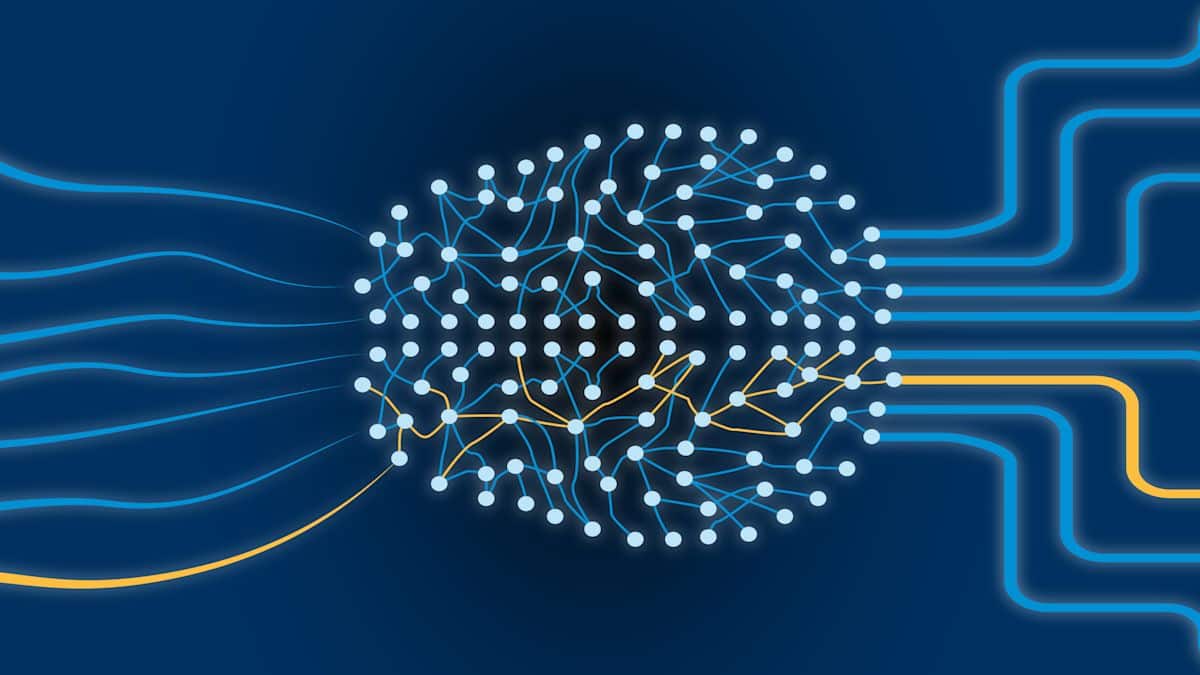
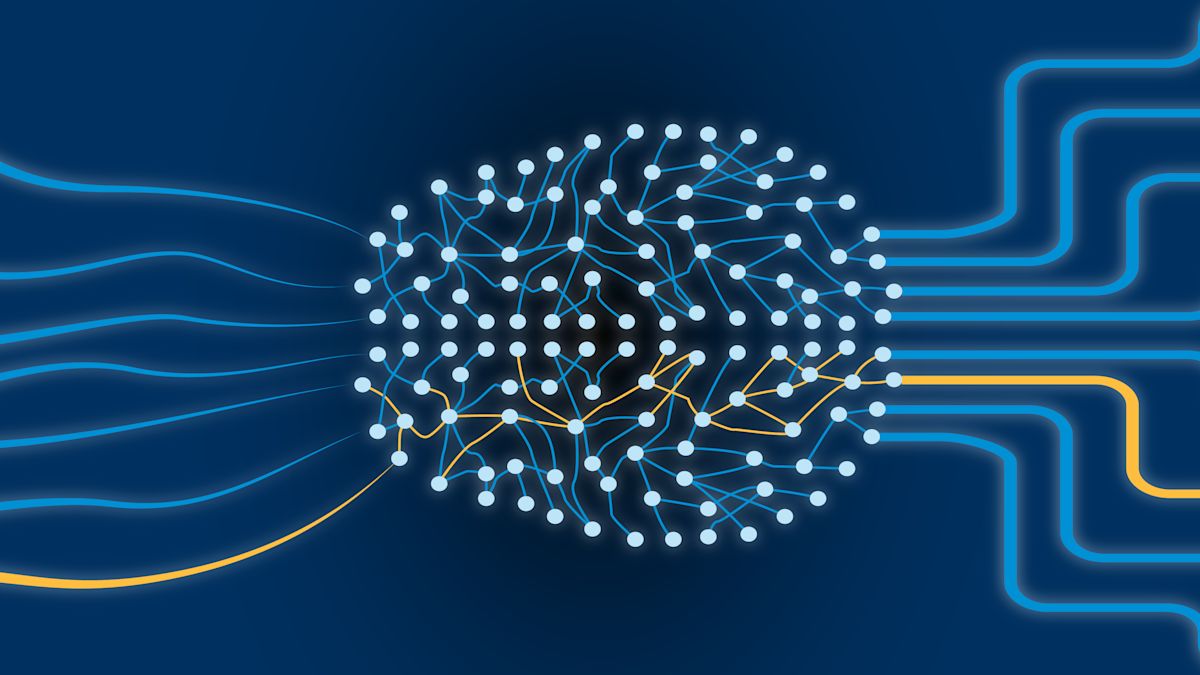
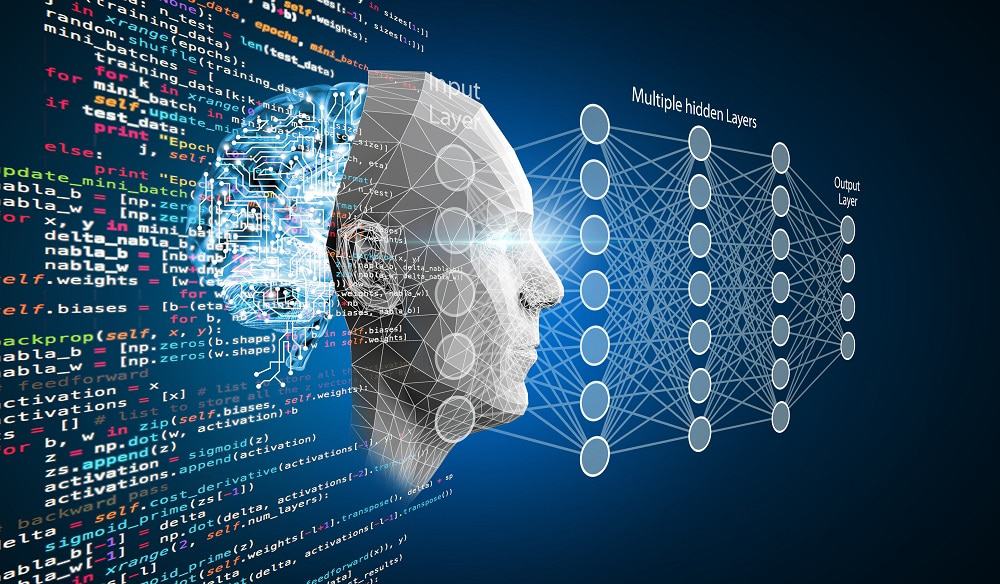
It’s called “deep” because of the layers. A standard neural network might have one or two layers of calculation. Deep learning models have hundreds. Each layer takes a piece of information, breaks it down, and passes it to the next, becoming increasingly abstract. In an image of a face, the first layer sees lines; the middle layers see eyes and noses; the final layers see “Mom.”
Editorial Opinion: While many tech enthusiasts treat deep learning as a magic wand, we must remember it is essentially a high-speed trial-and-error machine. It doesn’t “understand” a cat; it is simply the world’s best pattern matcher.
The Reality Check: It’s Not “Thinking” (Yet)
There is a common misconception that deep learning models possess a form of consciousness or “human-like” reasoning. Let’s clear the air: Deep learning is math on steroids. It relies on backpropagation and gradient descent—mathematical ways of saying “you got it wrong, try slightly differently next time.” It requires massive amounts of data to learn what a human can grasp in seconds. If you give a deep learning model a million photos of dogs but zero photos of cats, it will confidently tell you a cat is a “weird-looking dog.”
Why Deep Learning is the Current King of AI
Why are we talking about this now when the concepts have existed since the 1950s? Three words: Big Data and Compute.
-
The Data Deluge: We now generate enough digital breadcrumbs (photos, voices, clicks) to feed the hunger of deep networks.
-
GPU Revolution: The same chips that render your video games are perfect for the massive parallel math required for deep learning.
-
Self-Correction: Unlike older algorithms, deep learning performance doesn’t plateau. The more data you throw at it, the better it gets.
Beyond the Hype: Practical Applications
Deep learning isn’t just about generating weird AI art or chatbots. It’s silently running the world:
-
Medical Diagnostics: models can now spot early-stage cancer in X-rays with higher accuracy than seasoned radiologists by detecting patterns invisible to the human eye.
-
Predictive Logistics: Companies like Amazon use it to predict what you’ll buy before you even click “add to cart,” moving inventory closer to your city in anticipation.
-
Natural Language Processing (NLP): Every time you speak to a voice assistant or use a translation app, is dissecting the nuances of your syntax and tone.
The “Black Box” Problem: What We Rarely Discuss
Here is the part most tech blogs skip: Interpretability. When a deep learning model makes a decision—say, denying a loan application—even the engineers who built it often can’t explain exactly why. The logic is buried under millions of weighted connections. This “black box” nature is the biggest hurdle in high-stakes fields like law and autonomous driving. How do we trust a system that can’t show its work?
How to Start Navigating the Deep Learning Space
If you’re looking to move beyond being a spectator, the path is more accessible than it looks. You don’t need a PhD in Mathematics, but you do need curiosity.
-
Master the Basics of Python: It is the lingua franca of AI.
-
Understand the “Why”: Don’t just copy-paste code from GitHub. Learn why a Convolutional Neural Network (CNN) is better for images than a Recurrent Neural Network (RNN).
-
Start Small: Use frameworks like PyTorch or TensorFlow to build a simple digit recognizer.
Conclusion: The Future is Layered
Deep learning is moving us away from a world where we command computers and toward a world where we train them. We are no longer limited by what we can explain in code; we are only limited by the data we can provide and the ethical guardrails we put in place. The “black box” is open, and what’s inside is a reflection of our own complex way of seeing the world.