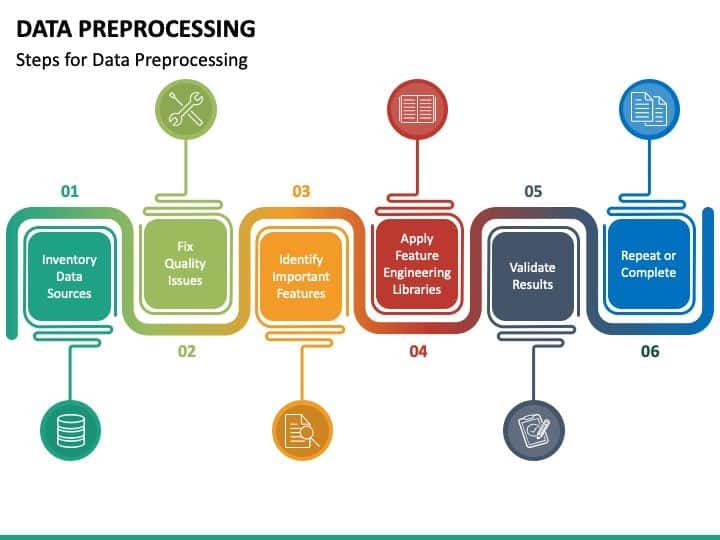
Data Preprocessing The Unsung Hero of the AI Revolution
Your machine learning model is not a genius. In fact, without meticulous human intervention, it is remarkably stupid. We live in an era where people worship complex neural networks and “black box” algorithms, but here is the cold, hard truth: the most sophisticated model in the world will fail if it’s fed mediocre data.
This is where data preprocessing comes in. It is the unglamorous, time-consuming, and often exhausting process of cleaning, transforming, and organizing raw data into something a machine can actually digest. While the media loves to talk about AI “thinking,” the real work happens in the trenches of data preparation. If you want a model that actually works in the real world, you have to stop treating preprocessing as a chore and start treating it as your most powerful competitive advantage.
The “Garbage In, Garbage Out” Reality Check
The industry is obsessed with the “GIGO” principle, but people still ignore it. We often think that “Big Data” solves everything. The misconception is that if we just throw enough data at a model, the AI will magically figure out what’s important.
It won’t.
Large datasets often just mean large amounts of noise. Data preprocessing is the filter that ensures your model is learning patterns, not just memorizing errors. Without it, you aren’t building intelligence; you are building an expensive random number generator.
Editorial Opinion: The Vanity of Complexity

I’ve seen countless data scientists spend weeks hyper-tuning parameters on a failing model, only to realize that their dataset had inconsistent units or missing values that skewed the entire logic. We need to stop romanticizing the “modeling” phase and start valuing the “cleaning” phase. A simple linear regression with perfect data preprocessing will outperform a Deep Learning model with messy data every single time.
The Core Stages of Data Preprocessing
To master this craft, you need to understand that data is rarely “ready” for use. It arrives in your lap scarred by human error, technical glitches, and missing context. Here is how we fix it:
1. Data Cleaning: Scrubbing the Noise
The first step is handling the “mess.” This includes dealing with:
-
Missing Values: Do you delete the row? Or do you use “Imputation” to fill in the gaps with a mean or median value? The choice depends on whether the absence of data is, in itself, a data point.
-
Outliers: Sometimes a weird number is a breakthrough; most of the time, it’s just a sensor error. Identifying and handling outliers prevents your model from being “distracted” by anomalies.
-
Duplicate Removal: Redundant data leads to biased models that think certain events are more common than they actually are.
2. Data Transformation: Speaking the Machine’s Language
Machines don’t understand “Cold,” “Warm,” and “Hot.” They understand 0, 1, and 2.
-
Normalization and Scaling: If one feature is measured in millimeters and another in kilometers, the model might assume the kilometers are more important just because the numbers are larger. Scaling brings everything to a level playing field (usually between 0 and 1).
-
Encoding: This is where we turn categorical labels into numerical values so the math can actually happen.
3. Data Reduction: Less is Often More
In data preprocessing, you also have to decide what not to include. Feature selection involves identifying which variables actually contribute to the outcome. If you have 200 columns of data but only 5 are predictive, the other 195 are just “noise” that will slow down your training and degrade your accuracy.
The Rare Conversation: Data Leakage

One thing that is rarely discussed in basic tutorials is “Data Leakage.” This happens when information from outside the training dataset is used to create the model. For example, if you include a “Patient ID” that accidentally correlates with the time of diagnosis, your model might “cheat” and get 100% accuracy in testing, only to fail miserably when it encounters a real patient.
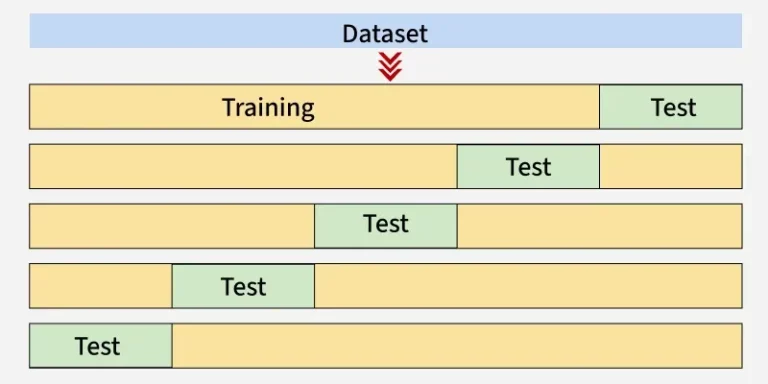
Proper data preprocessing requires a strict “firewall” between your training data and your testing data. You must apply your transformations to the training set first, and then apply those same parameters to the test set, never letting the two mix.
Practical Steps: How to Start Your Preprocessing Workflow
If you’re staring at a messy CSV file and don’t know where to start, follow this “Human-First” checklist:
-
Visualize First: Use a scatter plot or a histogram. You’ll see the outliers and missing gaps faster than any automated script ever could.
-
Understand the Domain: If you are processing medical data, a “missing” value might mean a test was never performed because the patient was healthy. In finance, it might mean a transaction was blocked. You can’t preprocess data you don’t understand.
-
Automate the Boring Parts: Use pipelines (like Scikit-Learn’s
Pipeline) to ensure your data preprocessing steps are repeatable and error-free.
The Future: Automated Data Preprocessing (AutoML)
We are seeing a rise in tools that claim to do all of this for you. While AutoML is great for rapid prototyping, it lacks the “nuance” of human intuition. An algorithm might see a 99-degree Celsius body temperature as an “outlier” and delete it, whereas a doctor (or a savvy data scientist) knows that’s the most important data point in the set.
As we move toward 2027, the best practitioners will be those who can leverage automated tools for speed while maintaining the editorial oversight to ensure the data remains “truthful.”
Why This Matters for Your Career
Everyone can run a model.fit() command. Very few can take a chaotic, real-world dataset and turn it into a gold mine. Mastering data preprocessing is how you move from being a “scripter” to being a true Data Strategist.