Supervised Learning: The Art of Training Machines with a Human Touch
Do you remember how you learned to distinguish a toxic friend from a loyal one? It probably involved a lot of trial and error, but more importantly, it involved “labels.” You saw a behavior, someone (or your gut) labeled it “red flag,” and your brain stored that association for the next time.
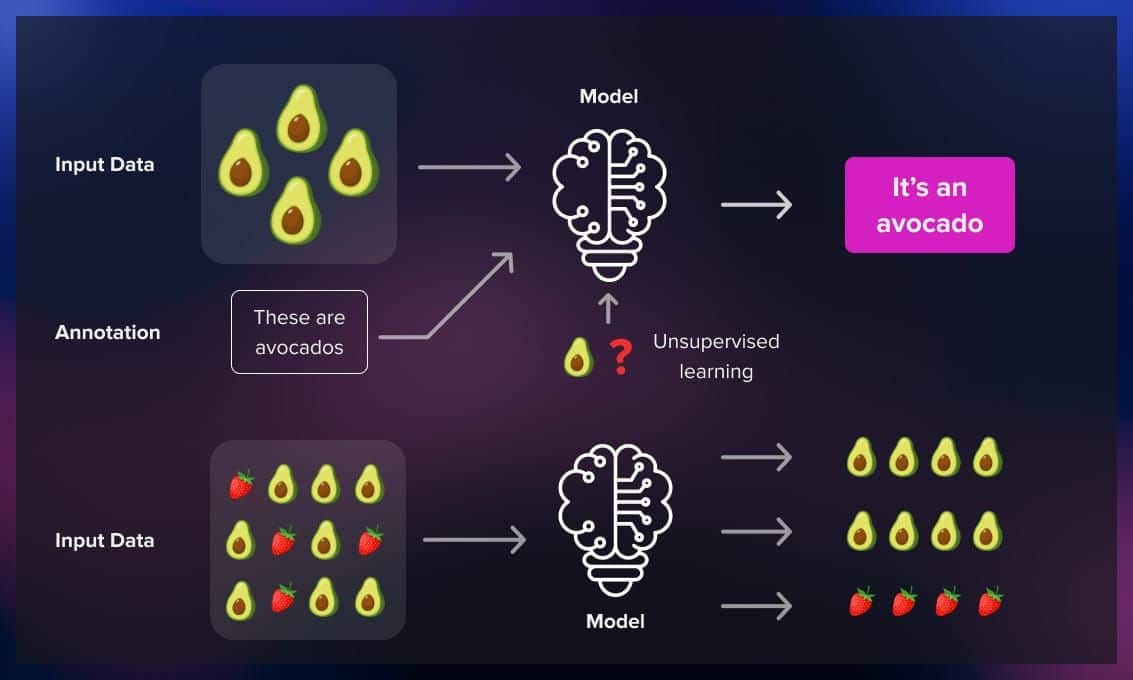
In the world of Artificial Intelligence, this is exactly how supervised learning functions. It is the digital equivalent of a classroom where a human teacher holds up flashcards, telling the computer, “This is a cat,” “This is a dog,” and “This is a spam email.” Without the teacher, the student is just a powerful processor lost in a sea of meaningless noise.
The Core Mechanics: Inputs, Labels, and Feedback Loops
To understand supervised learning, you have to look past the complex algorithms and see the data for what it is: a map. In this domain, we feed the machine a dataset that already contains the answers. This is called “labeled data.”
The process follows a deceptively simple loop:
-
Feeding: The model receives an input (e.g., a picture of a house).
-
Guessing: Based on its current math, it predicts a label (e.g., “Price: $300k”).
-
Correcting: We compare that guess to the actual label. If the machine is off by $50k, we adjust the algorithm’s internal weights.
Editorial Opinion: Many people think AI is inherently “smart.” In reality, supervised learning proves that AI is actually quite obedient and unimaginative. It doesn’t discover new truths; it just gets really, really good at mimicking the truths we’ve already defined for it.
The Reality Check: The Data Labeling Sweatshop
Here is the misconception: people think supervised learning happens “automagically” once you have a powerful server. Reality check: The bottleneck of AI isn’t the code; it’s the human labor. Behind every “smart” autonomous car or medical diagnostic AI, there are thousands of humans sitting in rooms for hours, clicking on photos of traffic lights or outlining tumors in lung scans. Supervised learning is only as good as the labels we provide. If the human is tired and labels a truck as a bridge, the AI will confidently drive right into it.
Classification vs. Regression: Two Sides of the Same Coin
When we talk about supervised learning, we are usually looking at two specific types of problems:
-
Classification: This is about “Which bucket does this belong in?” Is this email spam or not? Is this bank transaction fraudulent or legitimate? It’s discrete, binary, and absolute.
-
Regression: This is about “How much?” or “What is the value?” Predicting the stock market, estimating the temperature tomorrow, or determining the market value of a vintage car based on its mileage.
The Hidden Cost of Overfitting
A common pitfall that tech brochures rarely mention is “Overfitting.” Imagine a student who memorizes the exact answers to a practice test but fails the actual exam because the questions changed slightly.
In supervised learning, a model can become so obsessed with the training data that it learns the “noise” instead of the “pattern.” It becomes a genius at recognizing the specific photos you gave it, but a complete idiot when faced with a real-world scenario it hasn’t seen before. Balancing this—making a model “smart” but not “stubborn”—is the true craft of a data scientist.
Why It Still Dominates the Industry
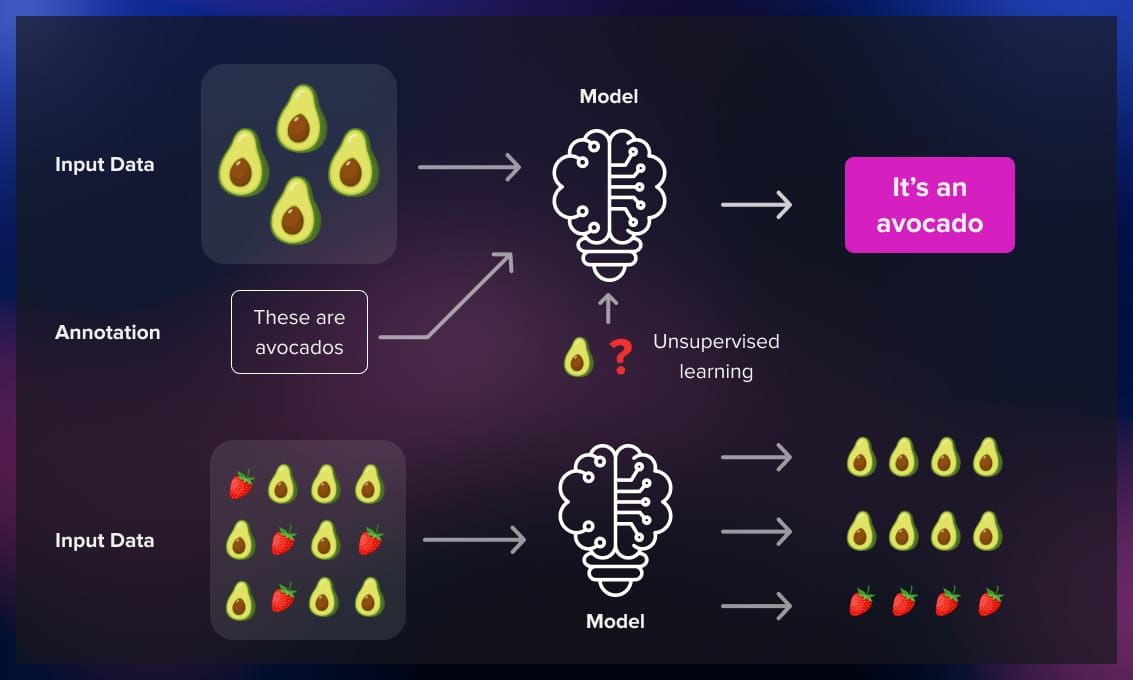
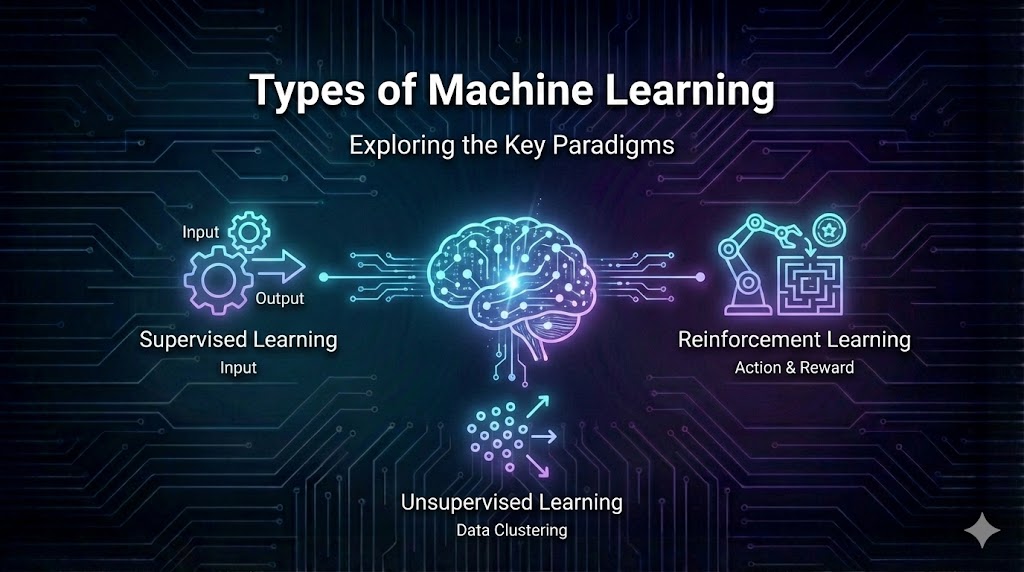
With all the talk about Unsupervised Learning (where the machine finds its own patterns) and Generative AI, why do we still care about the supervised method?
-
Reliability: In industries like Finance and Healthcare, “guessing” isn’t an option. We need the accuracy that only human-verified labels can provide.
-
Accountability: If a supervised model fails, we can look at the training data and see where the “teacher” gave a wrong instruction.
-
Efficiency: For specific tasks like language translation or facial recognition, supervised learning is still the fastest route to a high-performing product.
Practical Takeaway: Quality Over Quantity
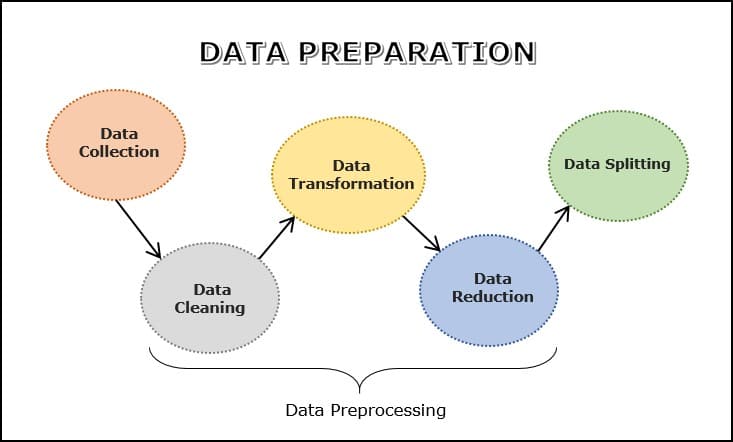
If you are a business owner or a developer looking to implement supervised learning, ignore the hype about “Big Data” for a moment. Instead, focus on Clean Data.
-
Audit your labels: Are your human annotators consistent?
-
Diversify your input: If you only train your model on data from one demographic or one type of environment, your AI will be biased and brittle.
-
Start with a Baseline: Don’t jump into complex neural networks if a simple Linear Regression can solve your problem with 90% accuracy.
Conclusion: The Human Mirror
Supervised learning is, ultimately, a mirror. It reflects our knowledge, our biases, and our expertise back at us through a digital lens. It reminds us that for all the “autonomy” we seek in technology, the most powerful machines still require a human hand to guide them across the finish line.