The Digital Subconscious: Why Unsupervised Learning is AI’s Real Creative Leap
Imagine walking into a massive, dark library. None of the books have titles. The pages are written in a foreign language. You have no guide, no index, and no teacher. Yet, after wandering the aisles, you notice patterns. Some books have thick leather covers. Others are thin and paper-bound. You start grouping them by touch and weight. You are categorizing the world through pure observation. This is exactly how unsupervised learning works. It is a machine’s ability to find meaning in data that no one has explained to it yet.
In a world obsessed with AI that follows instructions, unsupervised learning is the wild side. It doesn’t wait for a human to point out a cat. It looks at the raw, messy chaos of data. Then, it asks: “How do these things belong together?”
Beyond the Teacher: What is Unsupervised Learning?
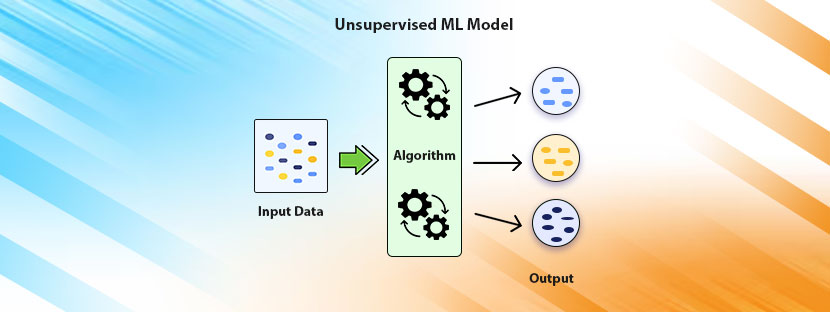
At its core, unsupervised learning is a type of algorithm. It draws inferences from datasets without labeled responses. Think of it as a student without an answer key. It is an explorer with a compass but no map.
The algorithm receives a dataset. Its task is to find hidden structures. It’s the difference between being told “this is a tumor” and being told “group these scans based on similarities.” One is a lesson; the other is a discovery.
The Reality Check: Many believe unsupervised learning is “smarter” or “sentient.” That is a myth. It is simply a different mathematical tool. While it finds hidden patterns, it also finds noise. It still needs a human to decide if those patterns actually matter.
The Hidden Architects: Clustering and Association
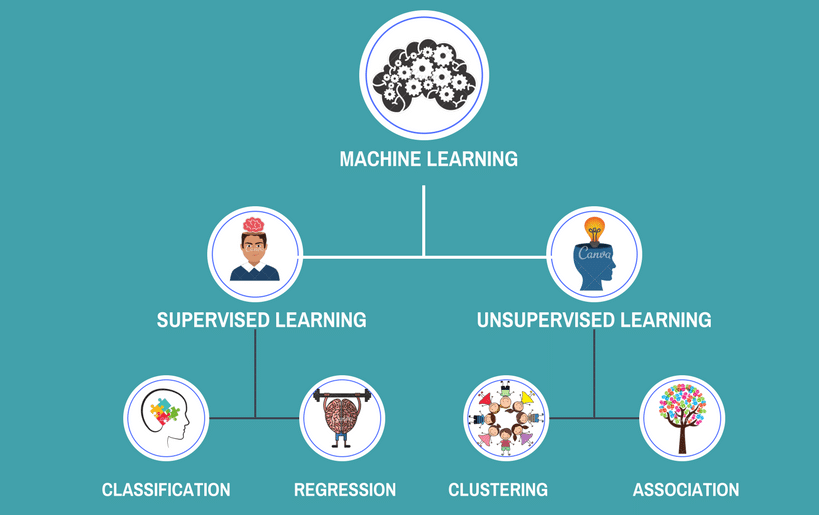
To understand these algorithms, we look at two primary functions.
1. Clustering: Finding the Tribes
Clustering groups data points that are similar. Take a service like Netflix. It doesn’t just know you like “Action.” realizes you like “Gritty, 1980s Noir Thrillers.” It finds a “tribe” of movies with specific traits. No human ever had to tag them that way.
2. Association: The Logic of Habits
Association finds the rules governing your data. If you buy a hammer, you likely need nails. Unsupervised learning maps these relationships in massive sets. It predicts behavior before the customer even realizes their own need.
The Editorial Perspective: The Beauty of the Unlabeled
We often undervalue the unlabeled. We spend billions “tagging” the world for machines. But the best insights lie in the data we haven’t categorized.
Unsupervised learning removes human bias. When we label data, we tell the machine how to think. When we leave it unlabeled, the machine shows us what we missed. It reveals patterns we were too tired or too biased to see ourselves.
Dimensionality Reduction: Cutting the Noise
Imagine describing a person using 5,000 different metrics. It’s too much information. You lose the person in the numbers.
Unsupervised learning uses “dimensionality reduction.” It keeps the essential traits while throwing away the noise. It’s the digital version of a sketch. Five perfect lines are better than a million messy scribbles.
Real-World Impact: Where the Unseen Becomes Visible
Where does unsupervised learning touch your life? It is everywhere.
-
Cybersecurity: Algorithms monitor network traffic for “anomalies.” They don’t know what a new virus looks like. They just know what “normal” looks like. Anything else is flagged.
-
Genetics: Researchers cluster DNA sequences. This helps identify genes linked to diseases without knowing the “answer” beforehand.
-
Market Segmentation: Companies find groups based on actual behavior. This leads to marketing that feels more human and less robotic.
Rare Insights: The Struggle with “Ground Truth”

Beginner tutorials rarely discuss the “Ground Truth” problem. In supervised learning, you know if the AI is right. In unsupervised learning, there is no “right” answer. Success is subjective. This makes the field an art form. Data scientists must “feel” the data. They decide if a cluster is useful or just a mathematical coincidence.
Actionable Steps for Implementation
Want to use unsupervised learning? Start with these moves:
-
Exploratory Data Analysis (EDA): Use clustering at the start of any project. See how your data behaves naturally first.
-
Anomaly Detection: Use it as a safety net. Let the model learn your system’s “pulse.” It will alert you when something feels “off.”
-
Customer Personas: Stop guessing who your buyers are. Run your data through a K-means algorithm. Let the results surprise you.
Conclusion: Embracing the Chaos
Unsupervised learning reminds us of a simple truth. There is a gap between knowledge and discovery. As AI evolves, our ability to let machines explore will be key. We will solve problems we haven’t even named yet.
The next time a recommendation feels perfect, remember the process. There was no teacher. There was just a machine in a dark library, slowly learning how to see.