The Efficiency Trap Navigating the World of the Optimization Algorithm
Perfection is a luxury that modern computing simply cannot afford. If a GPS tried to calculate every single possible route to your destination, you would arrive ten years too late. Instead, it relies on an optimization algorithm to find the “best” path in milliseconds. These algorithms are not seeking a perfect world. They are seeking the most efficient one within the limits of time and energy.
In simple terms, an optimization algorithm is a mathematical tool. It finds the best possible solution from a set of available alternatives. It is the silent engine behind airline pricing, logistics, and even the way your Netflix feed loads.
The Core Logic: Objective Functions and Constraints
Every optimization task starts with a goal. We call this the objective function. It might be “minimize cost” or “maximize speed.”
However, life has limits. We call these constraints. You want the fastest car, but you only have $10,000. The optimization algorithm balances these two forces. It sifts through thousands of variables to find the “sweet spot.” It is a digital tug-of-war where efficiency always wins.
The Reality Check: People often think these algorithms find the “absolute best” answer. Usually, they don’t. They find a “local optimum”—a solution that is better than everything nearby. In many cases, hunting for the absolute “global” best is a waste of resources. “Good enough” is often the smarter goal.
The Two Faces of Optimization: Gradient vs. Heuristics
Not all problems are solved the same way. The approach depends on the landscape of the data.
1. Gradient Descent: Rolling Down the Hill
Imagine standing on a foggy mountain. You want to reach the bottom. can’t see the valley, but you can feel the slope under your feet. You take a step in the steepest direction downward. This is Gradient Descent. It is the backbone of machine learning. It slowly nudges the model toward the lowest possible error.
2. Heuristics: The Educated Guess
Sometimes, the mountain is too jagged. There are too many peaks and valleys. In this case, we use heuristics. These are “rules of thumb” that help the algorithm skip bad options. It doesn’t check every door; it only checks the ones that look promising.
The Editorial Perspective: Why Human Intuition Still Matters
We are moving toward a world governed by code. However, an optimization algorithm lacks one thing: context. It can optimize a factory for maximum output. But it might ignore worker burnout.
Algorithms are incredibly logical, but they are also cold. As we lean on these tools, our job changes. We are no longer the “doers.” We are the “goal-setters.” If we set the wrong goal, the algorithm will reach it perfectly—even if it destroys everything else in the process.
Common Misconception: More Data Equals Better Results
This is a dangerous trap. Feeding more data into an algorithm doesn’t always help. Sometimes, it creates “noise.”
If your data is messy, your optimization algorithm will optimize for the wrong things. This is known as overfitting. The model becomes so focused on the training data that it fails in the real world. Quality beats quantity every single time.
Practical Applications: Where Efficiency Meets Reality
Optimization is happening around you right now.
-
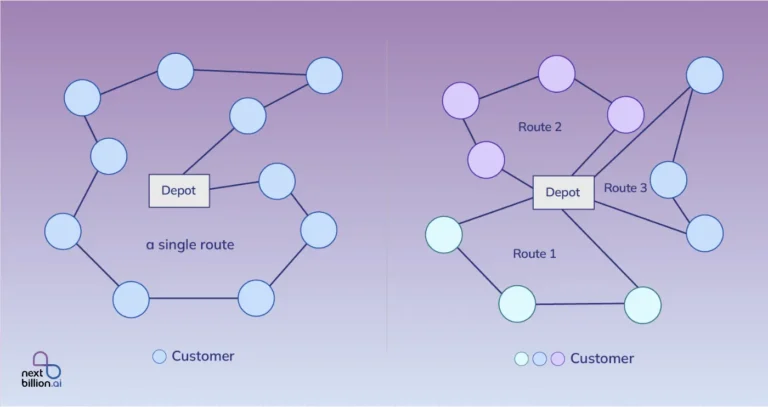
Logistics: Companies like FedEx use these tools to plan routes. Saving one mile per truck saves millions of dollars a year.
-
Finance: Portfolios are optimized to get the highest return with the lowest risk.
-
Energy: Power grids use algorithms to balance supply and demand in real-time. This prevents blackouts during heatwaves.
Rare Insights: The Cost of Convergence
One thing experts rarely mention to beginners is “computational cost.” Every step an algorithm takes costs electricity and time.
A complex optimization algorithm can be expensive to run. Sometimes, the money you save through optimization is less than the money you spent running the computer. Real intelligence is knowing when to stop calculating.
Actionable Steps for Beginners
Want to use optimization in your projects? Follow these steps:
-
Define Your Goal Clearly: Be specific. “Make it better” is not a goal. “Reduce latency by 10%” is.
-
Identify Your Constraints: What are the hard limits? Budget? Time? Hardware?
-
Choose the Right Tool: Don’t use a sledgehammer for a nail. Simple problems only need simple linear programming.
-
Test for Sensitivity: Change your inputs slightly. If the solution collapses, your model isn’t robust enough for the real world.
Conclusion: The Path Forward
An optimization algorithm is more than just a piece of code. It is a philosophy of improvement. It teaches us that while we can’t have everything, we can certainly have the best version of what is available.
As we build more complex systems, these algorithms will be our guides. They help us navigate a world of infinite choices with finite resources. Perfection might be a myth, but through optimization, we can get remarkably close.